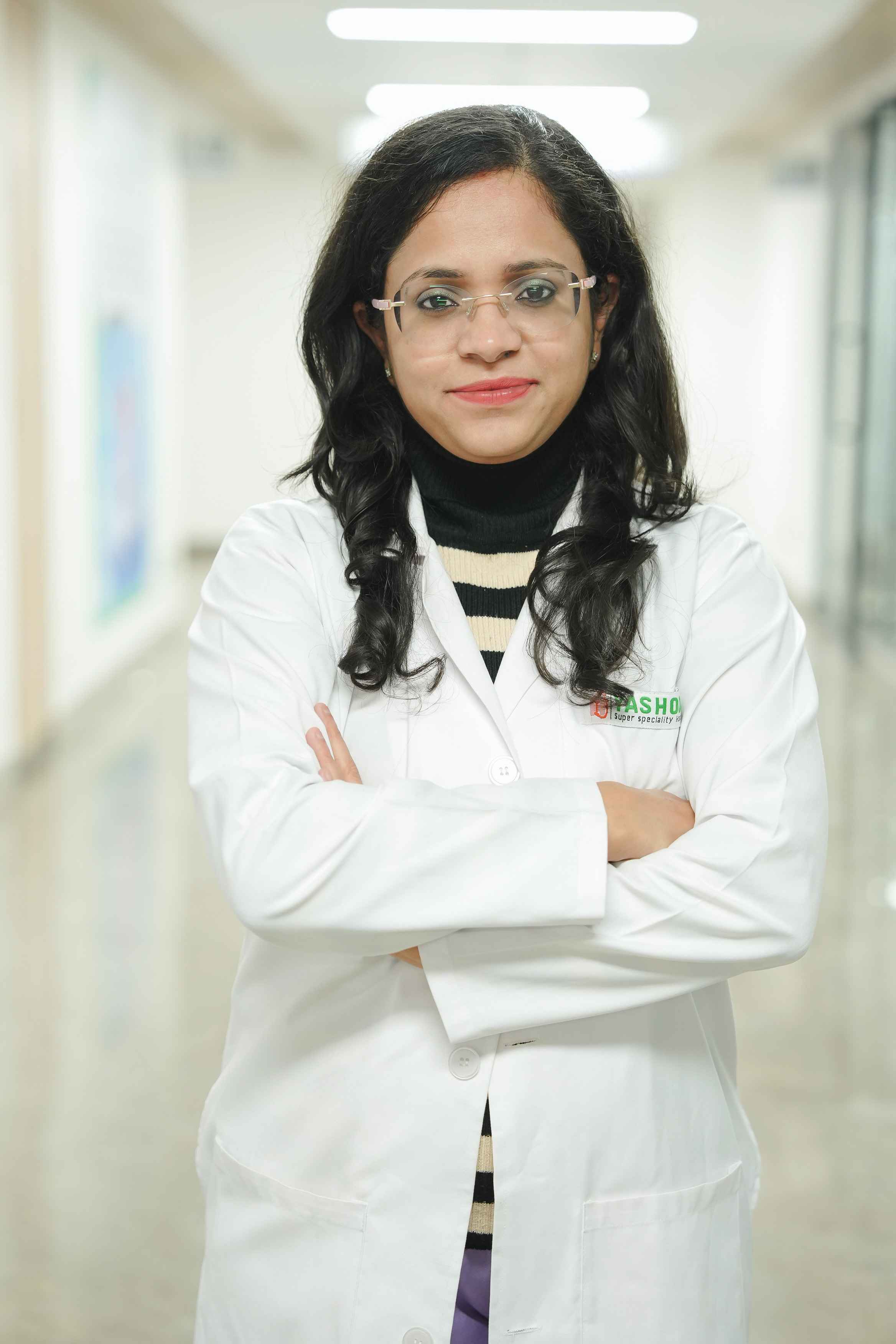
Dr. Sneha Mishra
Consultant
IVF and Infertility
IVF Centre in Noida
Most people think of IVF as a medical procedure. In clinical terms, it is as much a laboratory process as it is a medical one. The consultation, ovarian stimulation, and egg retrieval are the visible parts of treatment. What happens between egg retrieval and embryo transfer, inside the IVF laboratory, is where outcomes are largely influenced.
The Fertility and IVF Centre at Yashoda Medicity is built around this understanding. Laboratory standards here meet international benchmarks, with High-Efficiency Particulate Air (HEPA) filtration, laminar airflow workstations, artificial intelligence-assisted embryo monitoring, and vitrification-based cryopreservation. These advanced technologies are supported by a multidisciplinary team of fertility specialists, embryologists, reproductive medicine experts, and counsellors working together within a comprehensive fertility programme.
Conditions We Treat
The team at the IVF Centre in Noida manages a wide range of fertility-related conditions, including:
- Unexplained Infertility
- Male Factor Infertility, including Low Sperm Count, Poor Motility, Abnormal Morphology, and Azoospermia
- Female Factor Infertility, including Ovulation Disorders, Polycystic Ovary Syndrome (PCOS), Diminished Ovarian Reserve, and Premature Ovarian Insufficiency
- Endometriosis
- Blocked or Damaged Fallopian Tubes
- Uterine Fibroids and Other Uterine Abnormalities
- Recurrent Pregnancy Loss
- Recurrent Implantation Failure
- Age-Related Decline in Fertility
- Genetic Disorders Affecting Conception
- Hormonal Imbalances Affecting Reproduction
- Fertility Preservation Needs Before Cancer Treatment or Surgery
- Fertility Preservation for Medical or Elective Reasons
When to Consult a Fertility Specialist in Noida
The general recommendation is to seek a fertility consultation after twelve months of regular unprotected intercourse without conception, or after six months if the woman is above thirty-five years of age. In practice, earlier consultation is often beneficial when a known fertility-related condition exists.
Book a consultation if any of the following apply:
- Twelve months of trying without conception, or six months if above thirty-five
- A known diagnosis of polycystic ovary syndrome, endometriosis, or uterine fibroids
- Irregular or absent menstrual cycles
- A history of pelvic infection or previous surgery involving the reproductive organs
- A previous pregnancy loss, particularly recurrent miscarriages
- A known male factor concern, including abnormal semen analysis results
- A family history of genetic disorders that may affect pregnancy
- A diagnosis requiring chemotherapy, radiation therapy, or surgery that may affect fertility
- A previous failed IVF cycle where a second opinion or alternative approach is being considered
- Age-related fertility concerns, especially if the woman is above forty
- A history of ectopic pregnancy
- Known low ovarian reserve or diminished egg count
- Repeated failed intrauterine insemination (IUI) cycles
- Difficulty conceiving after stopping contraception for an extended period
- Fertility preservation planning before medical treatment or surgery
Advanced Fertility and IVF Hospital in Noida
Infertility Assessment
Accurate diagnosis of both partners before treatment begins allows fertility care to be tailored to the actual cause of infertility rather than applied generically.
For women, evaluation includes ovarian reserve testing, hormonal assessment, pelvic ultrasound, and, when indicated, laparoscopy and hysteroscopy to assess the uterine cavity and fallopian tubes directly.
For men, semen analysis, sperm DNA fragmentation index testing, and hormonal evaluation help establish the male factor contribution, which accounts for a significant proportion of infertility cases and often requires specialised evaluation.
In Vitro Fertilisation (IVF)
In vitro fertilisation involves controlled ovarian stimulation, egg retrieval under sedation, laboratory fertilisation, embryo culture, and transfer of the most viable embryo into the uterus.
Each stage is carefully managed using personalised stimulation protocols based on the patient's age, hormonal profile, ovarian reserve, and fertility diagnosis.
Intracytoplasmic Sperm Injection (ICSI)
For couples facing significant male factor infertility, intracytoplasmic sperm injection (ICSI) involves injecting a single selected sperm directly into an egg.
This technique bypasses barriers that conventional fertilisation cannot overcome. Combined with sperm DNA fragmentation testing, it allows embryologists to select sperm with the highest structural integrity, improving fertilisation potential.
Micro Testicular Sperm Extraction (Micro-TESE)
For men diagnosed with azoospermia (absence of sperm in the ejaculate), Micro-TESE at the IVF Centre in Noida uses advanced microsurgical techniques to identify and retrieve sperm directly from testicular tissue.
This highly specialised procedure requires close collaboration between experienced urologists and embryologists to optimise outcomes.
Preimplantation Genetic Testing (PGT)
Preimplantation genetic testing screens embryos for chromosomal abnormalities before transfer, helping identify embryos with the highest likelihood of implantation and healthy pregnancy outcomes.
Testing for aneuploidy reduces the risk of implantation failure and miscarriage associated with chromosomally abnormal embryos. Testing for specific single-gene disorders is also available for couples with known hereditary conditions.
Fertility Preservation
Egg freezing through vitrification enables women to preserve fertility before age-related decline, cancer treatment, or other medical circumstances.
Vitrification achieves significantly higher post-thaw survival rates than older freezing methods and is considered the current gold standard in fertility preservation. Sperm banking offers similar fertility preservation options for men.
Donor Programme
For patients for whom conception using their own eggs or sperm is not possible, the donor egg and sperm programme as part of infertility treatment in Noida provides access to rigorously screened donors within an ethical and transparent framework.
International patients, including those travelling from Africa, the Middle East, and Canada, are supported through dedicated coordinators who assist with scheduling, travel planning, and treatment coordination.
Blastocyst Culture and Embryo Grading
Embryos are often cultured to the blastocyst stage before transfer so that their developmental potential can be assessed more accurately.
Blastocyst culture allows embryologists to observe embryo growth over several days and select embryos with the strongest chance of implantation. Embryo grading is based on cell number, symmetry, expansion, and overall developmental quality.
Frozen Embryo Transfer
Frozen embryo transfer allows embryos created during a previous IVF cycle to be transferred in a later cycle after the uterus has been prepared.
This approach can be useful when the endometrium requires additional preparation, when preimplantation genetic testing is being performed, or when a fresh transfer is not clinically ideal. Frozen embryo transfer also gives couples flexibility in planning treatment.
Assisted Hatching
Assisted hatching is a laboratory technique in which a small opening is created in the outer shell of the embryo to support implantation.
It may be considered in selected cases, such as repeated implantation failure, advanced maternal age, or embryos with a thicker zona pellucida. The decision to use assisted hatching is made on a case-by-case basis.
Intrauterine Insemination (IUI)
Intrauterine insemination is a less invasive fertility treatment in which prepared sperm are placed directly into the uterus around the time of ovulation.
It may be recommended for mild male factor infertility, unexplained infertility, or cervical factor issues. In appropriate cases, IUI can be used before moving to IVF, depending on the couple's diagnosis and treatment goals.
Endometrial Preparation and Receptivity Assessment
Successful implantation depends not only on embryo quality but also on the readiness of the uterine lining.
Endometrial preparation is carefully timed in both fresh and frozen embryo transfer cycles. When clinically indicated, receptivity assessment may help determine the most suitable transfer window for the embryo.
Fertility Preservation for Men
Men who are about to undergo chemotherapy, radiation therapy, or surgery that may affect sperm production can preserve fertility through sperm banking.
In selected cases, testicular tissue retrieval may also be considered when sperm are not present in the ejaculate. These options help protect future reproductive potential before treatment begins.
Advanced IVF Laboratory
The laboratory adheres to international standards for air quality, temperature regulation, and contamination control.
High-Efficiency Particulate Air (HEPA) filtration systems remove airborne contaminants that may affect embryo development, while laminar airflow workstations protect eggs and embryos during handling.
These environmental controls directly influence embryo quality and are therefore maintained as a critical component of clinical care.
Artificial Intelligence-Assisted Embryo Monitoring and Selection
Time-lapse incubation systems continuously monitor embryo development without disturbing the embryos by removing them from the incubator.
Artificial intelligence-assisted analysis of these developmental patterns supports more informed embryo selection decisions by providing detailed insights into embryo viability and implantation potential.
Vitrification for Cryopreservation
Vitrification rapidly freezes eggs and embryos, preventing the formation of damaging ice crystals.
As a result, post-thaw survival rates are significantly higher compared to older cryopreservation techniques, making frozen embryo transfers increasingly comparable to fresh transfer outcomes.
Preimplantation Genetic Testing Laboratory
Embryo biopsy for preimplantation genetic testing requires highly specialised micromanipulation techniques performed at the blastocyst stage.
Samples are analysed for chromosomal and genetic abnormalities before embryo transfer decisions are made.
Counselling and Support Services
Fertility treatment can be emotionally demanding. The centre provides psychological counselling and emotional support throughout the treatment journey.
Genetic counselling is also available for couples undergoing preimplantation genetic testing or those with a known hereditary condition.
Embryo Culture and Incubation
Embryos are cultured in carefully controlled incubators that maintain stable temperature, humidity, and gas concentrations.
This controlled environment supports normal embryo development from fertilisation through the blastocyst stage and helps embryologists assess growth patterns with greater accuracy.
Andrology Laboratory
The andrology laboratory performs detailed semen analysis, sperm preparation, and advanced sperm function testing.
These services help identify male factor infertility and support treatment planning for procedures such as IVF and ICSI.
Quality Control and Traceability
Strict quality control protocols are followed at every stage of treatment, from sample collection to embryo transfer and cryostorage.
Each sample is carefully labelled and tracked to maintain accuracy, safety, and traceability throughout the fertility process.
Patient Journey at the Fertility and IVF Centre in Noida
Initial Consultation and Assessment
Both partners undergo comprehensive evaluation, including hormonal assessment, ovarian reserve testing, semen analysis, sperm DNA fragmentation testing, and relevant imaging studies to establish an accurate diagnosis before treatment planning begins.
Treatment Planning
A personalised treatment protocol is developed based on the findings of the fertility assessment and the specific reproductive goals of the couple.
Stimulation and Monitoring
Ovarian stimulation is monitored through regular ultrasound examinations and hormone testing, allowing medication doses to be adjusted according to the patient's response.
Egg Retrieval and Laboratory Phase
Egg retrieval is performed under sedation. Fertilisation, embryo culture, and, when indicated, preimplantation genetic testing are completed in the IVF laboratory over the subsequent days.
Embryo Transfer
The most viable embryo is transferred into the uterus at the optimal time. Transfer timing may be guided by endometrial receptivity assessment when clinically appropriate.
Follow-Up
A pregnancy test is performed approximately two weeks after embryo transfer. In unsuccessful cycles, a detailed review helps determine whether protocol modifications may improve future outcomes.
Why Choose Yashoda Medicity for IVF in Noida?
- Laboratory standards that support successful outcomes: HEPA filtration, advanced incubation systems, embryo monitoring, and vitrification technology are maintained to international standards because laboratory quality directly affects embryo development.
- Artificial intelligence-assisted embryo selection: Time-lapse embryo monitoring combined with AI-supported analysis provides continuous developmental information that supports embryo selection.
- Comprehensive evaluation of both partners: Male factor infertility, including sperm DNA fragmentation testing and Micro-TESE for azoospermia, is thoroughly investigated and managed within the same programme.
- Integrated genetic testing services: Preimplantation genetic testing for chromosomal abnormalities and single-gene disorders supports informed embryo transfer decisions.
- Comprehensive fertility care under one roof: Fertility specialists, embryologists, reproductive medicine experts, genetic counsellors, and reproductive urologists collaborate to provide coordinated care throughout the fertility journey.
- International patient support: Dedicated coordinators assist patients travelling from outside the region with scheduling, treatment planning, and logistical support.
Book Your Consultation Today
IVF outcomes are determined by a combination of clinical expertise and laboratory excellence. A well-designed stimulation protocol helps produce healthy eggs, but successful outcomes also depend on embryo quality, advanced laboratory infrastructure, and personalised clinical decision-making.
The Fertility and IVF Centre at Yashoda Medicity, Noida provides all of these elements through advanced reproductive technology, artificial intelligence-assisted embryo monitoring, and a multidisciplinary team dedicated to helping couples achieve their parenthood goals.
Whether you are seeking consultation with a Fertility Specialist in Noida, looking for advanced infertility treatment in Noida, or searching for the Best IVF Centre in Noida, our team is committed to delivering evidence-based, personalised fertility care.
Call us today: 9266610101
 Call: +91 9266610101