 Open Emergency Modal
Open Emergency Modal
Open Emergency Modal
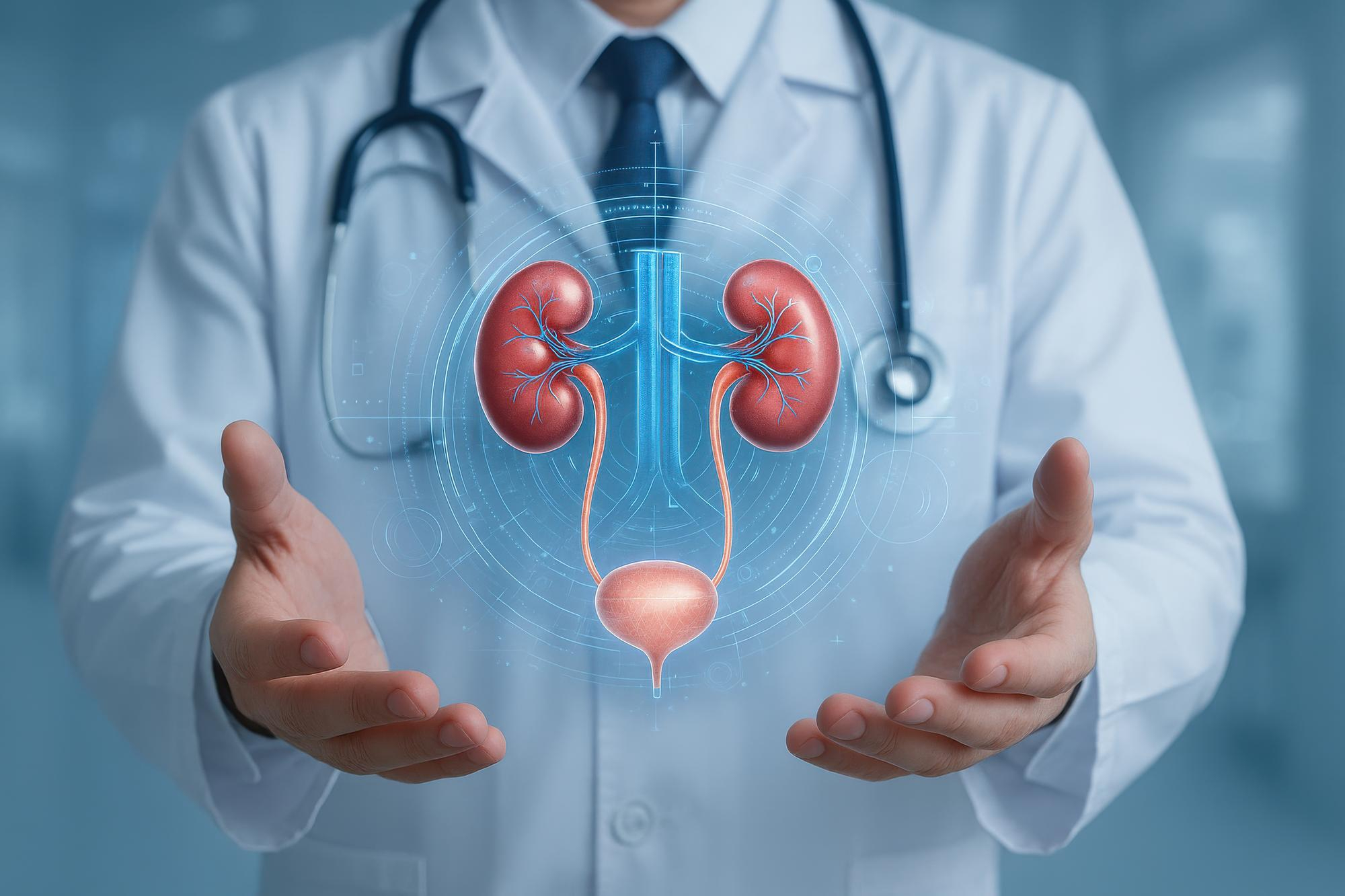
The Uro-Oncology Department at Yashoda Medicity is dedicated to the prevention, diagnosis, and advanced treatment of cancers affecting the urinary system and male reproductive organs. Our specialists work across disciplines to provide holistic and personalized care, addressing cancers of the kidney, bladder, prostate, testis, adrenal glands, and ureters.
With expertise in both minimally invasive and complex open surgeries, supported by robotic and laparoscopic technology, we focus on delivering maximum tumor clearance while preserving function, continence, and quality of life. Our multidisciplinary tumor board ensures that each patient receives a treatment plan tailored to their condition and overall health.
We manage a wide spectrum of urological cancers, including:
We offer comprehensive treatment modalities, blending advanced surgery with systemic and supportive therapies:

A 4-year-old male child with congenital Pelvi-Ureteric Junction (PUJ) Obstruction underwent Robot-Assisted Pyeloplasty at Yashoda Medicity. The child had an excellent postoperative recovery and was discharged on postoperative day 2.
Robotic surgery offers superior precision and control, providing a significant advantage not only in cancer surgeries but also in pediatric minimally invasive procedures.
The benefits of robotic surgery over conventional techniques include smaller incisions, minimal intraoperative blood loss, enhanced surgical precision and dissection, reduced postoperative pain, and faster recovery and discharge.
The Department of Urology at Yashoda Medicity is committed to providing the highest standard of care to every patient, with special expertise in Robotic Surgery, Reconstructive Urology, Uro-Oncology, Stone Diseases, and Renal Transplant Surgeries.
Treatment By:
Dr. Vaibhav Saxena
The Department of Urology at Yashoda Medicity, Indirapuram, headed by Dr. Vaibhav Saxena, a pioneer in Robotic Urological Surgeries, has successfully performed a wide range of robotic procedures in both Urology and Uro-Oncology. Patients from across India have been successfully treated for various cancers and other urological conditions.
Among his recent notable cases was a Robotic Radical Cystectomy with Pelvic Lymph Node Dissection and Intracorporeal Urinary Diversion, performed on a patient who had travelled from Mathura for treatment. The patient had previously received neoadjuvant chemoradiation but developed a recurrence in the urinary bladder. Curative robotic surgery was deemed the best option. The patient underwent a successful procedure and was discharged on the fifth postoperative day.
Treatment By:
Dr. Vaibhav Saxena
It was a very good experience, I had a cholecystectomy. All the doctors including surgeon, anesthetic, nursing and housekeeping staff were very supportive. I was admitted for 24 hours. Quick and very fast recovery. Under Dr P.K.Dewan, sir is very humble and nice.
All experience good, patient treatment was good, satisfied with all the services, nursing staff and doctors team also good and cooperative.
I had an excellent experience at Yashoda Hospital for my mother’s Total Knee Replacement Surgery.
From a clinical perspective, Dr. Amit Sharma and his team were outstanding. Their expertise and professionalism were evident throughout the process, and they did a fantastic job with the surgery and post-operative care.
Beyond the medical treatment, the administrative side was equally impressive. Mr. Varun took complete charge of the Insurance (TPA) and admission process, ensuring everything was seamless and stress-free for our family. His coordination made a significant difference in our overall experience.
We are truly grateful to the entire team for their dedication and care. Highly recommended!
Mr. Ajeet Kumar Verma from Yashoda Homecare provided satisfactory service of sample collection. Well behaved, humble & polite person
I had really good experience with Yashoda Home Care, the sample collection was very hygienically taken and pain-free, hassle-free. Mr. Ajeet was the phlebotomist.
Had a good experience with Ajeet Kumar Verma from Yashoda Home Care who supported me while I was looking for someone to dress my mom’s stitches. He is very professional and a caring person.
Great support and service by the Home care department. Everyone from Ms Niharika, Mr. Anoop to all the attendants including Mr. Natwar Pandey, Mr Inam and Mr. Ajit, all have been superbly supportive and helpful throughout. God bless you all and highly recommended.
Very good services in home care Yashoda hospital his ish
Caretaker Deepanshu and Jatin and Satish is very good caretaker I have never seen better care takers in my life.
And he is very polite behaviour and friend in nature
Yashoda Super Specialty Hospitals Kaushambi service is very good according other hospital and other home care services
The home care facility provided by the hospital is also good, the staff which was at home was cooperative.
Home care services are Good. Mr. सुनील Sajwan was cooperative and the केयर taker Mrs. Shushila's वर्क has been quite satisfactory.
Had a. Very good experience with Yashoda Homecare, Kaushambi. The staff was very cooperative with excellent on time services. I would like to give a special mention to Mr Sunil Sajwan (Sales) and Sushila ji (PCA) for their quick response and excellent services.
Fully satisfied Mr .Ajeet Kumar Verma service Yashoda home care . vry good
Was great to recieve the best homecare services from yashoda hospital and really impressed with Ms. Niharika's support at the initial phase followed by Mr. Natwar Pandey who was really supportive in taking care of my father basic daily needs.
Thanks for all the support

 Call: +91 9266610101