Dr. Pradeep K. Dewan
Vice Chairman and Head
Minimal Access, Robotic & Bariatric Surgery
Dr. P.K. Sinha
Associate Director
General Surgery (Minimal Access, Robotic & Bariatric Surgery)
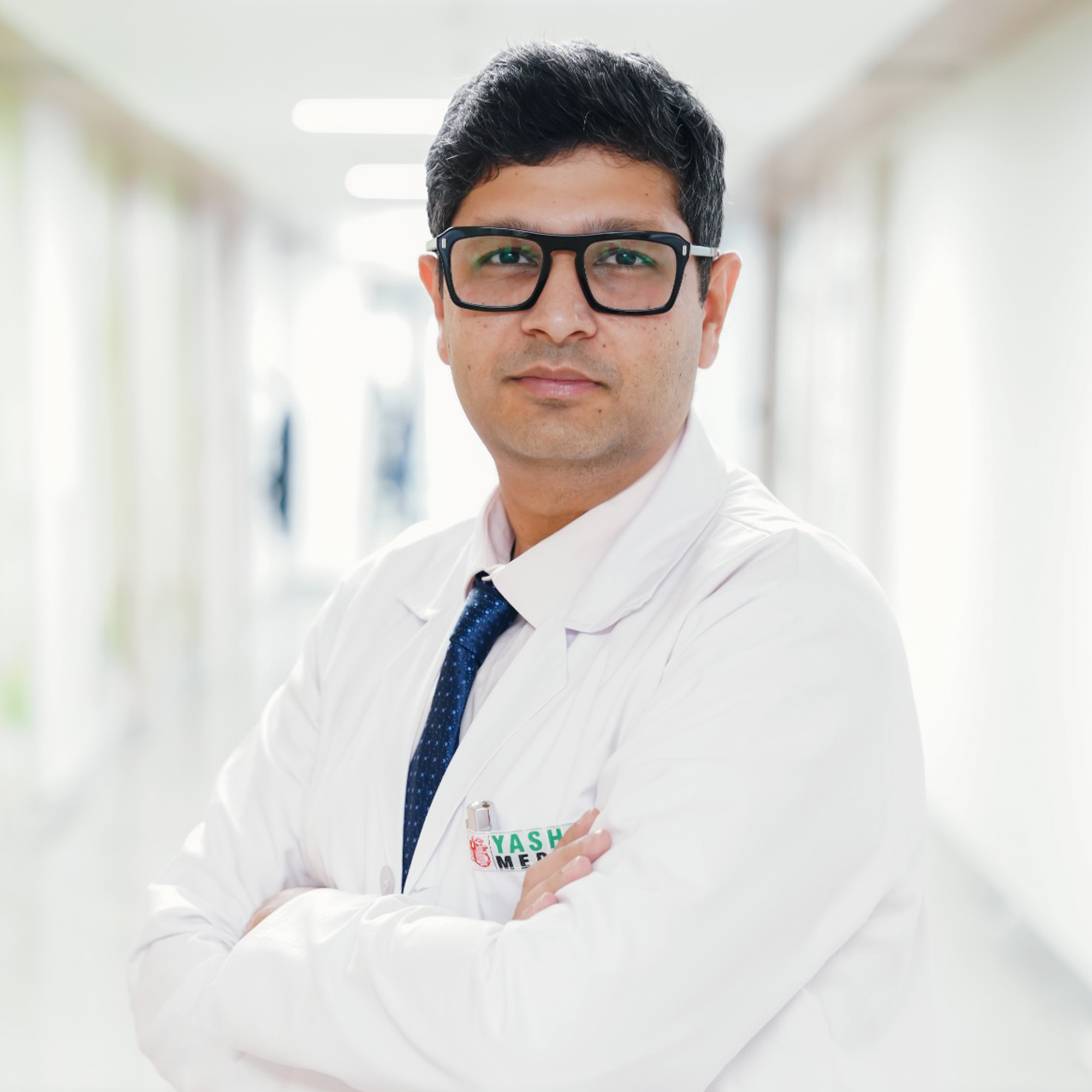
Dr. Abhimanyu Dewan
Senior Consultant
Department of Minimal Access, Bariatric & Robotic Surgery
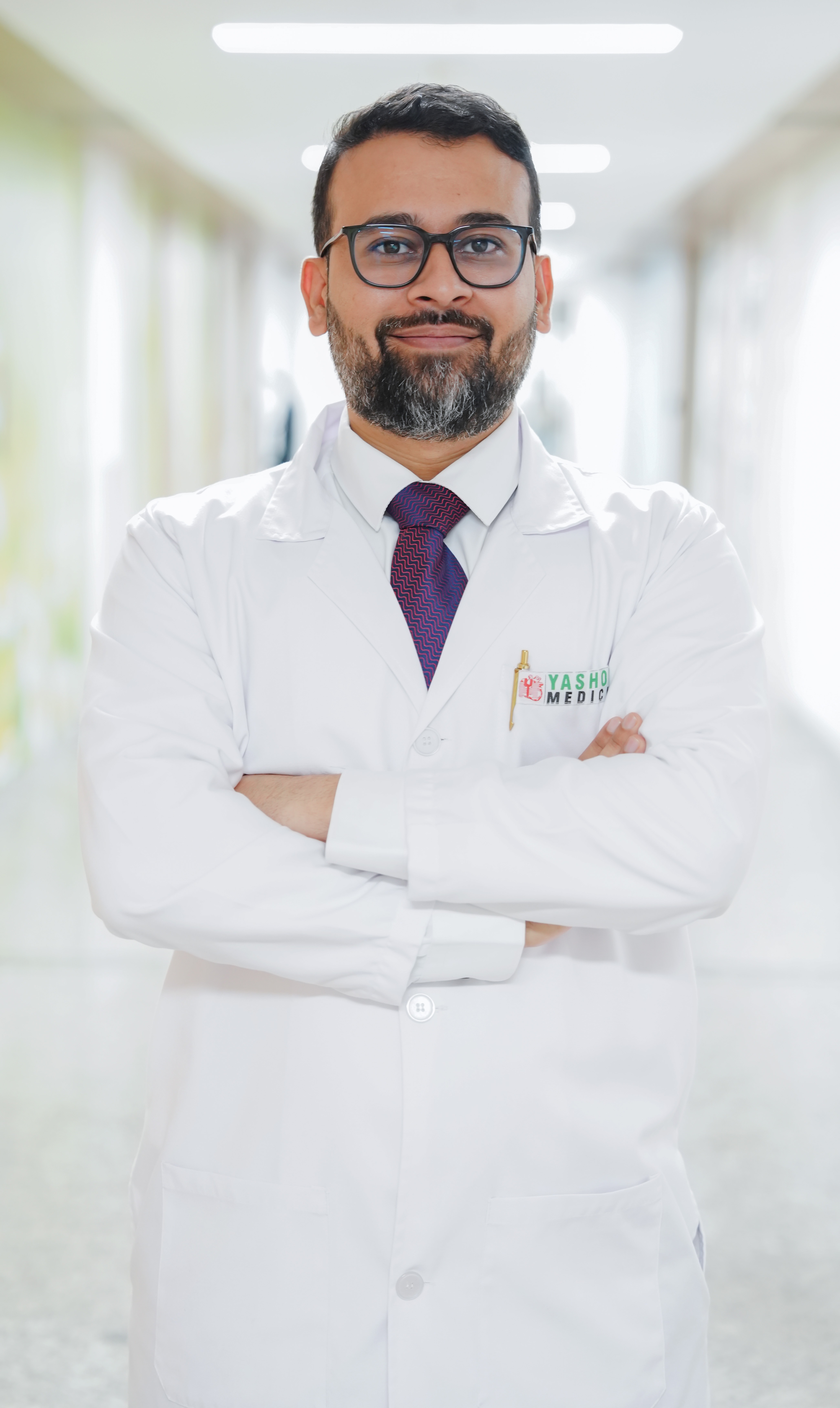
Dr. Ismail Khan
Consultant
Minimal Access, Bariatric & Robotic Surgery
Robotic surgery hospital in Kaushambi
Surgical care has evolved significantly over the years, with technology now playing an important role in improving precision and supporting better clinical outcomes. Robotic-assisted surgery is one such advancement that is increasingly being used in selected surgical procedures across multiple specialities. Robotic surgery does not replace the surgeon. The surgeon remains in complete control throughout every procedure. The robotic system enhances surgical capability by providing a magnified, high-definition view of the operative field, reducing tremor, and enabling access to anatomical areas that may be difficult to reach with conventional laparoscopic instruments.
Robotic surgery is associated with potential benefits such as smaller incisions, reduced blood loss, lower infection risk, less postoperative pain, and in many cases, shorter hospital stays and faster recovery. These outcomes may vary depending on the procedure and the patient’s clinical condition.
Robotic Systems for Modern Surgical Care in Kaushambi
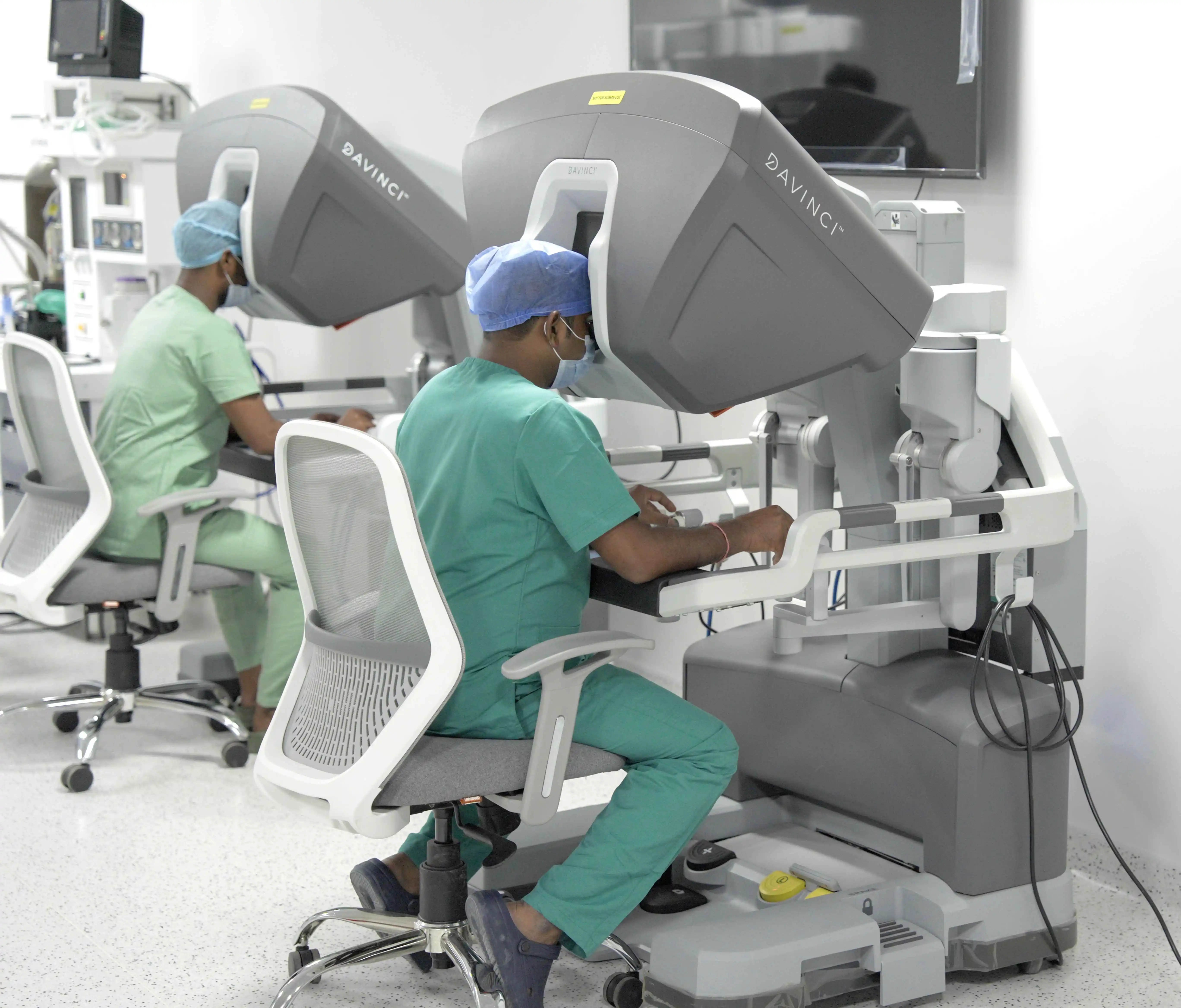
Da Vinci Xi Robotic Surgical System
The Da Vinci Xi is a robotic platform designed for soft tissue surgery. It is widely used in urology, gynaecology, general surgery, gastrointestinal and colorectal surgery, and selected thoracic procedures, where precision, dexterity, and high-definition 3D visualisation in confined anatomical spaces are key surgical requirements.
Features
The system's EndoWrist instruments replicate the full range of motion of the human wrist at the robotic surgery hospital in Kaushambi, but with greater articulation and stability than any manual technique can provide inside the body. The operative view is high-definition, three-dimensional, and magnified, thereby giving the surgeon depth perception and anatomical clarity that standard laparoscopy cannot match. Tremor filtration eliminates even subtle physiological hand movements, ensuring smooth, controlled dissection throughout the procedure.
Departments
In urology, the da Vinci Xi is used for radical prostatectomy, partial and radical nephrectomy, and reconstructive urinary tract surgery which procedures where nerve preservation and millimetric precision directly affect functional outcomes.
In gynaecology, it is used for complex hysterectomy, myomectomy, endometriosis excision, and pelvic reconstructive procedures, particularly where adhesions or difficult anatomy make conventional laparoscopy inadequate.
In general and gastrointestinal surgery, it handles rectal cancer resections, colorectal anastomosis, and hepatobiliary procedures, where confined spaces make the robotic approach clinically superior.
The result across all these applications is consistent, which may include reduced surgical trauma, fewer complications, and faster functional recovery compared to open or standard laparoscopic alternatives.
Mako SmartRobotics
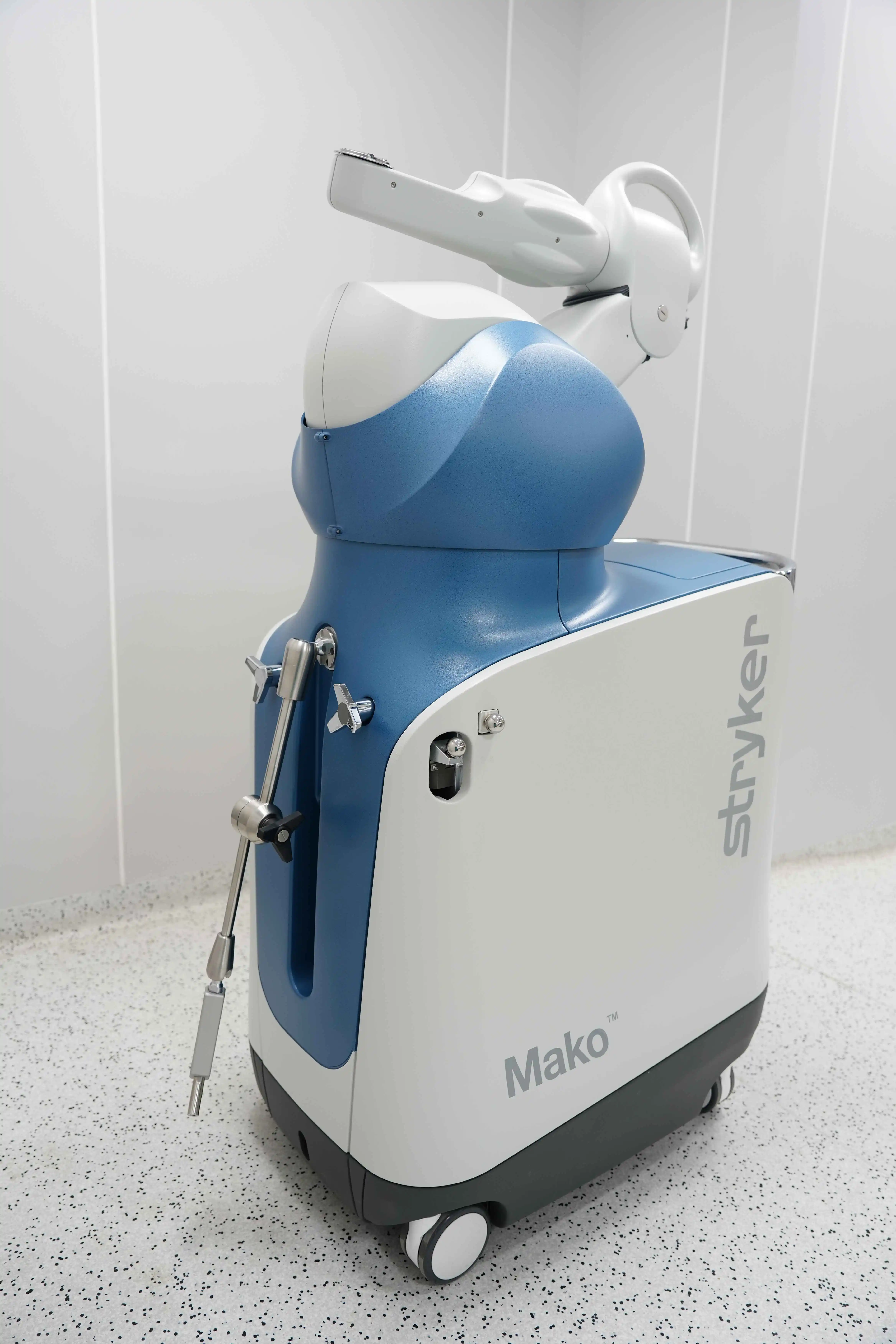
Mako is a different kind of robotic system at the robotic surgery hospital in Kaushambi. It is designed specifically for joint replacement, which is for total and partial knee arthroplasty and total hip replacement. Its clinical value lies in a level of implant positioning accuracy that manual surgical technique, however experienced, cannot consistently achieve.
Feature
Before surgery, the system uses high-resolution CT imaging to create a patient-specific three-dimensional model of the joint. The surgical team uses this model to plan the procedure virtually, defining implant size, positioning, and the precise amount of bone to be resected. When surgery begins, a robotic arm with haptic guidance executes that plan with sub-millimetric accuracy.
The AccuStop technology is central to what makes Mako different. It provides real-time haptic feedback and physically restricts the surgical instrument within predefined boundaries for protecting healthy bone and soft tissue from inadvertent damage during resection. The system also allows intraoperative adjustments for ligament balancing and alignment correction as the procedure progresses.
For patients, this translates into better joint biomechanics, reduced post-operative pain, faster rehabilitation, and longer implant survival. For younger/more active patients in particular where implant longevity over decades matters considerably for the ones looking for a minimally invasive surgery centre in Kaushambi, the Mako-assisted replacement represents a meaningfully better long-term outcome than conventional techniques.
Medtronic O-Arm Surgical Imaging System
The O-arm addresses a different surgical challenge entirely. In complex spinal and neurosurgical procedures, the primary risk is implant malpositioning which can be a misplaced pedicle screw, an incorrectly positioned fixation device, a structural error that is only discovered after the wound is closed. The O-arm eliminates that risk at the robotic surgery hospital in Kaushambi by providing real-time intraoperative imaging throughout the procedure.
Feature
The system delivers two-dimensional and three-dimensional imaging during surgery itself, integrating with navigation platforms to track instruments and guide placement with high precision. The surgeon can verify implant positioning before leaving the operating theatre — reducing the risk of revision surgery and the complications that come with it.
It is used for spinal instrumentation procedures including pedicle screw placement, spinal fixation, and deformity correction surgeries such as scoliosis and kyphosis correction. It supports spine trauma cases where fracture stabilisation requires precise implant positioning, spinal tumour resections, decompression surgeries, and revision spine cases where previous implants or altered anatomy increase complexity.
In selected neurosurgical procedures, it provides image-guided precision in deep or high-risk anatomical regions where the margin for error is narrow.
Conditions and Procedures Treated With Robotic Surgery
The surgical techniques at Yashoda Medicity, being the robotic surgery hospital in Kaushambi, are applied across a broad range of conditions and specialities:
- Prostate Cancer: Robotic Radical Prostatectomy
- Kidney Cancer: Robotic Partial and Radical Nephrectomy
- Uterine Fibroids: Robotic Myomectomy
- Endometriosis: Robotic Excision Surgery
- Complex Hysterectomy: Robotic Approach
- Colorectal and Rectal Cancer: Robotic Resection
- Hepatobiliary Conditions: Robotic Procedures
- Knee Replacement: Mako-Assisted Total and Partial Arthroplasty
- Hip Replacement: Mako-Assisted Total Hip Arthroplasty
- Spinal Instrumentation: O-arm Guided Pedicle Screw Placement
- Spinal Deformity Correction: Scoliosis and Kyphosis
- Spine Trauma: O-arm Guided Fracture Stabilisation
- Spinal Tumour Resection: Image-Guided Navigation
When to Ask About Advanced Robotic Treatment in Kaushambi
Not every procedure requires or benefits from a robotic approach. But for the right cases, the clinical advantages are real and consistent. You should ask your surgeon specifically about robotic options if you are facing any of the following:
- A prostate, kidney, or urological procedure where nerve preservation is a priority
- A gynaecological procedure involving fibroids, endometriosis, or complex pelvic anatomy
- A colorectal or GI procedure in a confined anatomical region
- A knee or hip replacement, particularly if you are younger or more physically active
- A spinal procedure involving instrumentation, deformity correction, or revision surgery
- Any procedure where you want to minimise recovery time and return to normal activity as quickly as possible
The surgical team at Yashoda Medicity will assess whether a robotic approach is appropriate for your specific case.
Why Choose Yashoda Medicity for Robotic Surgery in Kaushambi?
- Three distinct robotic platforms, one hospital. Da Vinci Xi for soft tissue surgery, Mako for joint replacement, and O-arm for spinal and neurosurgical navigation; this breadth of robotic capability is not standard across hospitals in Kaushambi or the broader NCR.
- Multi-speciality robotic surgery under one roof. Urology, gynaecology, orthopaedics, general surgery, colorectal surgery, spine, and neurosurgery all use robotic systems here. Patients across specialities can access robotic approaches without being referred to a different facility.
- Precision that manual technique cannot replicate. Sub-millimetric implant positioning with Mako, tremor-free dissection with da Vinci Xi, and real-time intraoperative imaging with O-arm, each system at the robotic surgery hospital in Kaushambi addresses the specific precision requirements of its surgical context in a way that conventional approaches cannot consistently match.
- Faster recovery, less disruption. Smaller incisions, reduced blood loss, lower infection risk, and shorter hospital stays are consistent outcomes across robotic procedures. For patients managing work and family commitments in Kaushambi, that difference is practically significant.
- Robotic surgery available locally. Access to this level of robotic surgical infrastructure has historically required travelling to a major Delhi centre. At Yashoda Medicity, it is available in Kaushambi.
Book Your Appointment Today
Robotic surgery is no more the future of surgical care but is the present. For Kaushambi residents, it is available now at Yashoda Medicity.
For patients facing a surgical procedure where precision, recovery time, and long-term outcomes matter, asking about robotic options is a reasonable and increasingly important part of the conversation with your surgeon.
Book a consultation today: 9266610101
 Call: +91 9266610101