Dr. Pradeep K. Dewan
Vice Chairman and Head
Minimal Access, Robotic & Bariatric Surgery
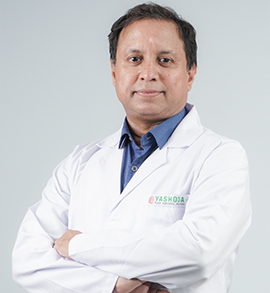
Dr. P.K. Sinha
Associate Director
General Surgery (Minimal Access, Robotic & Bariatric Surgery)
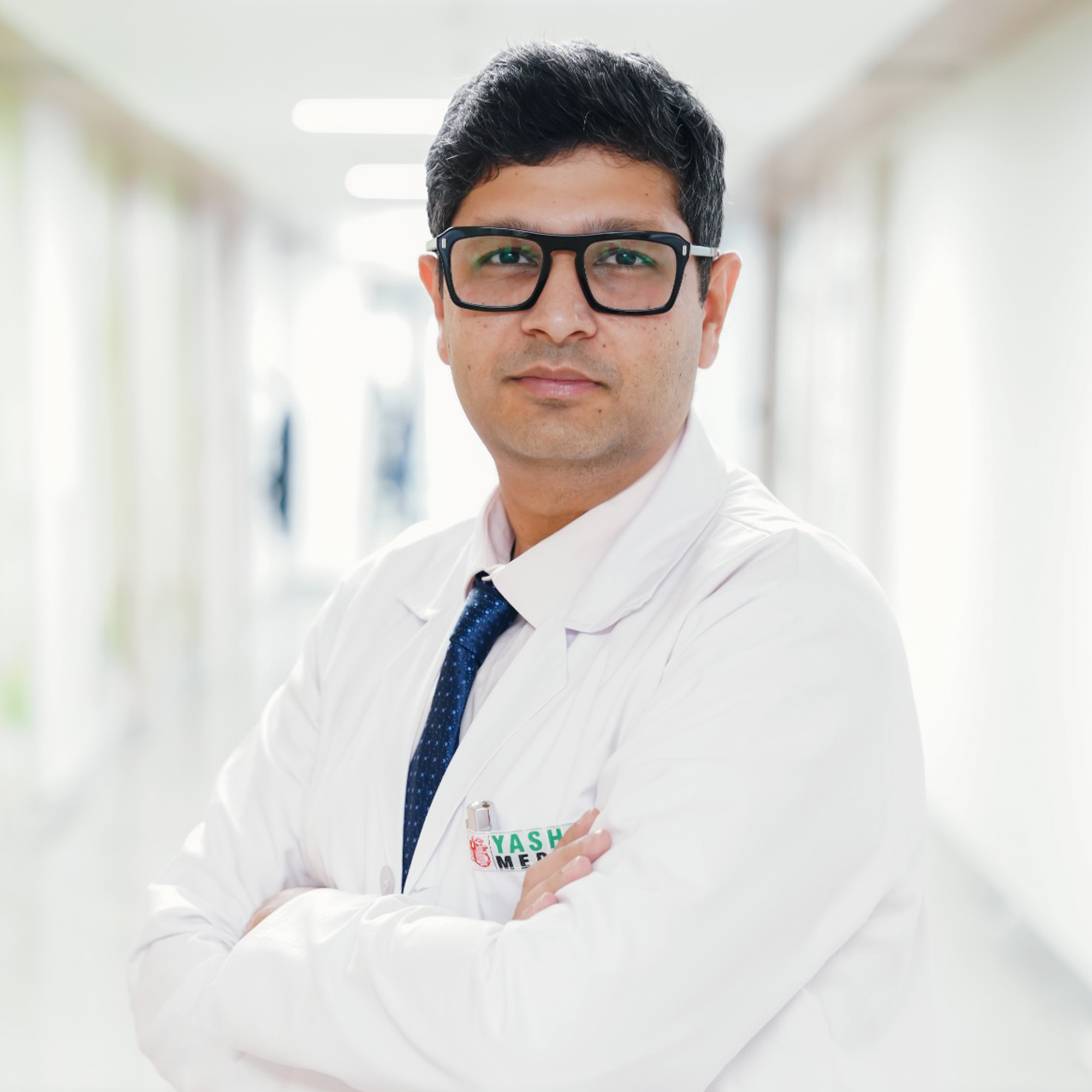
Dr. Abhimanyu Dewan
Senior Consultant
Department of Minimal Access, Bariatric & Robotic Surgery
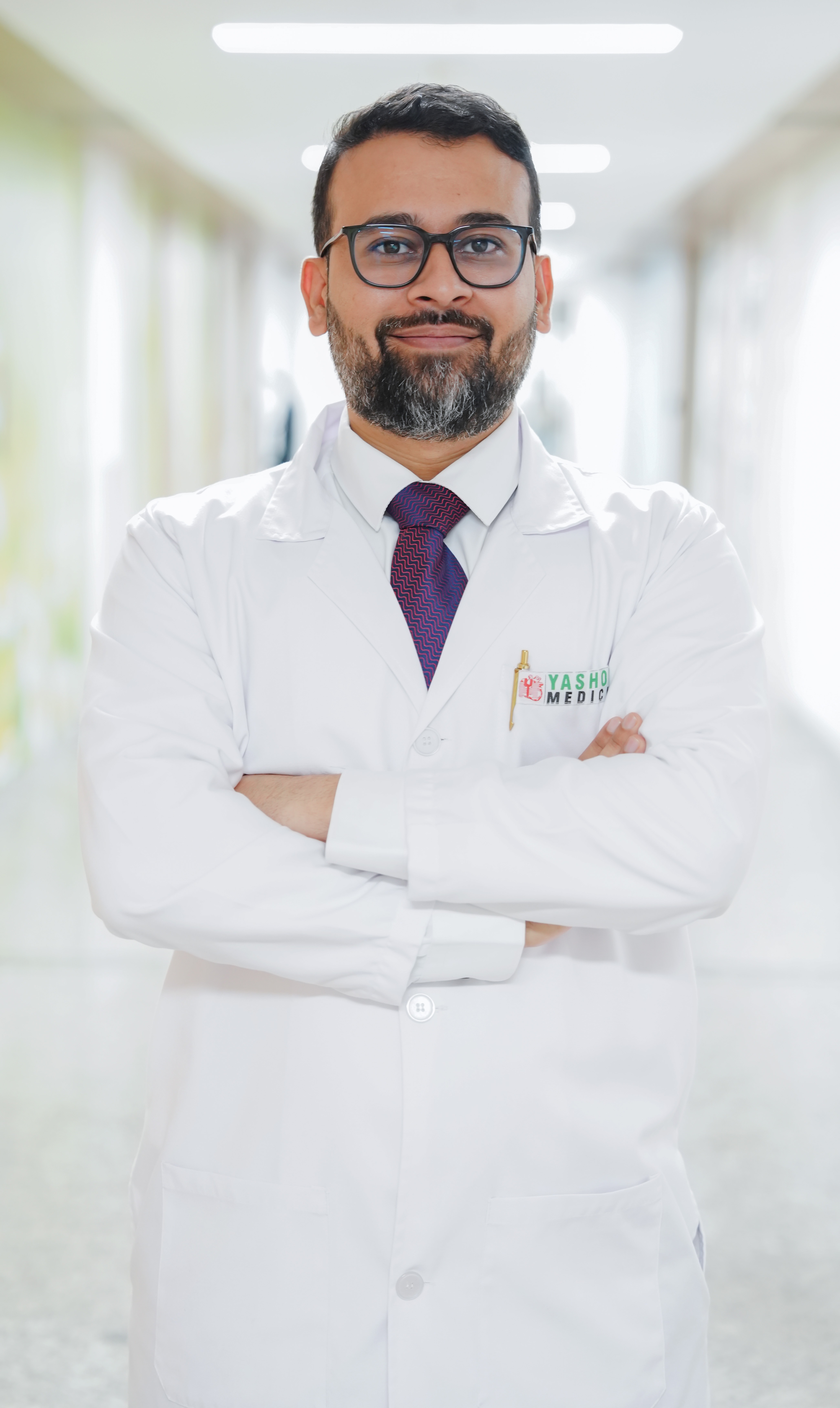
Dr. Ismail Khan
Consultant
Minimal Access, Bariatric & Robotic Surgery
Laparoscopic Surgery Hospital in Kaushambi
Open surgery, involving a large incision, direct access to the surgical site, and weeks of recovery, was the standard for most general surgical procedures until relatively recently. Laparoscopic surgery changed that by replacing the large incision with two or three small ports, a camera, and purpose-built instruments. The same procedure, the same surgical objective, achieved with a fraction of the physical disruption to the body. Less pain, lower infection risk, shorter hospital stay, and a faster return to normal activity are consistent outcomes across procedures, not the exception in particularly straightforward cases.
What separates laparoscopic surgery done well from laparoscopic surgery done adequately is the quality of what the surgical team can see. At Yashoda Medicity, the Yashoda Institute of Minimal Access, Robotic and Bariatric Surgery performs laparoscopic procedures using advanced imaging technologies that provide a level of visualisation significantly beyond what standard laparoscopic equipment offers.
Conditions We Treat
The team of the laparoscopic surgery hospital in Kaushambi manages a wide range of conditions, including:
- Gallstones and Gallbladder Disease
- Appendicitis, including Stump Appendicitis
- Inguinal, Femoral, Umbilical, and Incisional Hernias
- Complex and Recurrent Hernias
- Hiatus Hernia and Gastro-Oesophageal Reflux
- Achalasia and Oesophageal Motility Disorders
- Hydatid Cyst of the Liver
- Pseudocyst of the Pancreas
- Rectal Prolapse
- Colorectal Conditions Suitable for Laparoscopic Resection
- Benign Abdominal Masses and Cysts
- Adhesiolysis for Bowel Obstruction
- Acute and Chronic Bowel Obstruction
- Perforated Peptic Ulcer
- Diagnostic Laparoscopy for Unclear Abdominal Pain
- Selected Liver Cysts and Lesions
When to Consult Best Laparoscopic Surgeon in Kaushambi
Many abdominal surgical conditions are referred late because patients either manage symptoms for longer than they should or assume that surgery means a large incision and prolonged recovery. Neither assumption is accurate for the conditions managed laparoscopically at Yashoda Medicity.
Book a consultation if you are experiencing any of the following:
- Persistent upper right abdominal pain, particularly after fatty meals, that has been attributed to gallstones
- A bulge in the groin, abdomen, or umbilicus that appears on standing or straining
- Recurring abdominal pain that has not been adequately investigated
- Difficulty swallowing or persistent reflux that has not responded to medication
- A previous hernia repair that has recurred or is causing discomfort
- An abdominal condition where surgery has been recommended and you want to understand whether a laparoscopic approach is possible
- A second opinion on a surgical recommendation involving open abdominal surgery
Advanced Treatment at the Laparoscopic Surgery Hospital in Kaushambi
Laparoscopic Cholecystectomy
Gallbladder removal is one of the most commonly performed laparoscopic procedures, and at Yashoda Medicity it is performed using ICG fluorescence guidance as standard. ICG fluorescence illuminates the biliary anatomy in real time before any dissection begins, clearly delineating the cystic duct and common bile duct while significantly reducing the risk of bile duct injury, one of the most serious complications of gallbladder surgery. Patients are typically discharged the same day or within twenty-four hours and return to normal activity within a week.
Laparoscopic Hernia Repair
Inguinal, femoral, umbilical, incisional, and complex recurrent hernias are repaired laparoscopically using advanced mesh strategies tailored to the specific hernia anatomy. Laparoscopic hernia repair allows the mesh to be placed in the pre-peritoneal space through small ports, resulting in lower post-operative pain, faster recovery, and lower recurrence rates for selected hernia types compared to open repair. For complex and recurrent hernias, where previous surgery has altered tissue planes, the enhanced visualisation provided by 3D and 4K imaging is particularly valuable.
Laparoscopic Appendicectomy
Appendicectomy is performed laparoscopically as the standard approach, including for complicated appendicitis and stump appendicitis where the anatomy may be more challenging than a straightforward case. Keyhole access reduces the risk of wound infection, particularly in inflamed or perforated cases, and supports a faster recovery than open appendicectomy.
Diagnostic Laparoscopy
Diagnostic laparoscopy is used when abdominal pain or suspected internal disease needs direct visual assessment. It helps identify the cause of symptoms quickly and can often be combined with treatment in the same sitting.
Laparoscopic Anti-Reflux Surgery
Patients with severe reflux or hiatus hernia may benefit from laparoscopic anti-reflux surgery. This approach helps control symptoms, reduce dependence on long-term medication, and improve quality of life.
Complex Abdominal Surgery Through Keyhole Access
Beyond common day-care procedures, the department of the laparoscopic surgery hospital in Kaushambi performs complex laparoscopic abdominal surgery including hiatus hernia repair, Heller myotomy for achalasia, surgery for hydatid cysts of the liver, pseudocysts of the pancreas, rectal prolapse, and colorectal resections. These are technically demanding procedures where superior visualisation directly influences surgical precision, safety, and outcomes.
Adhesiolysis and Bowel Obstruction
Abdominal adhesions from previous surgery are a common cause of bowel obstruction and chronic abdominal pain. Laparoscopic adhesiolysis releases these adhesions through keyhole access, helping minimise the additional adhesion formation that can occur with open surgery through previously scarred tissue.
Laparoscopic Drainage Procedures
Selected abdominal collections, cysts, and abscesses can be managed laparoscopically when surgery is required. This allows effective treatment with smaller incisions and quicker recovery.
State-of-the-Art Laparoscopic Surgery Facilities
High-Definition 3D and 4K Laparoscopic Imaging Towers: Standard laparoscopy uses two-dimensional imaging, which removes the depth perception surgeons rely on during open surgery. Three-dimensional imaging restores that depth perception through the laparoscope, allowing the surgical team to judge distances, tissue planes, and instrument positioning with significantly greater accuracy. Four-K resolution adds a level of image detail that standard high-definition imaging cannot provide, making subtle tissue plane identification and precise dissection more reliable, particularly in complex anatomy.
ICG Fluorescence Guidance: Indocyanine Green fluorescence is injected intravenously before the relevant stage of surgery and illuminates specific structures under near-infrared light, making bile ducts, blood vessels, and tissue perfusion visible in real time during the procedure. In cholecystectomy, this clearly delineates biliary anatomy before any cutting begins. In bowel surgery, it confirms adequate blood supply to an anastomosis before the bowel is joined. In hernia laparoscopy in Kaushambi and other abdominal procedures, it helps support safer dissection around important vascular structures.
Dedicated Day-Care Surgical Unit: Most laparoscopic procedures at Yashoda Medicity are completed as day-care or short-stay admissions. Patients arrive, undergo their procedure, recover under observation, and return home the same day or within twenty-four hours, with follow-up arranged within the week. For working adults in Kaushambi managing busy schedules, this recovery timeline is practically significant.
Emergency Laparoscopic Capability: The department provides twenty-four-hour emergency surgical cover, with laparoscopic approaches used even in emergency settings where the clinical situation allows. Emergency appendicectomy, selected cases of perforated viscus, and acute bowel obstruction are managed laparoscopically wherever clinically feasible, even outside standard operating hours.
Patient Journey at the Keyhole Surgery Centre in Kaushambi
- Initial Consultation: The surgeon reviews symptoms, prior investigations, and imaging to confirm the diagnosis and determine whether a laparoscopic approach is appropriate.
- Pre-Operative Assessment: Blood tests, anaesthetic review, and any additional imaging are completed. For day-care procedures, pre-operative fasting instructions and admission arrangements are provided.
- Surgery: The procedure is performed laparoscopically using 3D or 4K imaging and ICG fluorescence guidance where indicated. Most procedures are completed within one to two hours.
- Recovery: Patients are monitored in the recovery area at the laparoscopic surgery hospital in Kaushambi until they safely meet discharge criteria. Day-care patients return home the same day with written post-operative instructions and a contact number for any concerns.
- Follow-Up: A review appointment is scheduled within one to two weeks to assess wound healing, confirm recovery, and address any post-operative concerns.
Why Choose Yashoda Medicity for Laparoscopic Surgery in Kaushambi?
- 3D and 4K imaging as standard. The visualisation quality provided by these systems goes beyond standard laparoscopic imaging, supporting more precise dissection and reducing the risk of inadvertent injury in complex anatomy.
- ICG fluorescence for safer dissection. Real-time illumination of bile ducts, blood vessels, and tissue perfusion adds an intraoperative safety layer that standard white-light laparoscopy cannot provide, particularly relevant in cholecystectomy and bowel surgery.
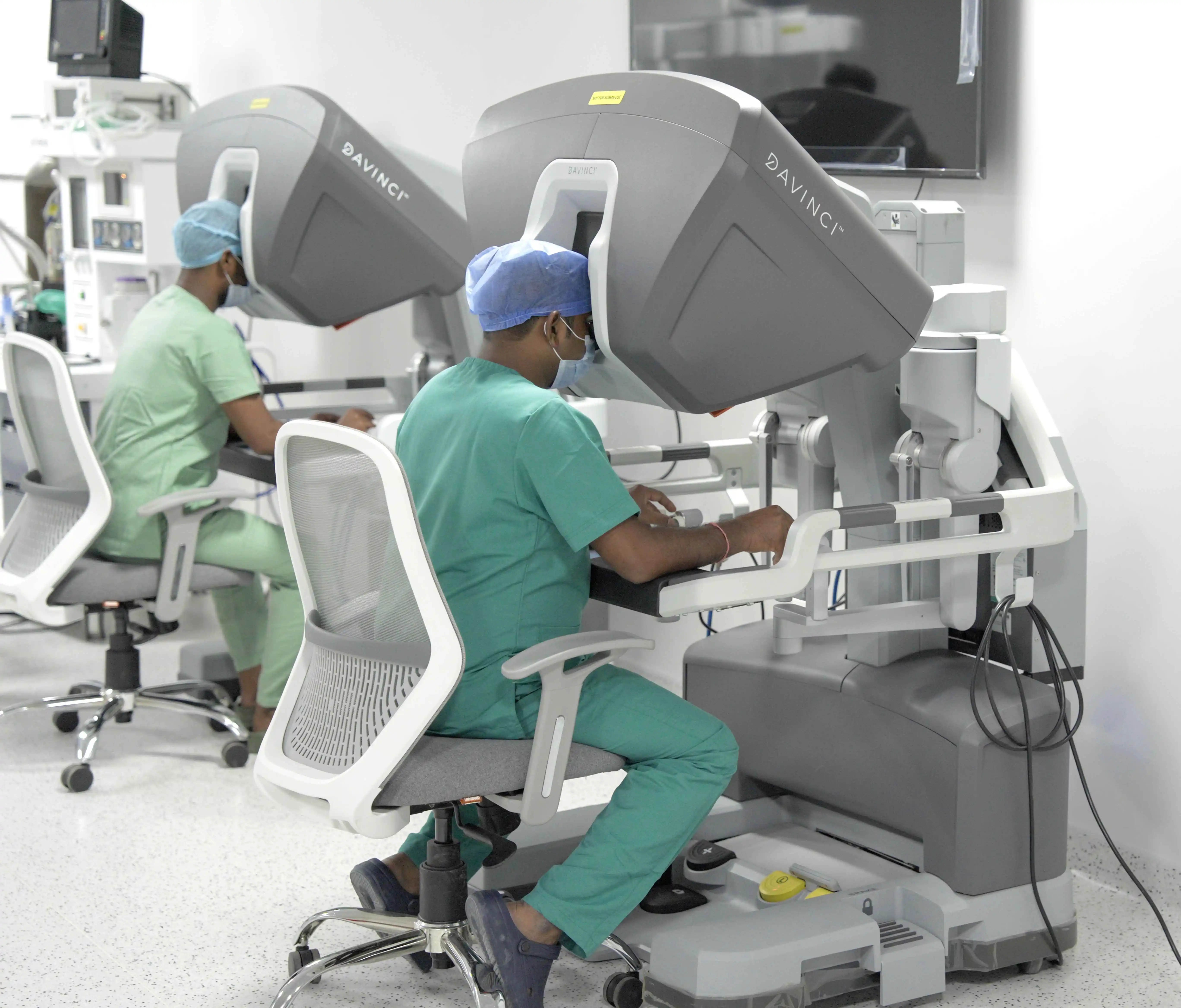
- Da Vinci Xi robotic surgical system. For selected complex procedures, robotic assistance provides enhanced dexterity, tremor filtration, and improved access in confined anatomical spaces, complementing minimally invasive surgery and supporting precise dissection.
- Day-care surgery for most procedures. Gallbladder surgery, hernia repair, and appendicectomy are typically completed as day-care procedures, minimising disruption to daily life and working schedules.
- Complex abdominal surgery laparoscopically. The department's capability extends well beyond common day-care procedures to complex abdominal surgery through keyhole access, supported by the imaging technology and surgical experience required to manage these cases safely.
- Emergency cover around the clock. Laparoscopic emergency surgery is available at all hours, not limited to planned operating lists.
Make an Appointment Today!
Laparoscopic surgery is not simply open surgery through smaller holes. The imaging technology, instruments, and surgical techniques are different, and at the level Yashoda Medicity operates, they contribute to a safety profile and surgical precision that go beyond standard laparoscopy.
The Laparoscopic Surgery Department at Yashoda Medicity, Kaushambi provides that level of minimally invasive surgical care, from common day-care procedures through to complex abdominal surgery, available locally for patients across the region.
Call us today: 9266610101
 Call: +91 9266610101