Dr. Pradeep K. Dewan
Vice Chairman and Head
Minimal Access, Robotic & Bariatric Surgery
Dr. P.K. Sinha
Associate Director
General Surgery (Minimal Access, Robotic & Bariatric Surgery)

Dr. Abhimanyu Dewan
Senior Consultant
Department of Minimal Access, Bariatric & Robotic Surgery

Dr. Ismail Khan
Consultant
Minimal Access, Bariatric & Robotic Surgery
Bariatric Surgery Hospital in Kaushambi
Bariatric surgery is still widely misunderstood. For many people, it is seen as a surgical shortcut for those who have not tried hard enough with diet and exercise. That perception is not just unfair; it is clinically inaccurate.
Obesity is a chronic, progressive disease with a well-documented biological basis. For patients with significant obesity, particularly those managing type 2 diabetes, hypertension, obstructive sleep apnoea, or fatty liver disease alongside it, bariatric surgery is not a last resort. It is the most effective treatment available, with outcomes that no medication or lifestyle programme can consistently replicate at the same level of severity.
The Yashoda Institute of Minimal Access, Robotic and Bariatric Surgery at Yashoda Medicity provides advanced technology and comprehensive post-procedure support.
Conditions We Treat
The team at the bariatric surgery hospital in Kaushambi manages a wide range of conditions, including but not limited to:
- Obesity with a Body Mass Index above 40
- Obesity with a Body Mass Index above 35, alongside significant comorbidities
- Type 2 diabetes with obesity
- Hypertension with obesity
- Obstructive sleep apnoea with obesity
- Non-alcoholic fatty liver disease with obesity
- Dyslipidaemia with obesity
- Obesity-related joint disease
- Metabolic syndrome
- Previous failed non-surgical weight management
- Gastroesophageal reflux disease (GERD) with obesity
- Infertility related to obesity
- Polycystic ovary syndrome (PCOS) with obesity
- Cardiovascular risk conditions associated with obesity
- Severe obesity impacting mobility and daily functioning
When to Consult a Bariatric Surgeon in Kaushambi
Bariatric surgery is not appropriate for everyone with obesity, and the decision to proceed requires a thorough assessment of multiple factors, not a single measurement. At the same time, many patients who would genuinely benefit from surgical intervention delay the conversation for years due to hesitation or the belief that they should manage without it.
A bariatric surgery consultation is worth considering if any of the following apply:
- Body mass index is above 40, or above 35 with a significant comorbidity such as diabetes, hypertension, or sleep apnoea
- Non-surgical weight management, including structured diet programmes and medication, has not produced or sustained adequate results
- Type 2 diabetes is poorly controlled despite medication and lifestyle modification
- Obesity-related conditions are progressing despite the best medical management
- Quality of life is significantly affected by weight-related physical limitations
- A previous bariatric procedure has not produced the expected outcome and revision surgery is being considered
Advanced Treatment at the Bariatric Surgery Hospital in Kaushambi
Gastric Bypass
Roux-en-Y gastric bypass creates a small stomach pouch and reroutes the digestive tract so that food bypasses most of the stomach and the upper small intestine. This produces both restriction, a smaller stomach capacity, and malabsorption, reduced calorie absorption from food passing through a shorter section of small bowel.
Sleeve Gastrectomy in Kaushambi
Sleeve gastrectomy removes a part of the stomach, leaving a narrow, sleeve-shaped tube. As a result, the stomach's capacity is reduced significantly thereby limiting food intake and producing early satiety. Beyond the mechanical restriction, sleeve gastrectomy alters the hormonal environment of the gut for reducing levels of ghrelin which is the hunger hormone.
Robotic Bariatric Surgery
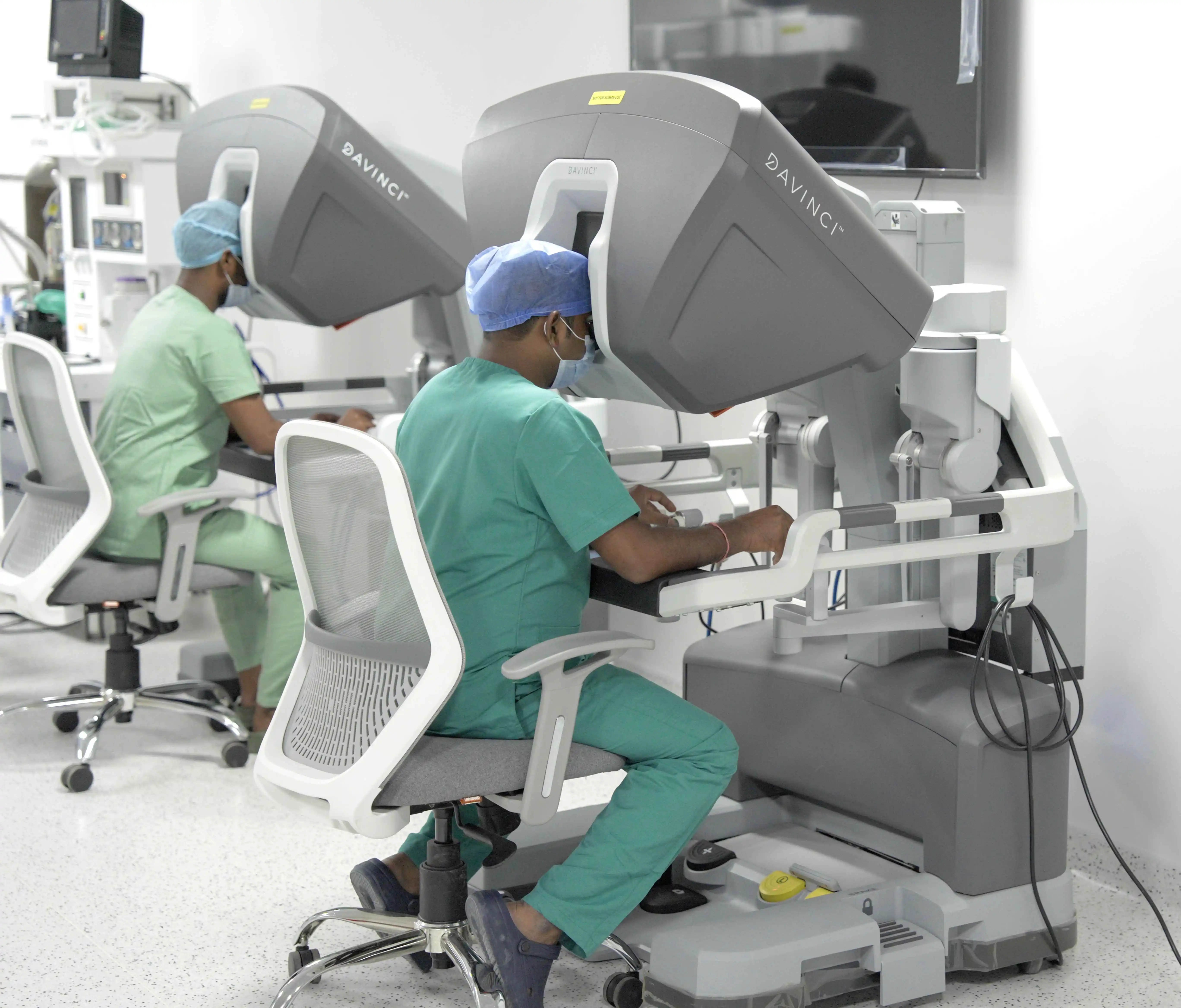
For complex bariatric cases, including patients with previous abdominal surgery, significant intra-abdominal adhesions, or anatomical factors that make standard laparoscopic technique more demanding, robotic-assisted bariatric surgery provides enhanced visualisation and instrument precision within the confined operative space. The da Vinci Xi system's three-dimensional operative view and EndoWrist instrumentation allow the surgical team to work with greater accuracy in challenging anatomy at the bariatric surgery hospital in Kaushambi.
Endoscopic Bariatric Procedures
Endoscopic options such as gastric balloon placement offer a non-surgical, temporary weight-loss approach for selected patients. These procedures reduce stomach volume without incisions and are often used for patients who are not candidates for surgery or as a bridge to definitive bariatric treatment.
Revision Bariatric Surgery
For patients with inadequate weight loss, weight regain, or complications from previous bariatric surgery, revision procedures correct or modify prior anatomy. These surgeries are more complex due to adhesions and altered structures, requiring advanced surgical expertise and careful planning based on individual anatomy and metabolic needs.
The Multidisciplinary Bariatric Programme
Pre-Operative Assessment and Prehabilitation
Bariatric surgery does not begin on the day of the operation. The pre-operative phase includes medical assessment, nutritional evaluation, psychological assessment, and a structured prehabilitation programme that prepares the patient physically and psychologically for surgery and lifestyle changes. Patients who are nutritionally and psychologically prepared consistently achieve better long-term outcomes.
Nutritional Support
Bariatric surgery permanently alters nutrient absorption. Lifelong nutritional monitoring, supplementation, and dietary guidance are clinical requirements, not optional additions to weight loss surgery in Kaushambi. The nutritional team manages this from pre-operative care through long-term follow-up.
Psychological Support
Weight and eating behaviour are influenced by psychological factors that surgery alone cannot address. Pre-surgical psychological assessment identifies risks affecting adherence, while ongoing counselling supports long-term adjustment.
Long-Term Follow-Up
The bariatric surgery hospital in Kaushambi provides structured follow-up tracking weight, metabolic markers, nutritional status, and quality of life for years after surgery. Bariatric surgery is not complete at discharge. Long-term monitoring ensures metabolic benefits are sustained, and complications are managed early.
State-of-the-Art Bariatric Surgery Facilities
Advanced Laparoscopic and Robotic Platforms
Bariatric procedures at Yashoda Medicity are performed using high-definition laparoscopic systems and, for complex cases, the da Vinci Xi robotic platform. Both provide the visualisation quality and instrument precision required for safe bariatric surgery in a confined abdominal space, with robotic assistance reserved for cases where it offers a genuine clinical advantage over standard laparoscopic technique.
Dedicated Bariatric Operating Infrastructure
Operating theatre equipment, anaesthetic protocols, and post-operative monitoring systems are adapted for bariatric patients, accounting for the specific physiological considerations of operating on patients with significant obesity, including airway management, positioning, and cardiovascular monitoring requirements.
Bariatric ICU and Critical Care Support
A dedicated critical care setup is available for high-risk bariatric patients, ensuring close monitoring in the immediate post-operative phase. This includes advanced ventilatory support, invasive monitoring capabilities, and rapid response systems for early complication management.
Enhanced Recovery After Surgery (ERAS) Protocols
Standardised ERAS pathways are implemented to support early mobilisation, pain control, and faster recovery. These protocols reduce hospital stay, minimise complications, and improve overall post-surgical outcomes through structured, evidence-based recovery steps.
Advanced Anaesthesia and Airway Management Support
Specialised anaesthesia protocols are designed for patients with obesity, including difficult airway management systems, fibre-optic intubation support, and tailored drug dosing strategies to ensure safe peri-operative care.
Multidisciplinary Team
Bariatric surgeons, physicians, dietician, psychologist, and specialist nursing staff work within a coordinated programme rather than as separate referrals the patient must navigate independently. This integration ensures seamless care across pre-operative, surgical, and long-term follow-up phases.
Patient Journey at the Bariatric Surgery Hospital in Kaushambi
- Initial Consultation: The bariatric surgeon reviews the patient’s weight history, comorbidities, prior weight management attempts, and overall clinical picture to assess surgical candidacy and determine the most appropriate procedure.
- Multidisciplinary Assessment: Physician, dietician, and psychologist assessments are completed alongside relevant investigations, including blood tests, imaging, and endoscopy where indicated at the obesity surgery centre in Kaushambi.
- Prehabilitation: A structured pre-operative programme covering nutritional optimisation, physical preparation, and psychological readiness is completed before surgery is scheduled.
- Surgery: Sleeve gastrectomy, gastric bypass, or robotic-assisted bariatric surgery is performed according to the agreed plan. Most patients are discharged within two to three days.
- Post-Operative Nutritional Transition: Dietary stages are followed in sequence after surgery, transitioning from fluids to a modified solid diet over several weeks, with dietician guidance throughout.
- Long-Term Follow-Up: Regular reviews at defined intervals track metabolic outcomes, nutritional status, weight trajectory, and psychological adjustment, with the programme remaining actively involved for years after surgery.
Why Choose Yashoda Medicity for Bariatric Surgery in Kaushambi?
- Surgery positioned as metabolic treatment, not weight management alone. The programme’s clinical objectives include diabetes remission, cardiovascular risk reduction, and metabolic improvement alongside weight loss, reflecting the evidence base rather than a narrow focus on the scale.
- Robotic capability for complex cases. Patients with previous abdominal surgery, significant adhesions, or anatomical complexity have access to robotic-assisted technique that reduces operative risk in these more demanding cases.
- A programme, not just a procedure. Prehabilitation, nutritional support, psychological care, and long-term follow-up are built into the programme from the outset, not arranged separately after the surgical episode.
- Multidisciplinary integration. Surgeon, physician, dietician, and psychologist work within the same programme, ensuring coordinated care across all phases.
- Long-term follow-up that takes metabolic outcomes seriously. Nutritional monitoring, metabolic marker review, and psychological support continue for years after surgery, because long-term outcomes depend as much on post-operative care as on the procedure itself.
Book Your Appointment Today
Bariatric surgery is one of the most evidence-supported interventions in medicine for significant obesity and its metabolic consequences. Understanding it as a clinical treatment rather than a lifestyle intervention is the starting point for a genuinely honest conversation about whether it is the right option for an individual patient.
The Yashoda Institute of Minimal Access, Robotic and Bariatric Surgery at Yashoda Medicity, Kaushambi provides all the required resources.
Call us today: 9266610101
 Call: +91 9266610101