Radiation Oncology Hospital in Greater Noida
When people think about the radiation oncology hospital in Ghaziabad, they often imagine broad radiation beams, major side effects, and damage to large areas of healthy tissue. However, modern radiation oncology has evolved into a highly precise and technology-driven speciality focused on accuracy, safety, and personalised treatment.
Today, tumours can be targeted with sub-millimetre precision, treatment plans can be modified during the course of therapy as the body changes, and certain brain metastases can even be treated without surgery in a single session. Advanced imaging systems also allow doctors to monitor tumour position in real time while radiation is being delivered.
At Yashoda Medicity, the Department of Radiation Oncology combines advanced radiation platforms, real-time imaging, adaptive treatment planning, and multidisciplinary cancer care to deliver highly precise radiation therapy for a wide range of cancers.
Conditions We Treat
The radiation therapy centre in Ghaziabad manages a broad range of cancers using advanced radiation techniques tailored to tumour type, location, and stage.
These include:
- Brain and Spinal Cord Tumours
- Head and Neck Cancers
- Breast Cancer
- Lung Cancer
- Prostate Cancer
- Cervical and Gynaecological Cancers
- Liver and Hepatobiliary Cancers
- Pancreatic Cancer
- Colorectal Cancer
- Paediatric Malignancies Requiring Radiation
When to Consult a Radiation Oncology Hospital in Ghaziabad
Radiation therapy is not only used in advanced cancer care. In many cancers, it serves as a primary curative treatment, while in others it forms an essential part of combined treatment alongside surgery, chemotherapy, or targeted therapy.
You should consult a radiation oncologist if:
- A cancer diagnosis has been confirmed, and radiation therapy has been recommended
- Surgery has been completed, and adjuvant radiation is advised to reduce recurrence risk
- A tumour board or treating oncologist has suggested radiation as part of combined treatment
- A second opinion regarding radiation treatment planning is being sought
- A brain, spine, or surgically difficult tumour is being evaluated for radiosurgery
- Cancer has spread to the brain, spine, or bones and radiation is being considered for symptom control
- A previously treated cancer has recurred and radiation is being evaluated as a treatment option
The timing and sequencing of radiation therapy often directly influence treatment outcomes, making specialist evaluation an important part of cancer management.
Advanced Radiotherapy in Ghaziabad
Intensity Modulated Radiation Therapy and Image Guided Radiation Therapy
Intensity Modulated Radiation Therapy (IMRT) allows radiation beams to conform closely to the shape of the tumour. This enables doctors to deliver a higher radiation dose to cancer cells while reducing exposure to nearby healthy tissues.
To further improve treatment precision, Image Guided Radiation Therapy (IGRT) uses imaging before each session to confirm the exact position of the tumour in real time. Since body position and internal anatomy can change slightly from day to day, this imaging helps maintain treatment accuracy throughout the course of therapy.
Stereotactic Body Radiation Therapy and Stereotactic Radiosurgery
At the radiation oncology hospital in Ghaziabad, stereotactic techniques deliver very high doses of radiation with exceptional precision to small, well-defined tumours.
Unlike conventional radiation treatment, which may require several weeks of therapy, Stereotactic Body Radiation Therapy (SBRT) and Stereotactic Radiosurgery (SRS) are often completed in only a few sessions, and in some cases, a single session.
These techniques are especially useful for brain tumours, brain metastases, spine lesions, and selected lung or liver tumours where precise targeting is critical.
Adaptive Radiation Therapy
During radiation treatment, the body may change due to tumour shrinkage, weight loss, or movement of nearby organs. Adaptive radiation therapy addresses these changes by modifying the treatment plan during the course of therapy.
This means the radiation plan delivered midway through treatment may differ from the original plan created on day one. Updating the treatment plan according to current anatomy improves precision and helps protect healthy tissues.
Adaptive radiation therapy is particularly valuable in cancers involving the head and neck, abdomen, and pelvis, where anatomical changes during treatment are common.
Brachytherapy
Brachytherapy delivers radiation internally by placing radioactive sources within or very close to the tumour.
Because the radiation source is positioned directly at the treatment site, very high doses can be delivered to the tumour while minimising exposure to surrounding healthy structures.
This technique is commonly used for gynaecological cancers including cervical and uterine cancer, selected breast cancers, and certain sarcomas.
Surface Guided Radiation Therapy
Surface Guided Radiation Therapy (SGRT) uses three-dimensional surface scanning technology to continuously monitor patient positioning throughout treatment.
Unlike conventional methods, SGRT does not rely on permanent skin markings or tattoos for alignment. The system can detect even minor body movements in real time and automatically pause treatment if movement exceeds the safe threshold.
This improves treatment accuracy while also enhancing patient comfort.
State-of-the-Art Radiation Technology at Yashoda Medicity
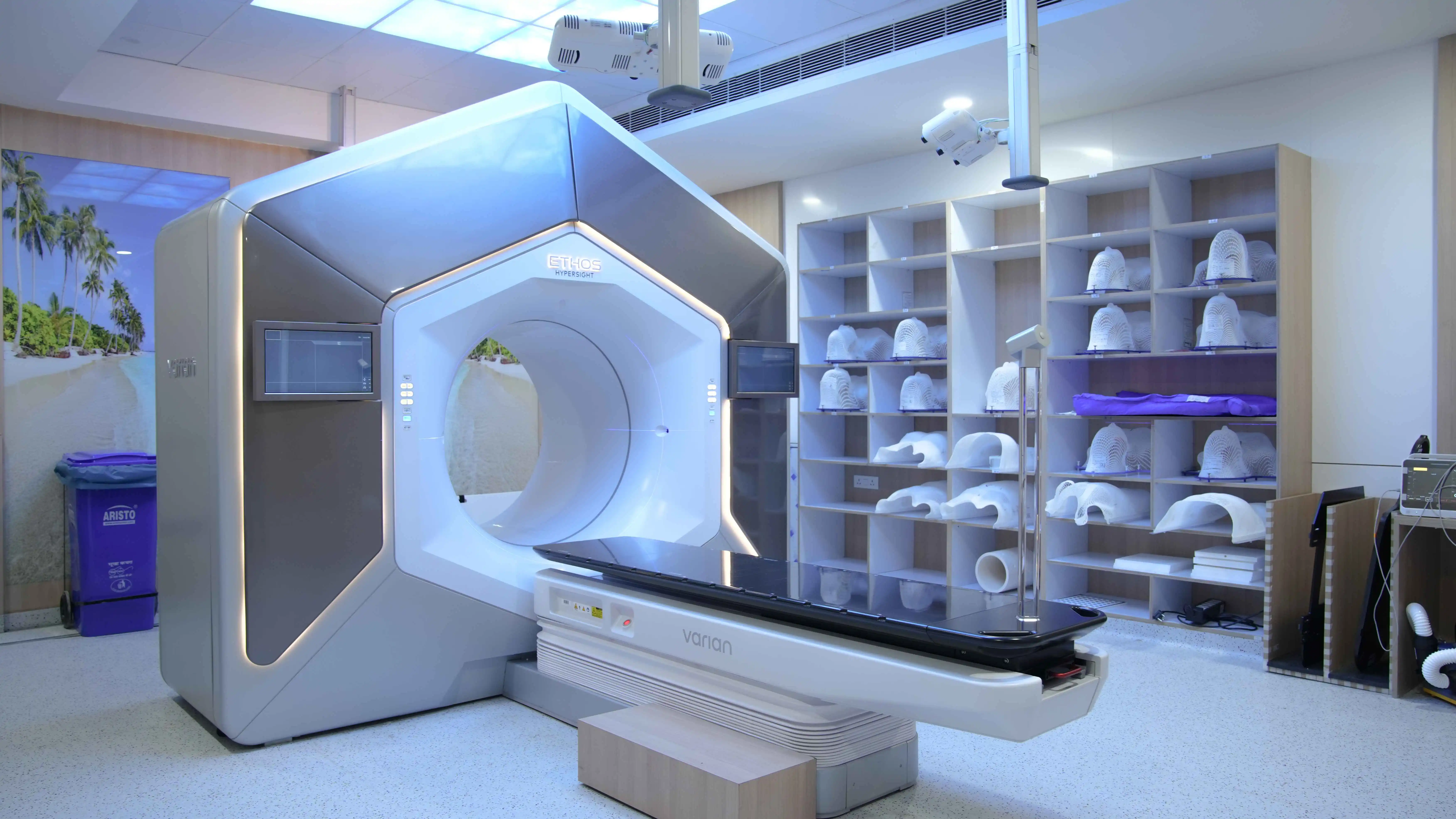
ETHOS with HyperSight and IDENTIFY
ETHOS is an advanced adaptive radiation therapy platform designed to personalise treatment throughout the entire radiation course.
The system continuously adapts treatment according to changes in the patient’s anatomy rather than relying solely on the original treatment plan. This ensures that treatment remains accurate even if the tumour shrinks or body structure changes during therapy.
HyperSight
HyperSight produces high-quality full-field computed tomography images within seconds while using lower radiation doses compared to conventional imaging systems.
Before each treatment session, HyperSight captures updated images of the patient’s anatomy. If the tumour has changed in size, if organs have shifted, or if body contours have altered, the treatment plan can be adjusted immediately before radiation delivery.
IDENTIFY
IDENTIFY is the integrated surface guided radiation therapy platform used with ETHOS. It continuously monitors body position through non-invasive three-dimensional surface scanning without the need for skin tattoos or markers.
Even the smallest positional changes are detected instantly, helping maintain precise treatment delivery throughout the session.
EDGE with HyperArc and ExacTrac Dynamic
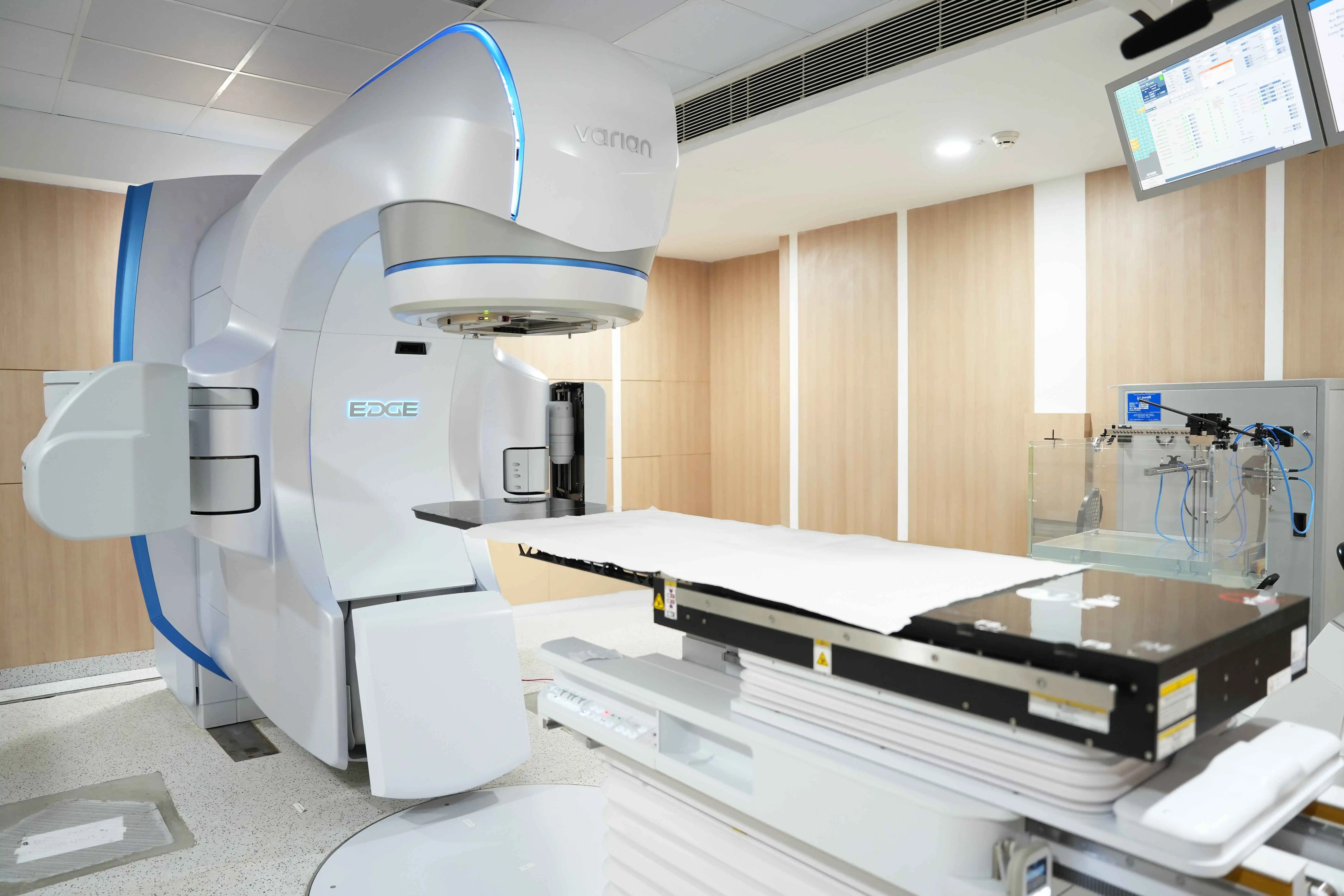
EDGE is a highly advanced radiosurgery system designed for delivering extremely precise, high-dose radiation to tumours located in challenging anatomical areas.
The system is particularly valuable when treatment accuracy must be maintained within fractions of a millimetre.
HyperArc
HyperArc automates stereotactic radiosurgery for brain and upper spine tumours. It allows single or multiple brain metastases to be treated efficiently within a short treatment session.
Highly focused radiation doses at the radiation oncology hospital in Ghaziabad are directed precisely at tumour targets while protecting surrounding healthy brain tissue as much as possible.
ExacTrac Dynamic
ExacTrac Dynamic combines surface-guided monitoring with real-time X-ray imaging to maintain positional accuracy throughout treatment delivery.
This becomes especially important in tumours affected by breathing motion, such as lung and liver cancers. The system continuously tracks movement and adjusts alignment in real time rather than relying only on a pre-treatment position check.
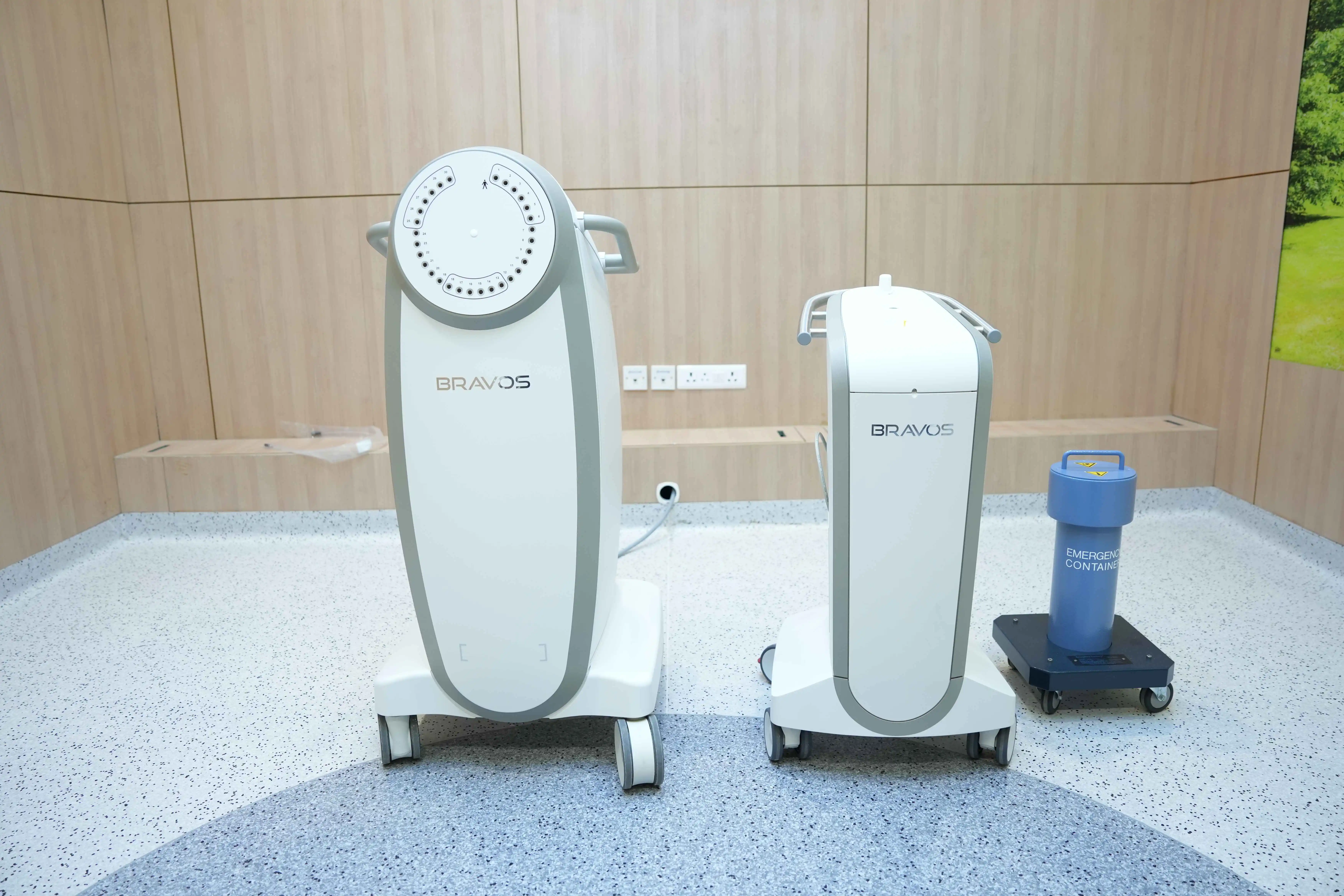
BRAVOS
It is an advanced workflow management platform that improves patient safety, treatment accuracy, and day-to-day efficiency in radiation therapy. The system helps clinical teams follow clear and consistent workflows throughout every stage of treatment.
Custom checklists with configurable e-Signatures support secure verification of important treatment steps. Built-in time-out reviews help ensure all safety protocols are completed before treatment begins, while integrated workflow tracking follows the patient journey from diagnosis to post-treatment review.
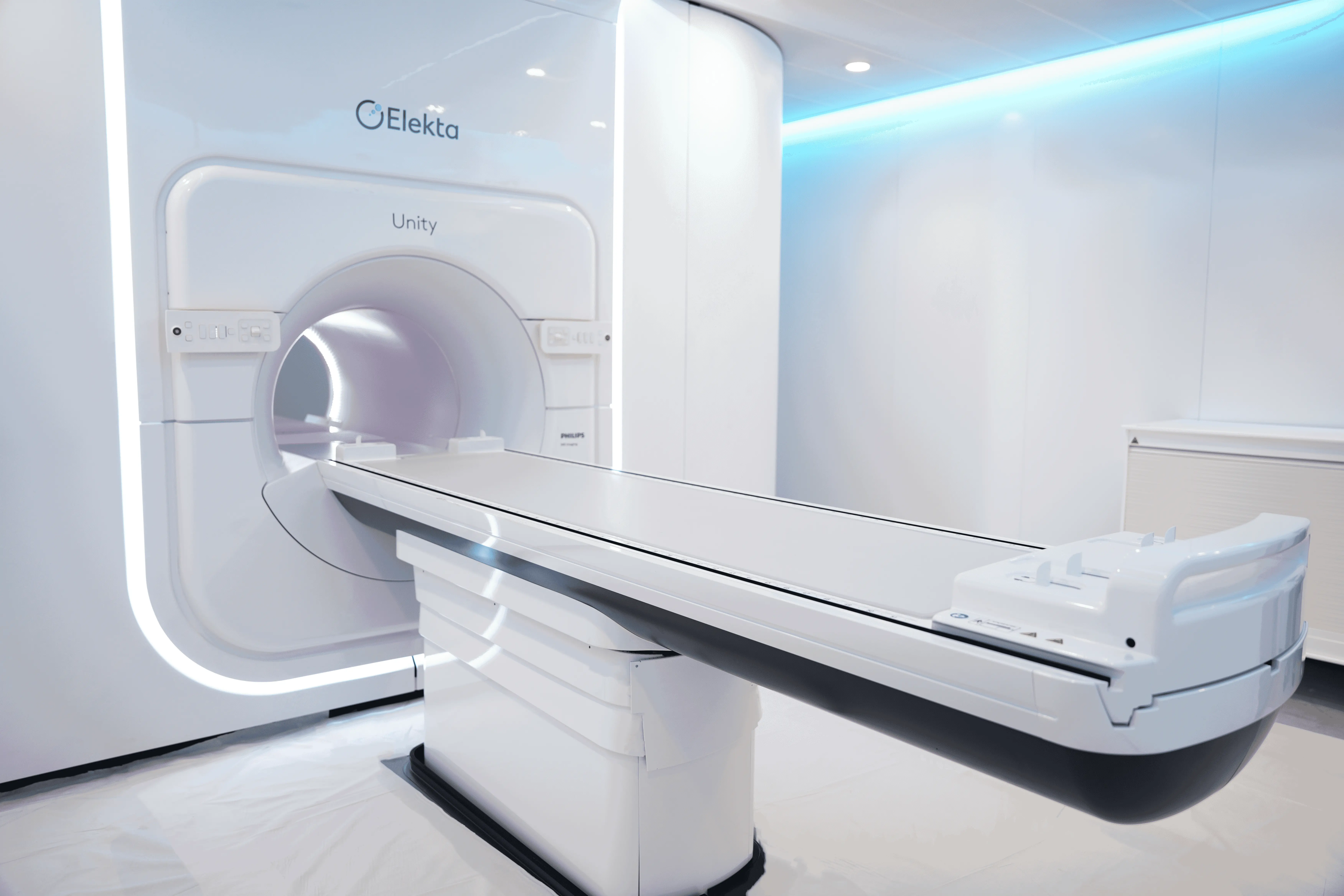
Elekta Unity MR-Linac
The Elekta Unity MR-Linac represents one of the most significant advances in modern radiation oncology. This system combines a high-field 1.5 Tesla Magnetic Resonance Imaging scanner with a linear accelerator, allowing doctors to obtain live high-resolution images of the tumour and surrounding anatomy while radiation is actively being delivered.
Real-time imaging improves treatment precision, especially in cancers where tumour position changes due to breathing or organ motion. The MRI-Linac is particularly valuable for cancers involving the abdomen and pelvis, including pancreatic, liver, prostate, and gynaecological cancers.
Patient Journey at the Radiation Oncology Hospital in Ghaziabad
Consultation and Assessment: The treatment journey begins with a detailed consultation where the radiation oncologist reviews the diagnosis, staging, previous treatments, imaging, and overall health status of the patient.
Treatment Planning: Once evaluation is complete, advanced imaging is used to map the tumour and nearby critical structures in detail. Based on this assessment, the treatment team determines the radiation dose, treatment technique, and number of sessions required.
Treatment Delivery: Radiation therapy is usually delivered as a daily outpatient treatment over a defined number of weeks. For stereotactic treatments such as SBRT or SRS, the total number of sessions is significantly lower. Throughout treatment, patients are closely monitored for response and side effects.
Supportive Care: Nutritional guidance, skin care advice, symptom management, and supportive care services continue throughout the treatment process to help patients tolerate therapy more comfortably.
Follow-Up Care: After treatment completion, imaging studies are performed to assess response. Long-term follow-up helps monitor for recurrence, manage late side effects, and coordinate ongoing care with the broader oncology team.
Why Choose Yashoda Medicity for Cancer Radiation Treatment in Ghaziabad?
- Four advanced radiation platforms, one centre. Elekta Unity MR-Linac, ETHOS with HyperSight and IDENTIFY, EDGE with HyperArc and ExacTrac Dynamic, and BRAVOS together enable adaptive radiation therapy, sub-millimetre radiosurgery, and real-time MRI-guided treatment. The availability of such a wide range of advanced radiation technologies within a single centre is uncommon in India.
- Adaptive radiation as a standard approach. Treatment at Yashoda Medicity is not based on a fixed plan alone. The treatment plan is continuously adapted according to changes in the patient’s anatomy during the course of therapy. ETHOS enables treatment adaptation at every session based on real-time anatomical changes.
- Brain metastases treated without surgery. Advanced radiation techniques can treat one or multiple brain metastases with highly focused radiation delivered in a single session while protecting surrounding healthy brain tissue as much as possible. For patients who are not suitable candidates for surgery, this serves as an effective treatment alternative.
- Radiation therapy within a multidisciplinary cancer programme. Radiation oncology at Yashoda Medicity functions as part of an integrated cancer institute, with tumour board reviews, medical oncology, surgical oncology, and supportive care services available within the same programme.
Book Your Appointment Today
Modern radiation oncology bears little resemblance to conventional radiation therapy from previous decades. Advances in imaging, adaptive planning, and precision radiation delivery have significantly improved treatment accuracy while reducing side effects.
The radiation oncology hospital in Ghaziabad at Yashoda Medicity provides advanced radiation technology, multidisciplinary cancer care, and highly personalised treatment planning for a wide range of cancers.
Consult a radiation oncologist today: 9266610101
 Call: +91 9266610101