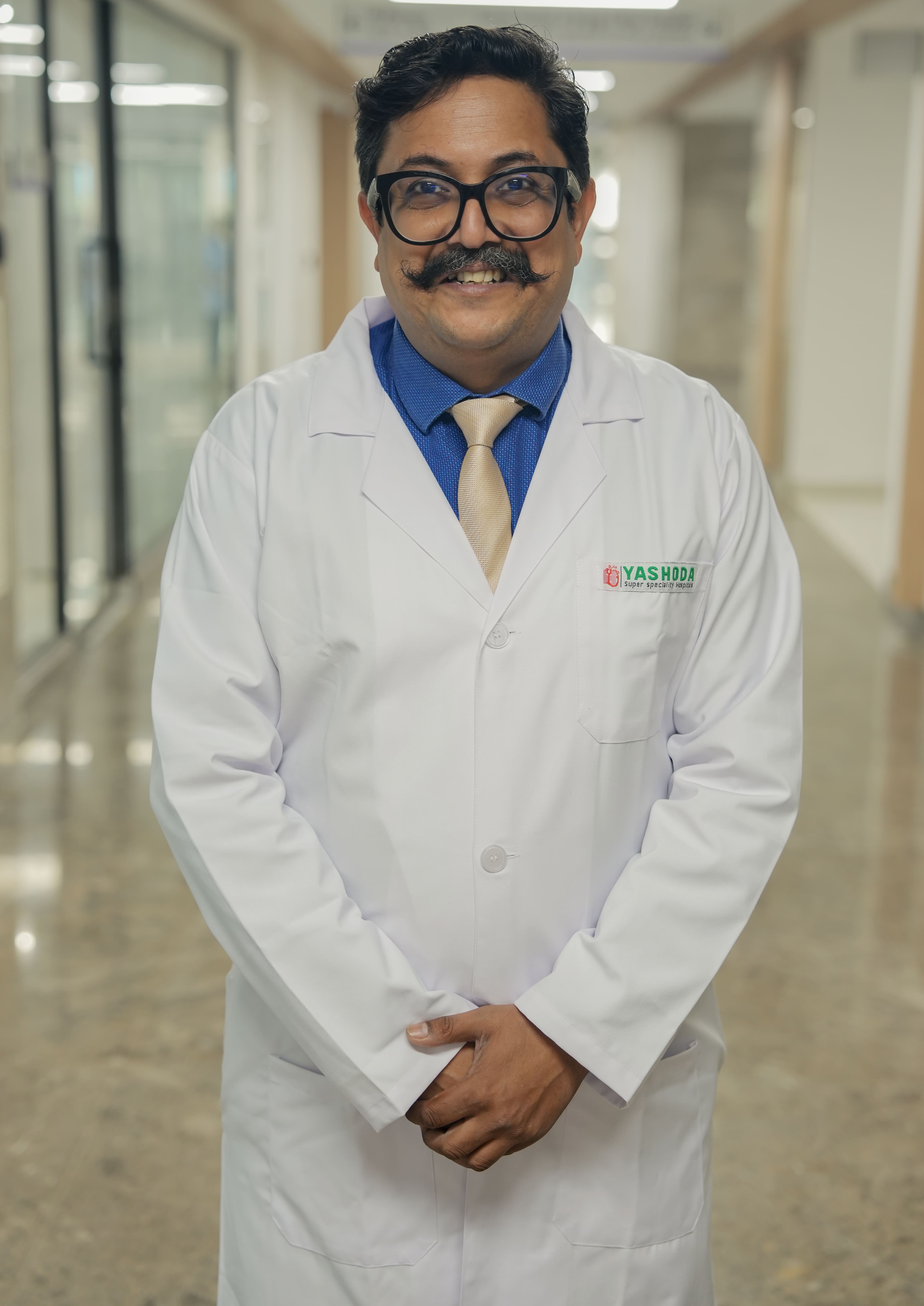
Dr. Vaibhav Saxena
Senior Director: Urology, Uro-Oncology, Robotics & Renal Transplant
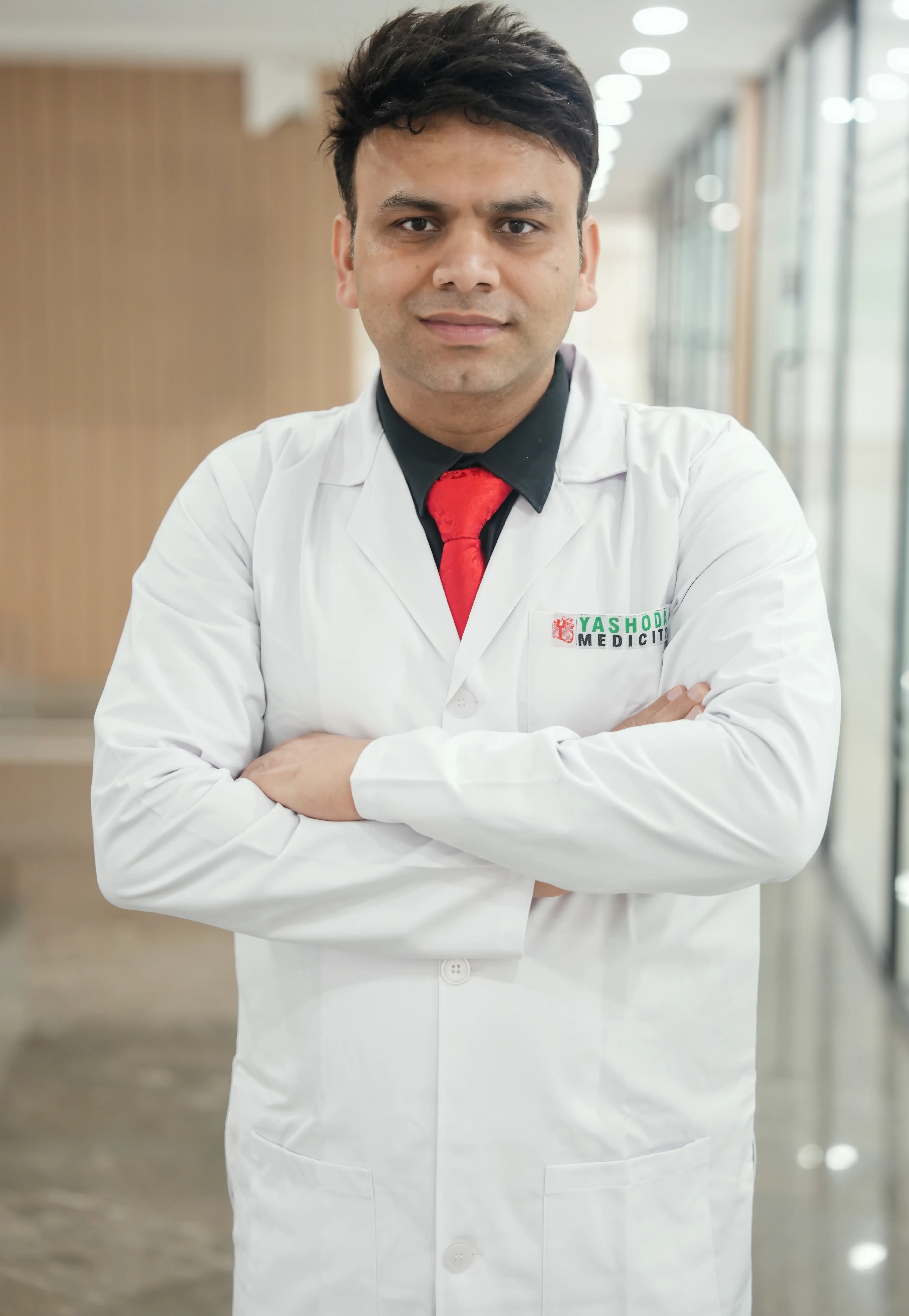
Dr. Kuldeep Aggarwal
Associate Director – Urology, Uro-oncology, Robotics & Renal Transplant
General Urology Hospital in Greater Noida
General urology is the first point of contact whenever an individual requires urological care. It involves the assessment, diagnosis, and management of urological conditions that most adults encounter at some stage in life, handled by specialists who can determine what requires monitoring, what can be managed with medication, and what may need a procedure.
The Urology and Andrology Department at Yashoda Medicity provides accessible, specialist general urology care in Ghaziabad without unnecessary delays or confusion.
Conditions We Treat
The team at the general urology hospital in Ghaziabad manages a wide range of conditions, including:
- Kidney Stones: First Episode and Recurrent
- Urinary Tract Infections: Simple, Recurrent, and Complex
- Benign Prostatic Hyperplasia (BPH)
- Overactive Bladder and Urinary Urgency
- Urinary Incontinence
- Bladder Infections and Cystitis
- Urethral Strictures
- Hydronephrosis
- Blood in the Urine (Haematuria)
- Urodynamic Disorders
- Scrotal Conditions: Varicocele, Epididymal Cysts, Hydrocele
- Recurrent Urinary Tract Infections in Women
- Lower Urinary Tract Symptoms in Men
When to See a General Urology Specialist in Ghaziabad
A general urologist is the right first point of contact for most urological concerns. Book a general urology consultation if you have:
- A urinary tract infection that has recurred more than twice in six months
- A kidney stone that has been identified on imaging, even if it is not currently causing symptoms
- Difficulty urinating
- Frequent urination or an urgent, difficult-to-control need to urinate
- Urinary leakage during coughing, sneezing, exercise, or without warning
- Blood in the urine
- Pain in the flank, lower abdomen, or groin that comes and goes without a clear cause
- A scrotal swelling or lump that has appeared or changed
- Burning or discomfort during urination that has not responded to standard antibiotic treatment
- Lower urinary tract symptoms that have been present for more than a few weeks
Many of these concerns can be managed entirely through outpatient consultation, with investigations, diagnosis, and treatment plans established without hospital admission or surgical intervention. The purpose of seeing a general urologist early is to identify the underlying cause and address it before the condition becomes more complex.
General Urology Hospital in Ghaziabad Services
Kidney Stone Assessment and Management
Kidney stones are extremely common in the National Capital Region, where hard water, hot weather, and inadequate hydration contribute to stone formation. Not all stones require immediate intervention. Small stones often pass spontaneously with adequate fluid intake and pain management. The kidney stone doctor in Ghaziabad assesses stone size, location, composition, and renal function to determine whether watchful waiting, medical expulsive therapy, or active intervention is the most appropriate approach.
Urinary Tract Infection Management
Urinary tract infections are among the most frequent presentations in general urology, particularly recurrent infections in women and infections in men, where the underlying cause is more likely to be structural or prostatic. A single uncomplicated urinary tract infection is usually managed in primary care. However, recurrent infections, infections in men, or infections associated with underlying structural abnormalities require specialist evaluation and targeted treatment.
Benign Prostatic Hyperplasia
Prostate enlargement is present in the majority of men above the age of sixty and is a common cause of lower urinary tract symptoms in the ageing male population. Most cases are managed initially with medication alongside lifestyle modifications, including fluid management and bladder training. Where medication does not achieve adequate symptom control, surgical options, including Transurethral Resection of the Prostate (TURP) and laser prostatectomy, are available within the department.
Bladder Disorders and Overactive Bladder
Overactive bladder, characterised by urinary urgency, frequency, and urgency incontinence, is a common condition that significantly affects quality of life. It is frequently undertreated because many people mistakenly assume it is a normal part of ageing.
Bladder training, pelvic floor physiotherapy, and medication are effective first-line treatments for most patients. The team at the general urology hospital in Ghaziabad assesses bladder function, identifies the type and cause of dysfunction, and recommends a treatment pathway tailored to the individual's needs.
Urodynamic Studies
Urodynamic testing provides objective measurement of how the bladder and urethra function. It is used to diagnose overactive bladder, stress incontinence, bladder outlet obstruction, and neurogenic bladder disorders before treatment is planned. Without urodynamic assessment, treatment may not accurately address the underlying bladder dysfunction.
Haematuria Investigation
Blood in the urine, whether visible or detected during urine testing, requires structured specialist investigation to determine the cause. The Urology and Andrology team manages haematuria evaluation systematically.
The investigation pathway is determined by factors such as age, risk profile, whether the haematuria is visible or microscopic, and associated symptoms. The objective is to identify or rule out significant pathology efficiently and appropriately.
Scrotal and Male Genital Conditions
Varicocele, epididymal cysts, hydrocele, and other scrotal conditions are managed through outpatient assessment and, where required, day-care surgical procedures. Varicocele assessment includes evaluation of its contribution to male infertility, where relevant, with treatment recommended when a significant varicocele is present alongside abnormal semen parameters.
State-of-the-Art General Urology Facilities
Flexible Cystoscopy Suite
Flexible cystoscopy allows direct visualisation of the bladder lining as an outpatient procedure without general anaesthesia in most cases. It is the primary investigation for haematuria, recurrent urinary tract infections, and lower urinary tract symptoms where bladder pathology needs to be excluded. The procedure is completed within the department, and patients return home the same day.
Ultrasound and Imaging
Renal and bladder ultrasound, computed tomography urography, and plain abdominal X-ray are available for urological assessment, covering stone detection, upper urinary tract evaluation, and bladder assessment. Imaging services are accessible within the hospital without external referral delays.
Urodynamics Laboratory
Filling cystometry, pressure-flow studies, uroflowmetry, and post-void residual measurement are available for comprehensive lower urinary tract assessment. Results are reviewed by the urology team and used to plan treatment for bladder dysfunction, incontinence, and voiding disorders.
Extracorporeal Shock Wave Lithotripsy (ESWL)
Non-invasive stone fragmentation using focused shock waves is available as a day-care procedure. In most cases, there is no incision, no endoscopic intervention, and no hospital admission required. It is the least invasive stone treatment option and is suitable for a range of stone sizes and locations.
Endoscopic Equipment
Flexible and rigid ureteroscopes, laser lithotripsy systems, and cystoscopes are available within the department for both diagnostic and therapeutic endoscopic procedures. Day-care endoscopy allows most patients to undergo treatment and return home on the same day.
Supportive Care
Dietary counselling for stone prevention, fluid intake guidance, and lifestyle advice are integrated into the management of recurrent stone disease and bladder conditions.
Patient Journey at the Best Urology Centre in Ghaziabad
Consultation
The first step involves a detailed discussion of symptoms, medical history, and any previous investigations. Based on this assessment, the urology specialist recommends appropriate diagnostic tests.
Diagnosis
Once diagnostic test results are available, the specialists review them to confirm a diagnosis and determine the most appropriate treatment plan.
Treatment
The majority of general urological conditions are initially managed conservatively through medication, lifestyle modification, and regular monitoring.
Follow-Up
Patients with kidney stones are monitored for recurrence. For bladder and prostate conditions, follow-up reviews are scheduled to assess treatment response and adjust management as needed.
Why Choose Yashoda Medicity for General Urology in Ghaziabad?
- Conservative Management First: Most urological problems do not require surgery. The Urology and Andrology team prioritises assessment, investigation, and conservative treatment. Surgical intervention is recommended only when clinically necessary.
- Outpatient Investigation Without Delay: Flexible cystoscopy, urodynamic studies, ultrasound, and stone assessment are all available within the department, reducing waiting times and avoiding external referrals.
- Comprehensive Stone Management: Extracorporeal Shock Wave Lithotripsy (ESWL), Ureteroscopic Removal of Stone (URS), and Percutaneous Nephrolithotomy (PCNL) are all available. The most appropriate technique is selected after thorough assessment.
- Dedicated Bladder Care: Overactive bladder and urinary incontinence are thoroughly evaluated and treated rather than being dismissed as inevitable consequences of ageing. Structured assessment and a broad range of treatment options are available for patients whose symptoms are affecting their quality of life.
Book Your Appointment Today
Most urological conditions are common, manageable, and best addressed early. The Urology and Andrology Department at Yashoda Medicity, Ghaziabad provides accessible, specialist general urology care with the investigations, treatments, and follow-up that urological health requires.
Call us today: 9266610101
 Call: +91 9266610101