Prof. Dr. Rajinder Kumar
Principal Director & Unit Head, Neurosurgery
Dr. Sumanto Chatterjee
Associate Director, Department of Neurology

Dr. Atul Gupta
Senior Consultant, Department of Neurosurgery
Dr. Luv Bansal
Senior Consultant - Neurologist
Neurosurgery Hospital in Delhi
Surgery on the brain or spinal cord operates within extraordinarily narrow margins. Even a millimetre of deviation in the wrong direction during a brain tumour resection can affect speech, movement, or memory in ways that no subsequent treatment can reverse. Similarly, a misplaced screw during spinal instrumentation can compress a nerve root, creating complications that may persist long after the original condition has been treated. This is a speciality where precision is not merely an advantage but an absolute requirement.
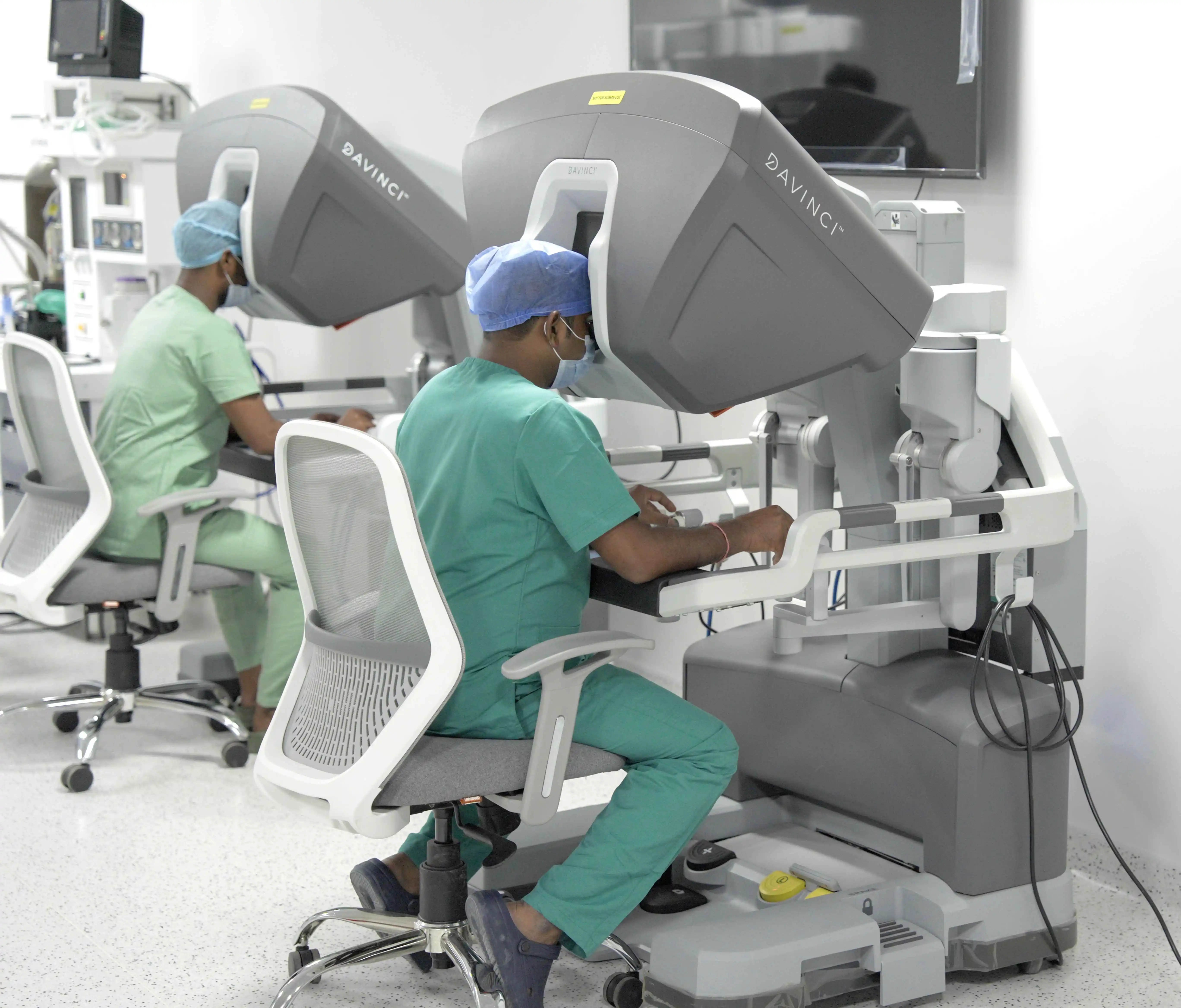
Yashoda Medicity delivers that precision. The Neurosurgery Department at the Yashoda Institute of Neurosciences uses advanced operating microscopes, high-definition exoscopes, intraoperative neuro-navigation, real-time neuromonitoring, and other advanced technologies to operate on the brain, spine, and peripheral nerves with the accuracy these structures demand.
Conditions We Treat
The team at the neurosurgery hospital in Ghaziabad manages a wide range of neurological and spinal conditions, including:
- Brain Tumours, including Gliomas, Meningiomas, Pituitary Tumours, and Metastatic Disease
- Ruptured and Unruptured Aneurysms
- Arteriovenous Malformations (AVMs) and Fistulas
- Cavernomas
- Carotid Artery Stenosis
- Head and Spine Injuries and Intracranial Haemorrhages
- Disc Prolapse and Spondylolisthesis
- Spinal Tumours and Osteoporosis-Related Spinal Fractures
- Congenital Anomalies, including Craniovertebral Junction Anomalies and Spina Bifida
- Peripheral Nerve Conditions, including Carpal Tunnel Syndrome
- Trigeminal Neuralgia and Facial Pain Syndromes
- Scoliosis and Spinal Deformities
- Functional Neurosurgery for Parkinson’s Disease and Refractory Epilepsy
- Neurological Complications of Stroke and Encephalitis
When to Consult the Best Neurosurgeon in Ghaziabad
Not every neurological symptom requires surgery, and a neurosurgical consultation does not mean an operation has already been decided upon. It simply allows a specialist to evaluate whether surgical intervention is necessary and determine the most appropriate treatment approach.
Book a consultation if you are experiencing any of the following:
- Persistent or worsening headaches not explained by a prior diagnosis
- Chronic neck or back pain that has not responded to medication or physiotherapy
- Seizures without a known cause
- Progressive weakness or impaired movement in the limbs
- Numbness, tingling, or loss of sensation
- Difficulty walking or frequent loss of balance
- Noticeable memory loss or altered behaviour
- Weak grip or reduced hand function
- Unexplained visual disturbances, double vision, or hearing loss
- Leg pain radiating from the lower back
If symptoms include a sudden severe headache, rapid onset weakness on one side of the body, or loss of consciousness, emergency medical assessment is essential and should not be delayed.
Advanced Treatment at the Neurosurgery Hospital in Ghaziabad
Brain Tumour Surgery
Removal of brain tumours requires balancing maximal tumour resection with preservation of the surrounding brain tissue responsible for speech, movement, memory, and other critical functions. Intraoperative neuro-navigation maps the tumour's position relative to these eloquent areas in real time, allowing the surgical team to work as close to functional tissue as oncologically safe. Intraoperative neuromonitoring tracks brain and nerve function continuously throughout the procedure, providing immediate feedback if any response changes, so the team can adjust before permanent damage occurs.
Cerebrovascular Surgery
Aneurysms, arteriovenous malformations, and cavernomas are managed through a combination of open microsurgical and endovascular approaches depending on location, anatomy, and rupture status. Ruptured aneurysms require urgent surgical or endovascular treatment to prevent rebleeding, while unruptured aneurysms are assessed for their rupture risk before a treatment decision is made. The hybrid operating theatre at Yashoda Medicity supports combined open and endovascular procedures in the same setting, allowing the most appropriate approach for each case without patient transfer between facilities.
Minimally Invasive and Endoscopic Neurosurgery
Keyhole craniotomies, endoscopic brain surgery, and percutaneous spinal interventions allow the surgical team to access brain and spine structures through significantly smaller openings than traditional open approaches, reducing trauma to surrounding tissue and supporting faster recovery. Endoscopic techniques are particularly relevant for pituitary tumours, ventricular conditions, and selected spinal procedures where the anatomy allows a minimally invasive route without compromising surgical access to the target.
Spine Surgery
The neurosurgery spine Department under the spine neuro surgeon in Ghaziabad covers disc prolapse, spinal canal narrowing, spinal fractures, spinal tumours, deformities, and congenital conditions affecting the spinal cord. Minimally invasive spine surgery and percutaneous fixation systems are used wherever the anatomy permits, reducing soft tissue disruption and supporting earlier mobilisation after surgery. The Medtronic O-arm surgical imaging system provides real-time intraoperative imaging and navigation during instrumentation procedures, supporting precise screw and implant placement where the margin for error is narrow.
Functional Neurosurgery
Deep-brain stimulation for Parkinson's disease and surgical management of refractory epilepsy represent the functional neurosurgery capabilities of the department. Deep brain stimulation involves the precise placement of electrodes in specific deep brain targets. It is a procedure that depends heavily on stereotactic planning and intraoperative electrophysiological recording for confirming accurate electrode positioning before final implantation.
Peripheral Nerve Surgery
Carpal tunnel syndrome, nerve injuries, and other peripheral nerve conditions are managed through both surgical decompression and repair techniques.
State-of-the-Art Neurosurgery Facilities
Advanced Operating Microscopes and High-Definition Exoscopes
Operating microscopes at the neurosurgery hospital in Ghaziabad provide the magnification and illumination essential for working safely in the confined spaces of the brain and spine. To extend this capability further, the high-definition exoscope provides superior image quality and a more ergonomic operating position for the surgical team during prolonged procedures. Here the image is projected onto a high-resolution monitor rather than viewed through an eyepiece.
Intraoperative Neuro-Navigation
Navigation systems track surgical instruments against pre-operative imaging data in real time, allowing the surgical team to know the precise location of instruments relative to critical brain and spine structures throughout the procedure. This is particularly important for deep-seated tumours and spinal instrumentation cases where visual landmarks alone are insufficient to guide surgery safely.
Intraoperative Neuromonitoring
Continuous monitoring of motor and sensory pathways, cranial nerve function, and brain electrical activity throughout surgery provides the surgical team with real-time feedback on neurological function as the procedure progresses. A change in monitoring signal is an immediate alert, allowing the team to modify their approach before any functional deficit becomes permanent.
Neurosonography
Intraoperative ultrasound imaging at the neuro hospital in Ghaziabad allows real-time visualisation of brain and spinal cord tissue during surgery, helping the team confirm tumour margins and assess the adequacy of resection without interrupting the operative workflow for separate imaging.
Hybrid Operating Theatre and Endovascular Suite
The hybrid operating theatre combines a fully equipped neurosurgical theatre with advanced fluoroscopic imaging, supporting combined open and endovascular procedures in a single setting. The dedicated endovascular suite manages aneurysm coiling, arteriovenous malformation embolisation, and carotid artery stenting with the imaging quality these catheter-based procedures demand.
Patient Journey at the Neurosurgery Hospital in Ghaziabad
- Consultation and Assessment: The first step is for the neurosurgeon to thoroughly discuss the symptoms, clinical examination findings, and prior imaging (if any) with the patient.
- Diagnostic Workup: If the specialists conclude that further investigation is required, they may recommend MRI, CT, catheter angiography, electroencephalography (EEG), or electromyography and nerve conduction studies.
- Surgical Planning: Before surgery begins, the pre-operative imaging is loaded into the navigation system to plan the surgical approach in detail.
- Surgery: The surgical procedure is performed using the appropriate combination of microscopic, endoscopic, navigation-guided, or endovascular technique, with intraoperative monitoring active throughout.
- Recovery and Rehabilitation: Post-operative recovery is monitored closely, with rehabilitation, including physiotherapy, speech therapy, or occupational therapy as relevant, beginning as early as clinically appropriate.
- Follow-Up: Structured follow-up is planned which includes imaging surveillance and ongoing management of any long-term neurological considerations.
Why Choose Yashoda Medicity for Neurosurgery in Ghaziabad?
- Intraoperative monitoring as standard. Continuous neurophysiological monitoring throughout surgery provides surgeons with real-time feedback on brain and nerve function, allowing immediate response if a signal change is detected.
- Navigation-guided precision for every complex procedure. Intraoperative neuro-navigation reduces reliance on visual landmarks alone in deep or anatomically complex surgical fields, improving both safety and surgical accuracy.
- Hybrid operating theatre for combined procedures. Open surgical and endovascular approaches are available in the same setting, supporting the most complex cerebrovascular cases without patient transfer.
- Minimally invasive approaches wherever possible. With the aim of supporting faster recovery without compromising surgical outcomes, Yashoda Medicity offers keyhole craniotomies, endoscopic brain surgery, and percutaneous spinal techniques.
- Part of a fully integrated neurosciences system. Neurosurgery at Yashoda Medicity works within the same institute as neurology and interventional neuro-radiology, so complex cases involving multiple disciplines are managed collaboratively from the outset.
Book Your Appointment Today
Neurosurgery demands a level of precision that few other surgical specialities approach. The technology, the technique, and the team need to work together with an accuracy that leaves no room for approximation, because the structures involved do not tolerate it.
The Neurosurgery Department at Yashoda Medicity, Ghaziabad delivers that level of care.
Call us today: 9266610101
 Call: +91 9266610101