Prof. Dr. Rajinder Kumar
Principal Director & Unit Head, Neurosurgery
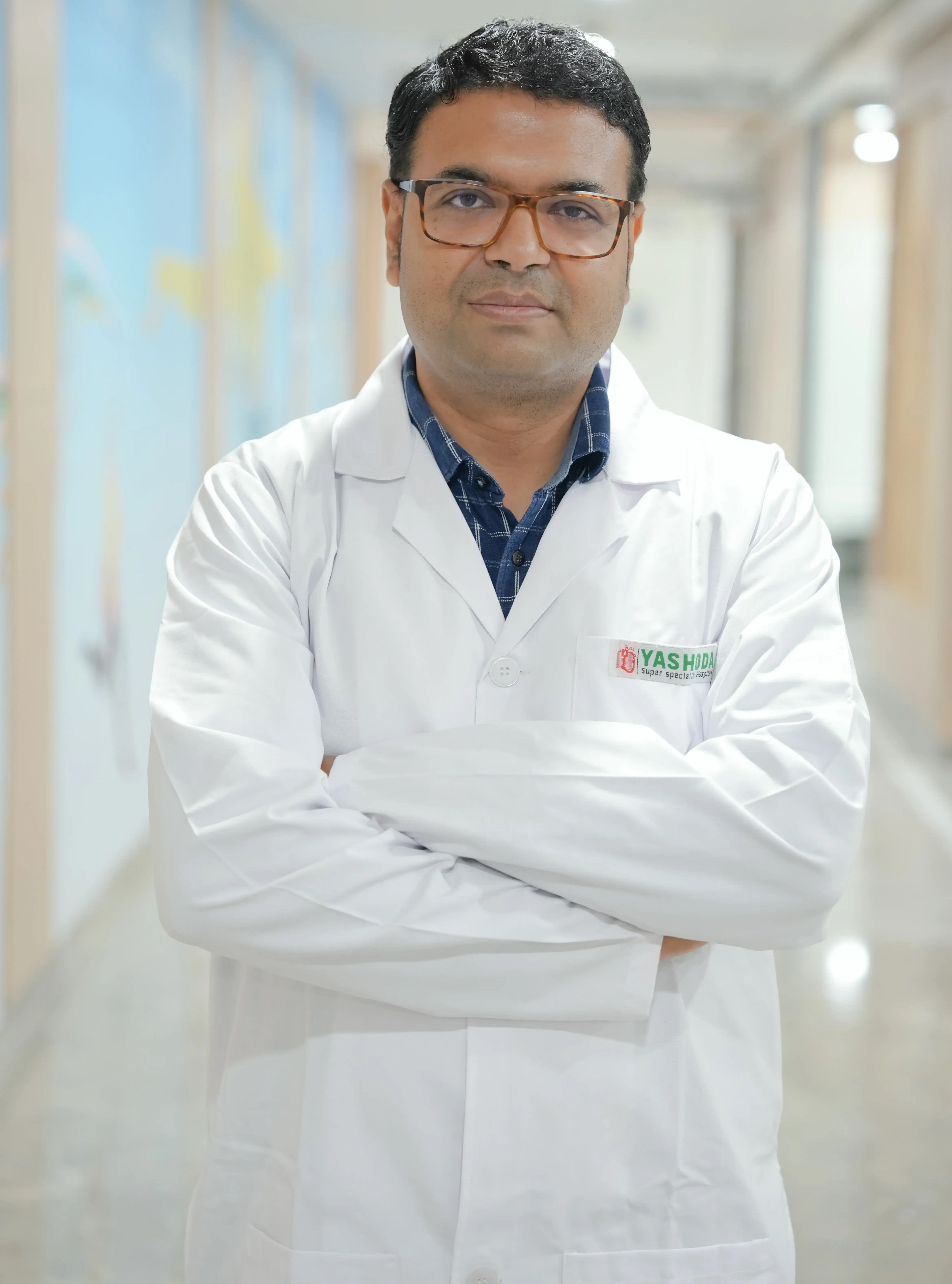
Dr. Sumanto Chatterjee
Associate Director, Department of Neurology

Dr. Atul Gupta
Senior Consultant, Department of Neurosurgery
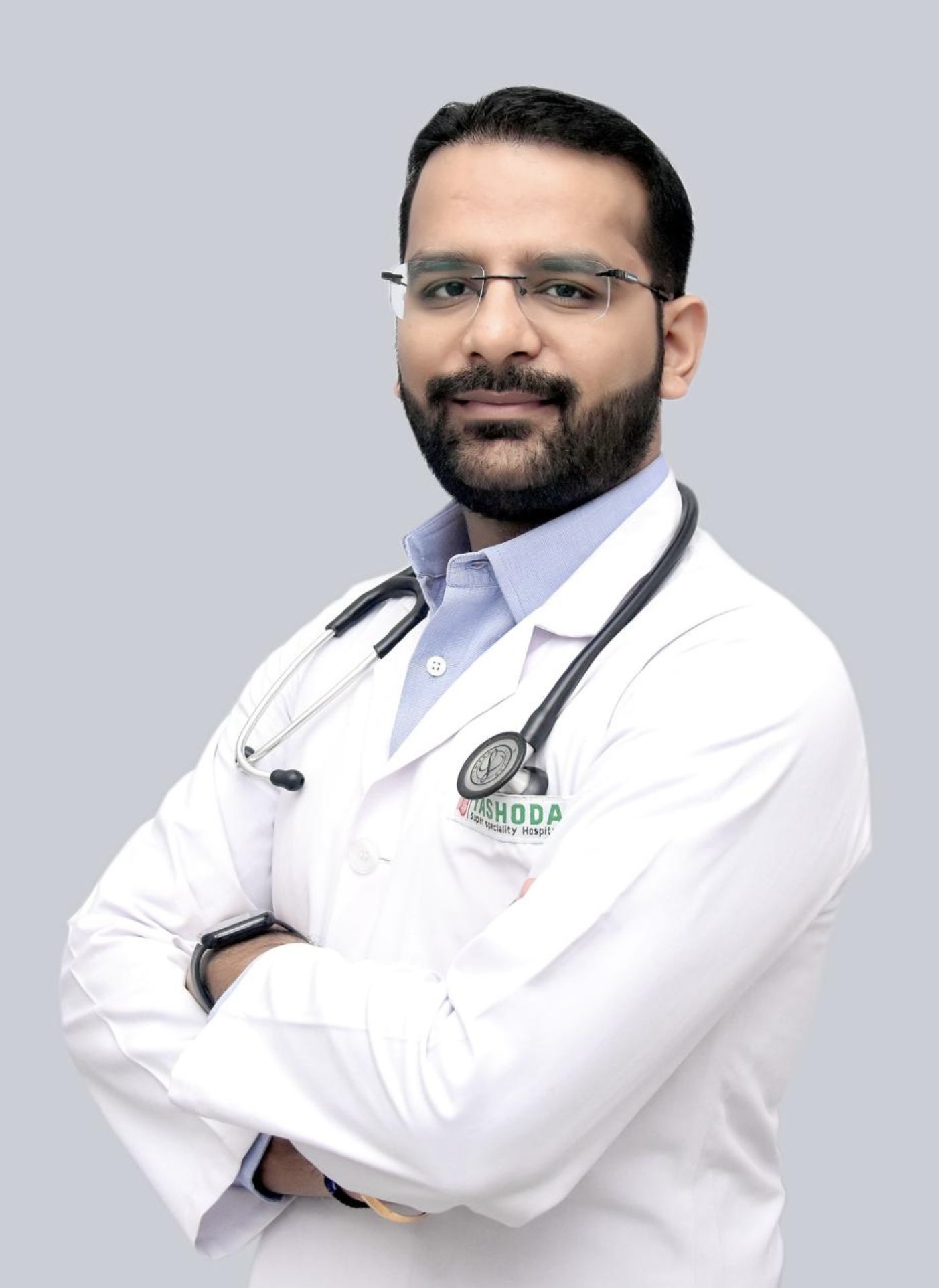
Dr. Luv Bansal
Senior Consultant - Neurologist
Neurology Hospital in Delhi
Neurology sits at one of the most diagnostically demanding ends of medicine. A symptom that appears straightforward on the surface, a recurring headache, an episode of confusion, or a hand that tremors slightly, can have origins that are entirely different from one patient to the next, requiring treatment approaches that have nothing in common with each other. Getting that distinction right before any treatment begins is not a preliminary step in neurology. It is the central clinical challenge.
The Department of Neurology at the Yashoda Institute of Neurosciences provides exactly this level of specialist diagnostic and management expertise in Ghaziabad, covering the full range of brain, spinal cord, peripheral nerve, and muscle disorders through a combination of advanced neurodiagnostic facilities and experienced neurologists who manage both common presentations and genuinely complex cases.
Conditions We Treat
The team of the neurology hospital in Ghaziabad treats a wide range of conditions, including:
- Migraine, Tension-Type Headache, Cluster Headache, and Trigeminal Neuralgia
- Stroke and Cerebrovascular Disorders, including Secondary Stroke Prevention
- Epilepsy and Seizure Disorders
- Parkinson's Disease and Related Movement Disorders
- Alzheimer's Disease and Other Dementia and Cognitive Disorders
- Diabetic, Hereditary, Inflammatory, and Toxin-Related Peripheral Neuropathies
- Multiple Sclerosis and Neuromyelitis Optica Spectrum Disorders
- Autoimmune Encephalitis
- Myelitis and Non-Surgical Compressive Myelopathies
- Myopathies and Muscular Dystrophies
- Meningitis, Encephalitis, and Central Nervous System Infections
- Status Epilepticus and Acute Neurological Deterioration
- Sleep Disorders and Balance Problems
When to Consult the Best Neurologist in Ghaziabad
Neurological symptoms are often attributed to stress, tiredness, or ageing before anyone considers a neurological cause. Some of them genuinely are benign and self-limiting. Others are early signals of conditions that are significantly more manageable when identified at an early stage.
Book a consultation if you experience any of the following:
- Weakness in one or more parts of the body
- Speech, memory, or behavioural changes
- Difficulty with coordination or balance
- Tremors, jerks, or other abnormal movements
- Chronic or recurring headaches that are not responding to standard treatment
- Numbness, tingling, or loss of sensation
- Seizures or episodes of loss of consciousness
- Dizziness or persistent vertigo
- Visual, hearing, or sensory disturbances
- Difficulty controlling bladder or bowel function
If any of these symptoms appear suddenly and severely, particularly weakness on one side of the body, sudden speech difficulty, or loss of consciousness, this requires emergency assessment rather than a scheduled consultation.
Advanced Treatment at the Neurology Hospital in Ghaziabad
Stroke and Cerebrovascular Disease
Acute stroke management follows defined, time-sensitive protocols at Yashoda Medicity because the window for effective intervention in ischaemic stroke is narrow and directly affects how much neurological function can be preserved. Beyond the acute phase, secondary stroke prevention, identifying and managing the underlying cause to reduce the risk of recurrence, is managed at the stroke treatment centre in Ghaziabad within the same team rather than being handed off to general medicine.
Epilepsy and Seizure Management
Epilepsy management requires accurate characterisation of seizure type before a treatment plan is established, since different seizure types respond to different medications and an incorrect choice can worsen rather than improve control. The department uses electroencephalogram recording and detailed clinical assessment to establish an accurate diagnosis before initiating or adjusting treatment.
Movement Disorders
Parkinson's disease and related conditions are managed with treatment plans that evolve over time as the condition progresses, rather than with a single prescription that remains unchanged. The neurology team reviews the response to medication regularly and adjusts the approach as the clinical picture changes, accounting for both motor and non-motor aspects of the condition.
Dementia and Cognitive Disorders
The first step towards successful treatment and long-term follow-up planning is the early and accurate diagnosis of dementia by distinguishing between Alzheimer's disease and other causes of cognitive decline at the neurology hospital in Ghaziabad. The department provides structured cognitive assessment alongside imaging and relevant blood tests to establish the most accurate diagnosis possible before treatment decisions are made.
Autoimmune and Demyelinating Disorders
Multiple sclerosis, neuromyelitis optica spectrum disorders, and autoimmune encephalitis require specialist immunological management that general neurology training alone does not fully prepare a clinician for. These conditions can present in ways that mimic other disorders, making accurate diagnosis a critical first step before any immunotherapy or disease-modifying treatment is started.
Peripheral Neuropathy
Neuropathies affecting the peripheral nerves, whether caused by diabetes, hereditary conditions, inflammation, or toxic exposure, are evaluated through a combination of nerve conduction velocity testing, electromyography, and blood work to identify the underlying cause before treatment is planned. Managing the cause, where one can be identified, is as important as managing the symptoms.
Neurocritical Care
Status epilepticus, encephalopathy, and acute neurological deterioration require intensive monitoring and management that goes beyond what a standard neurology ward provides. The department's neurocritical care capability supports these presentations with specialist input from the outset, rather than managing them through general intensive care without neurological oversight.
State-of-the-Art Neurology Diagnostic Facilities
Electroencephalogram
Brain electrical activity is recorded and analysed for epilepsy, seizure classification, encephalopathy, and sleep disorders. Accurate electroencephalogram interpretation is particularly important in epilepsy management, where the specific pattern of activity directly influences drug selection.
Nerve Conduction Velocity and Electromyography
These two tests are often performed together because they complement each other in assessing the health of peripheral nerves and the muscles they supply. As the nerve disorder specialist in Ghaziabad explains, nerve conduction velocity measures the speed and strength of electrical signals along nerves, while electromyography assesses the electrical activity within muscles themselves, distinguishing between nerve and muscle disorders that can produce similar clinical pictures.
Evoked Potentials
To evaluate the integrity of specific sensory pathways in the nervous system, visual evoked potentials, somatosensory evoked potentials, and brainstem auditory evoked responses are used. These are particularly useful in multiple sclerosis diagnosis, where demyelination may affect pathways that are not yet producing obvious symptoms but can be detected through these tests.
Repetitive Nerve Stimulation
This test at the brain specialist doctor in Ghaziabad is used specifically to evaluate the neuromuscular junction, the point where nerve signals are transferred to muscle. It is the primary diagnostic test for myasthenia gravis and related neuromuscular junction disorders, where standard nerve conduction studies alone would not identify the problem.
Advanced Neuroimaging
Computed tomography, magnetic resonance imaging, and Doppler studies support structural assessment of the brain, spinal cord, and cerebral blood vessels, providing the anatomical information that underpins clinical decision-making across stroke, demyelinating disease, and space-occupying lesions.
Patient Journey at the Neurology Department
Initial Consultation: The first step at the neurology hospital in Ghaziabad involves the neurologist reviewing the patient's medical history, performing a clinical examination, and determining the next steps for an accurate diagnosis.
Neurodiagnostic Testing: Based on the clinical assessment, the specialist may recommend tests such as an electroencephalogram, nerve conduction studies, electromyography, evoked potentials, or imaging studies.
Diagnosis and Treatment Planning: Once the test results are available, they are reviewed to develop an appropriate treatment plan.
Ongoing Management: For chronic conditions including epilepsy, Parkinson's disease, multiple sclerosis, and peripheral neuropathy, regular follow-up at the hospital ensures that the treatment plan remains appropriate and effective as the condition evolves.
Neurocritical Care, if Required: Acute neurological deterioration is managed with specialist oversight, with the neurology team involved from the outset rather than being brought in once general measures have been exhausted.
Why Choose Yashoda Medicity for Neurology Hospital in Ghaziabad?
Diagnosis before treatment. The department's approach prioritises accurate diagnosis over early treatment initiation, since starting the wrong treatment in neurology can sometimes complicate the clinical picture further.
Full neurodiagnostic capability on-site. Electroencephalogram, nerve conduction velocity, electromyography, evoked potentials, and advanced imaging are all available within the department, without the need for external referrals that may delay the diagnostic process.
Specialist management for complex conditions. Autoimmune neurological conditions, neuromuscular disorders, and complex epilepsy are managed with the subspecialty depth these conditions require.
Neurocritical care integrated. Acute neurological emergencies are managed with neurological specialist input from the outset, not handed to general intensive care without specialist oversight.
Part of a broader neurosciences programme. Where surgical or interventional input is needed alongside medical management, the neurology team works within the same institute as neurosurgery and interventional neuro-radiology, supporting genuinely coordinated care.
Book Your Appointment Today!
Neurology's defining challenge is diagnostic precision: arriving at the correct diagnosis before committing to a treatment plan in a specialty where the same symptom can arise from several very different underlying causes. That precision depends on experienced clinicians and comprehensive diagnostic tools working together.
The Department of Neurology at Yashoda Medicity, Ghaziabad provides both, within a broader neurosciences programme that covers medical, surgical, and interventional care under one roof.
Call us today: 9266610101
 Call: +91 9266610101