 Open Emergency Modal
Open Emergency Modal
Open Emergency Modal
The Department of Neurosurgery is dedicated to the surgical management of complex disorders of the brain, spine, and nerves. Our team combines clinical expertise with advanced technology to deliver safe and effective care. We manage a wide range of conditions, including brain tumours, spinal injuries, aneurysms, vascular malformations, congenital anomalies, and degenerative spine disorders.
With the use of advanced operating microscopes and exoscopes, intraoperative neuro-navigation systems, neurosonography, intraoperative monitoring, and minimally invasive techniques such as brain and spine endoscopy, keyhole approaches, percutaneous interventions, and endovascular procedures, we focus on precision, safety, and faster recovery.
Some neurological symptoms may point to underlying conditions requiring neurosurgical attention. Common warning signs include:
It is important to seek timely consultation with a neurosurgeon if you notice:
Early evaluation can help detect underlying conditions and prevent further complications.
Our neurosurgeons treat both emergency and elective conditions, including:
Accurate diagnosis is the foundation of neurosurgical care. At Yashoda Medicity and Yashoda Super Speciality Hospital, Kaushambi, we use a combination of clinical evaluation and advanced investigations:
The Neurosurgery Department is equipped with:
 More
More

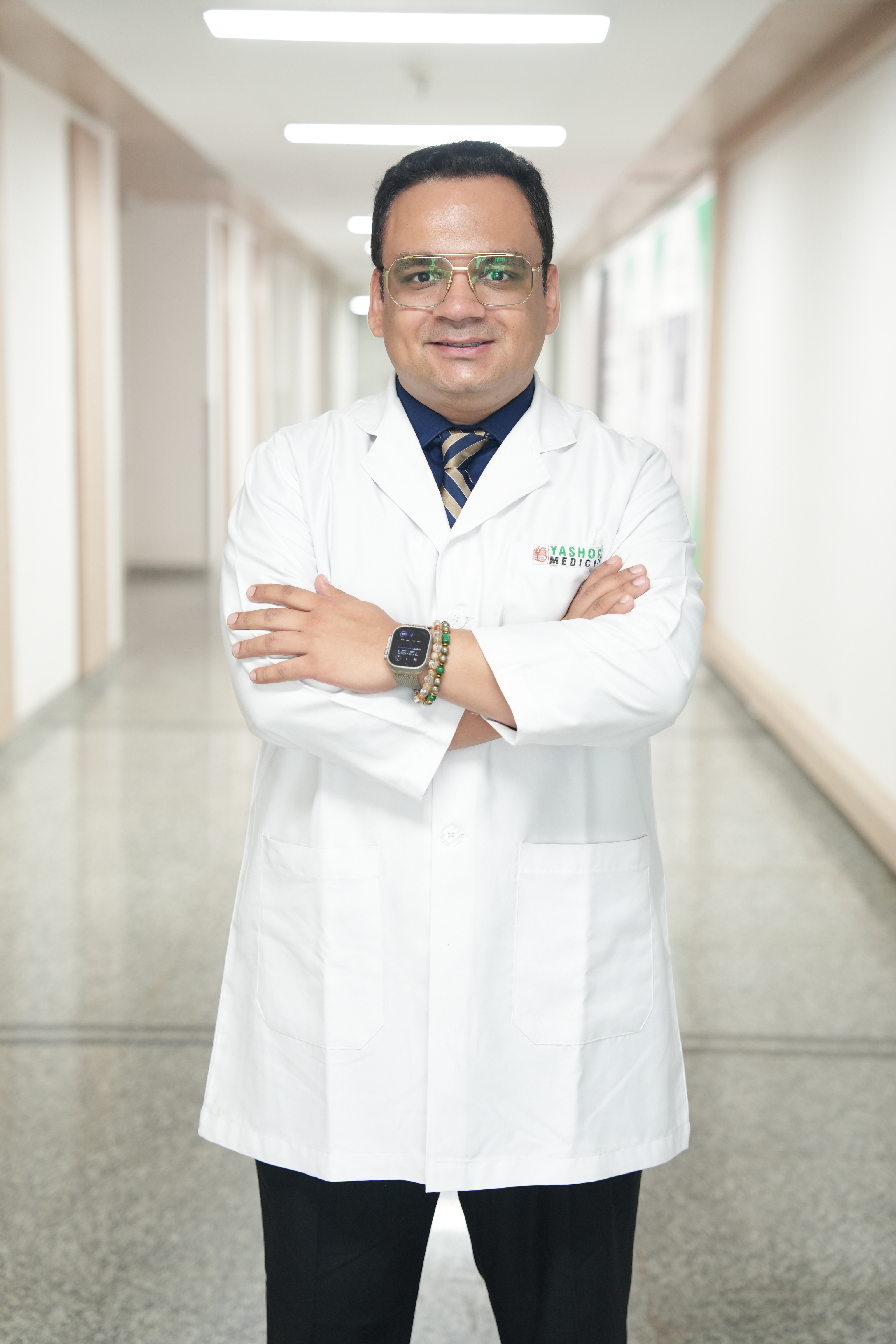
Principal Director & Unit Head
Neurosurgery
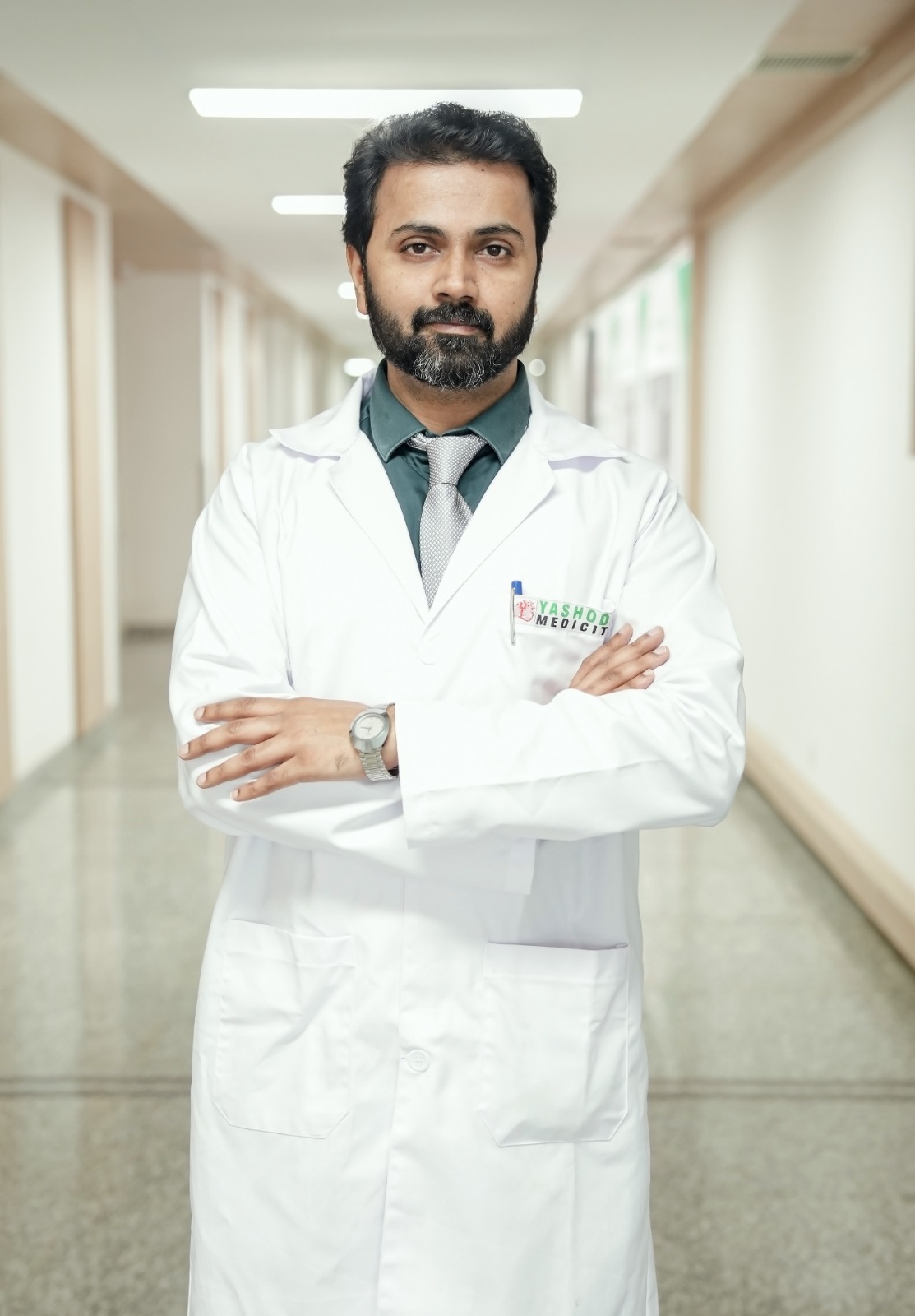
Principal Consultant
Neurosurgery
Principal Consultant
Neurosurgery

Senior Visiting Consultant
Neurosurgery

A 65-year-old female, a known carcinoma colon survivor, presented with altered sensorium, severe headache, diplopia, and worsening vision.
On arrival, she was drowsy, disoriented, with gaze palsy, hemianopia, and significantly elevated blood pressure. MRI brain revealed a large left occipital tumor with acute haemorrhage, requiring emergency intervention.
She underwent urgent craniotomy with total tumor excision and evacuation of the hematoma. The surgery was completed successfully.
Post-operatively, she showed rapid and remarkable recovery, with significant improvement in neurological status. She was discharged in four days and, at one-week follow-up, was walking independently with restored clarity of vision and no headache.
Her recovery was exceptional for the extent of pathology and age, with neurological improvement far exceeding expected timelines.
Treatment By:
Dr. Rajinder Kumar
It was a very good experience, I had a cholecystectomy. All the doctors including surgeon, anesthetic, nursing and housekeeping staff were very supportive. I was admitted for 24 hours. Quick and very fast recovery. Under Dr P.K.Dewan, sir is very humble and nice.
All experience good, patient treatment was good, satisfied with all the services, nursing staff and doctors team also good and cooperative.
I had an excellent experience at Yashoda Hospital for my mother’s Total Knee Replacement Surgery.
From a clinical perspective, Dr. Amit Sharma and his team were outstanding. Their expertise and professionalism were evident throughout the process, and they did a fantastic job with the surgery and post-operative care.
Beyond the medical treatment, the administrative side was equally impressive. Mr. Varun took complete charge of the Insurance (TPA) and admission process, ensuring everything was seamless and stress-free for our family. His coordination made a significant difference in our overall experience.
We are truly grateful to the entire team for their dedication and care. Highly recommended!
Mr. Ajeet Kumar Verma from Yashoda Homecare provided satisfactory service of sample collection. Well behaved, humble & polite person
I had really good experience with Yashoda Home Care, the sample collection was very hygienically taken and pain-free, hassle-free. Mr. Ajeet was the phlebotomist.
Had a good experience with Ajeet Kumar Verma from Yashoda Home Care who supported me while I was looking for someone to dress my mom’s stitches. He is very professional and a caring person.
Great support and service by the Home care department. Everyone from Ms Niharika, Mr. Anoop to all the attendants including Mr. Natwar Pandey, Mr Inam and Mr. Ajit, all have been superbly supportive and helpful throughout. God bless you all and highly recommended.
Very good services in home care Yashoda hospital his ish
Caretaker Deepanshu and Jatin and Satish is very good caretaker I have never seen better care takers in my life.
And he is very polite behaviour and friend in nature
Yashoda Super Specialty Hospitals Kaushambi service is very good according other hospital and other home care services
The home care facility provided by the hospital is also good, the staff which was at home was cooperative.
Home care services are Good. Mr. सुनील Sajwan was cooperative and the केयर taker Mrs. Shushila's वर्क has been quite satisfactory.
Had a. Very good experience with Yashoda Homecare, Kaushambi. The staff was very cooperative with excellent on time services. I would like to give a special mention to Mr Sunil Sajwan (Sales) and Sushila ji (PCA) for their quick response and excellent services.
Fully satisfied Mr .Ajeet Kumar Verma service Yashoda home care . vry good
Was great to recieve the best homecare services from yashoda hospital and really impressed with Ms. Niharika's support at the initial phase followed by Mr. Natwar Pandey who was really supportive in taking care of my father basic daily needs.
Thanks for all the support

 Call: +91 9266610101