
 Call: +91 9266610101
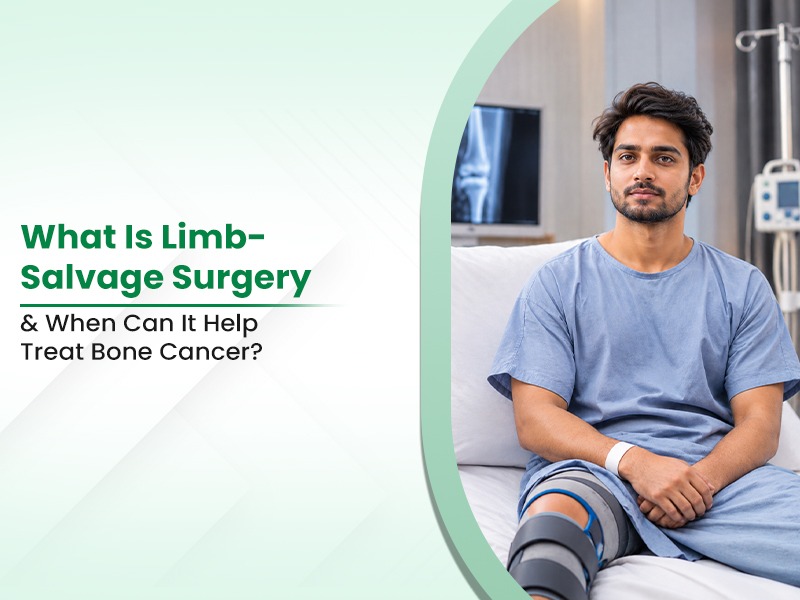
What Is Limb-Salvage Surgery and When Can It Help Treat Bone Cancer?
Hearing the words "bone cancer" once left families fearing that losing an arm or leg was the only way to survive. Today, modern surgical advances allow doctors to remove cancerous bone tumors completely while keeping the natural limb intact, functional, and strong. Understanding how limb-preserving procedures work helps patients and families explore safe, mobility-saving treatment choices with clarity and confidence.
What Is Limb-Salvage Surgery?
Limb-salvage surgery or limb-sparing surgery is an advanced orthopedic oncology procedure that involves the excision of cancerous tumors from bones or soft tissues without the need to cut off the arms or legs. In the process of surgery, the entire cancer mass along with the tiny portion of healthy tissue adjacent to it is carefully removed to make sure that there are no cancer cells left.
Additionally, blood vessels, nerves, and muscle tissue are protected during removal so the limb can retain its normal function. After the excision of the tumor, the missing bone/joint segment is reconstructed with the help of special implants or bone transplants/donations. Timely consultation with a competent bone cancer doctor in Delhi NCR will help you determine whether your tumor can be removed through limb-sparing surgery.
When Is This Surgery Helpful?
Limb-sparing procedures are suitable for most patients diagnosed with primary bone tumors or soft tissue sarcomas, provided the cancer can be removed safely with clear margins. Doctors consider this approach helpful in several clinical situations:
- Localized Bone Tumors: Conditions such as osteosarcoma, Ewing sarcoma, and chondrosarcoma that have not widely invaded major blood vessels or critical nerves respond well to limb-preserving removal.
- Good Response to Pre-Surgery Therapy: Many bone cancers shrink after initial chemotherapy, making it easier for surgeons to separate the tumor from surrounding healthy tissue.
- Growing Children and Teenagers: Young patients with bone tumors benefit from expandable implants that can be adjusted as the child grows, maintaining equal limb length over time.
- Metastatic Bone Disease: When cancer spreads to a limb bone from another organ, targeted surgical stabilization relieves pain, prevents fractures, and restores everyday walking or arm function.
Key Reconstruction Methods Used
Rebuilding the bone after tumor removal is tailored to the patient's age, tumor location, and daily activity goals. At the Best Oncology Department in Delhi NCR, surgeons use computer-assisted surgical planning and high-resolution MRI scans to map the exact tumor boundaries before selecting the best reconstruction method:
- Endoprosthetic Replacement: Custom or modular metal implants replace the removed bone segment and nearby joint, allowing early weight-bearing and reliable joint movement.
- Allograft Bone Reconstruction: Carefully screened donor bone is shaped and fixed to bridge the gap left after tumor removal, integrating naturally with surrounding healthy bone tissue.
- Biological Reconstruction: The patient's own removed bone segment is treated to destroy tumor cells and re-implanted, providing an exact anatomical fit using natural bone structure.
- Expandable Pediatric Implants: Specialized adjustable prostheses lengthen gradually as a child's healthy limb grows, preserving skeletal balance and growth potential in young patients.
Role of Precision Radiation Therapy
Bone cancer care often combines surgery with chemotherapy or targeted radiation therapy, especially for radiation-sensitive tumors like Ewing sarcoma or tumors located in complex areas such as the pelvis and spine. When radiation is required before or after surgery, protecting healthy muscles, nerves, and joints is essential for successful limb recovery.
Advanced radiation platforms at Yashoda Medicity, such as ETHOS with HYPERSIGHT and IDENTIFY Technology and Elekta Unity MR-Linac, use real-time imaging to track internal anatomical changes and monitor patient positioning during each session. Meanwhile, EDGE with HyperArc and ExacTrac Dynamic delivers concentrated, high-precision radiation beams to complex spinal or deep-seated lesions while sparing surrounding healthy tissues.
What Happens During Recovery?
Recovery after limb-sparing surgery is a structured, step-by-step process supported by a multidisciplinary team of surgeons, medical oncologists, and physiotherapists. Choosing an experienced limb salvage surgery hospital in Delhi NCR ensures seamless coordination from pre-surgical imaging through post-operative healing:
- Early Guided Movement: Gentle physiotherapy begins soon after surgery to prevent joint stiffness, improve blood circulation, and protect the reconstructed bone.
- Progressive Strength Training: Over time, rehabilitation specialists introduce targeted muscle-strengthening and balance exercises to help patients walk comfortably or regain full arm use.
- Ongoing Follow-Up Care: Regular clinical checkups and imaging scans monitor bone healing, implant stability, and long-term freedom from tumor recurrence.
How Should Patients Choose Care?
Choosing the right medical center is vital to achieving both complete tumor removal and lasting physical independence. A trusted best hospital in Delhi NCR brings together orthopedic oncosurgeons, radiologists, pathologists, radiation specialists, and rehabilitation experts under one roof.
Patients should look for centers equipped with image-guided biopsy suites, computer-assisted surgical navigation, and customized reconstruction options. Performing the initial diagnostic biopsy at the same specialized center where surgery is planned also ensures the biopsy pathway supports safe, effective limb preservation later.
Conclusion
Limb-salvage surgery offers a safe, effective way to remove bone tumors while preserving natural movement and everyday independence. Consulting an experienced bone cancer doctor in Delhi NCR early after diagnosis helps patients explore personalized reconstruction and recovery options with confidence. At Yashoda Medicity, our multidisciplinary orthopedic oncology team combines advanced surgical precision, targeted therapies, and dedicated rehabilitation to support you at every step of your healing journey. Book your consultation today to receive compassionate, comprehensive bone cancer care.
FAQ’S
1. What is limb-salvage surgery in bone cancer treatment at Yashoda Medicity?
At Yashoda Medicity, limb-salvage surgery removes a cancerous tumor from a bone or soft tissue while keeping the natural arm or leg intact and functional without amputation.
2. Which bone conditions can benefit from limb-sparing surgery?
It helps treat localized tumors like osteosarcoma, Ewing sarcoma, and chondrosarcoma, as well as metastatic bone disease and bone tumors in growing children.
3. How do surgeons rebuild the bone after removing a tumor?
Doctors use specialized medical implants, donor bone grafts, treated biological bone, or expandable pediatric implants to restore natural movement and strength.
4. How does advanced radiation therapy support limb-preserving bone cancer care at Yashoda Medicity?
At Yashoda Medicity, modern platforms like ETHOS with HYPERSIGHT and IDENTIFY Technology, Elekta Unity MR-Linac, and EDGE with HyperArc and ExacTrac Dynamic precisely target tumors while sparing healthy tissue.
5. What does recovery involve after limb-salvage surgery?
Recovery at Yashoda Medicity includes early guided physiotherapy, progressive strength training, and regular follow-up scans to ensure lasting mobility and healing.