
 Call: +91 9266610101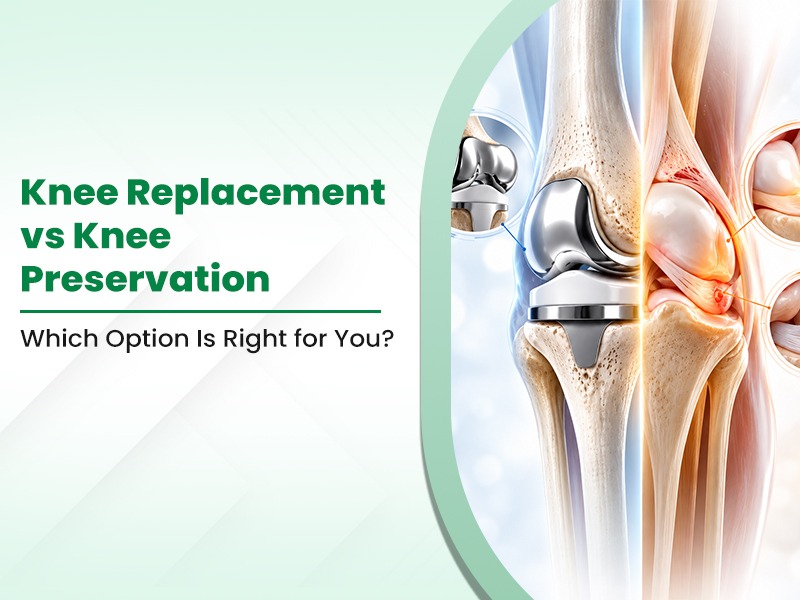
Knee Replacement vs Knee Preservation: Which Option Is Right for You?
Chronic pain, stiffness, and reduced mobility can affect your ability to work, enjoy leisure activities, and sleep comfortably. When knee pain starts interfering with daily life, it may be important to explore both surgical and non-surgical treatment options. In orthopaedic care, treatment may involve preserving the natural knee joint or replacing damaged joint surfaces. The most suitable approach depends on factors such as the extent of joint damage, symptoms, bone quality, age, activity level, and overall health.
What Is Joint Preservation?
Joint preservation refers to procedures that aim to preserve the patient's natural bone, cartilage, and other joint structures where clinically appropriate. For patients exploring treatment options at a Total Knee Replacement Hospital in Delhi, understanding these techniques can help them discuss alternatives to joint replacement with their orthopaedic specialist.
The following are some methods used in selected patients:
- Osteotomy Procedures: Realigning the bones to redistribute pressure away from damaged areas of cartilage and towards healthier portions of the joint.
- Cartilage Repair: Treating selected localised cartilage defects using techniques that may include cartilage repair procedures or biological approaches, depending on the condition.
- Arthroscopic Procedures: Using minimally invasive techniques to diagnose or treat selected problems within the knee.
- Ligament Reconstruction: Repairing or reconstructing damaged ligaments when instability is contributing to symptoms or joint problems.
Joint preservation may be considered for selected patients with localised joint damage, ligament injuries, or specific structural problems. Suitability depends on the underlying condition rather than age alone.
What Is Joint Replacement?
Joint replacement, or arthroplasty, involves removing damaged portions of the knee joint and replacing them with prosthetic components. Total knee replacement may be considered when advanced arthritis or other severe joint damage causes persistent pain and functional limitation despite appropriate non-surgical treatment.
Primary aspects of knee replacement include:
- Damaged Surface Replacement: Removing damaged cartilage and small amounts of underlying bone and replacing the affected surfaces with prosthetic components.
- Prosthetic Components: Using biocompatible materials designed to restore the alignment and function of the knee.
- Correction of Deformity: Correcting significant alignment problems associated with advanced joint degeneration when appropriate.
- Functional Improvement: The aim is to reduce pain and improve mobility and function following appropriate rehabilitation.
For individuals seeking comprehensive clinical care, consulting experts at a Total Knee Replacement Hospital in Noida provides access to diagnostic evaluation and personalised treatment planning.
Key Differences to Consider
Understanding the differences between preservation and replacement can help patients discuss the most appropriate treatment strategy with their orthopaedic specialist.
- Anatomical Retention: Preservation procedures aim to retain as much of the patient's natural joint as possible, whereas knee replacement substitutes damaged joint surfaces with prosthetic components.
- Recovery Timeline: Recovery varies depending on the procedure, the patient's health, and the rehabilitation programme. Some preservation procedures may require a gradual return to activity, while recovery after knee replacement also involves structured rehabilitation and progressive weight-bearing as advised.
- Ideal Candidate Profile: Preservation may be considered for selected patients with localised or early joint damage, while total knee replacement is generally considered for advanced, symptomatic disease affecting multiple areas of the knee.
- Surgical Approach: Preservation procedures address specific structural problems, whereas total knee replacement involves replacing the damaged joint surfaces.
Seeking guidance at a total knee replacement hospital in Delhi can help patients understand their treatment options based on their individual knee condition.
Benefits of Modern Treatments
Advances in orthopaedic surgery have improved the techniques used for both joint preservation and knee replacement. Depending on the procedure, modern approaches may involve minimally invasive techniques, improved implant designs, computer-assisted or robotic technologies, and structured rehabilitation.
At Yashoda Medicity, treatment is planned according to the patient's diagnosis, extent of joint damage, overall health, and functional goals. The expected recovery time and rehabilitation programme vary according to the procedure performed.
Choosing the Right Option
Deciding between preserving the natural knee and undergoing joint replacement requires a comprehensive evaluation by an orthopaedic specialist.
Essential clinical considerations include:
- Severity of Deterioration: Imaging and clinical examination help determine whether joint damage is localised or involves multiple compartments of the knee.
- Age and Activity Level: Age and activity level are considered along with the extent of joint damage, symptoms, bone quality, and long-term treatment goals.
- General Bone Quality: Bone health can influence the choice of procedure and suitability for different surgical options.
- Characteristics of the Pain: The location, severity, duration, and effect of pain on daily activities are considered when determining appropriate treatment. Pain at rest may be associated with more advanced joint disease but does not, by itself, determine the need for knee replacement.
Living Comfortably After Treatment
Regardless of the chosen treatment, post-operative care and rehabilitation are important for recovery and long-term function.
Key recovery practices include:
- Targeted Physical Therapy: Strengthening the quadriceps, hamstrings, and other supporting muscles to improve knee function and stability.
- Weight Management Guidance: Maintaining a healthy body weight can help reduce mechanical stress on the knee.
- Low-Impact Activities: Activities such as swimming, cycling, and walking may support mobility and physical fitness, depending on the patient's recovery stage and medical advice.
- Regular Clinical Follow-ups: Follow-up appointments help monitor recovery, joint function, and any concerns after treatment.
At Yashoda Medicity, rehabilitation programmes are tailored according to the procedure, patient's condition, and functional goals.
Conclusion
Choosing between knee preservation and knee replacement depends on the extent of joint damage, symptoms, age, bone quality, activity level, and long-term functional goals. Seeking advice at a Total Knee Replacement Hospital in Greater Noida can help patients receive appropriate diagnostic evaluation and a personalised treatment plan.
At Yashoda Medicity, orthopaedic specialists provide comprehensive evaluation and treatment for knee conditions, including joint preservation procedures and total knee replacement when clinically indicated. Book a consultation to discuss the most appropriate treatment option for your knee condition.
FAQs
1. What is the main difference between joint preservation and joint replacement?
Joint preservation aims to retain and treat the patient's natural knee structures where possible, while joint replacement replaces damaged joint surfaces with prosthetic components. The appropriate option depends on the individual's condition.
2. Who may be suitable for joint preservation procedures?
Joint preservation may be considered for selected patients with localised joint damage, cartilage defects, ligament problems, or specific structural abnormalities. Age alone does not determine suitability.
3. How long does recovery take after knee replacement surgery?
Recovery varies between individuals and depends on factors such as overall health, the type of procedure, and rehabilitation. Structured physical therapy can help patients gradually regain strength, mobility, and function.
4. Can lifestyle changes help manage joint health after treatment?
Yes. Maintaining a healthy weight and participating in appropriate low-impact activities such as swimming, cycling, or walking can support joint function and overall physical health.
5. How do I know which knee treatment option is right for me?
A comprehensive evaluation by an orthopaedic specialist, including clinical examination and appropriate imaging, can help determine whether joint preservation, knee replacement, or another treatment approach is most suitable.