
 Call: +91 9266610101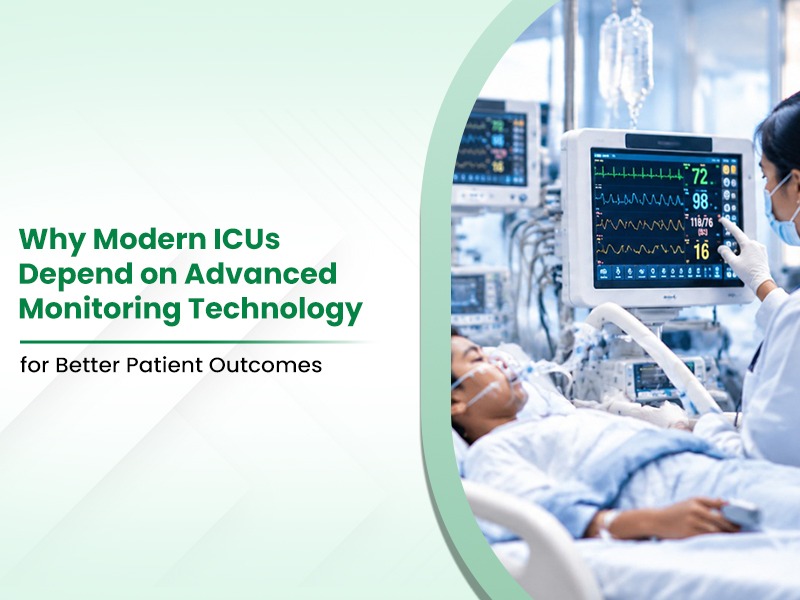
Why Modern ICUs Depend on Advanced Monitoring Technology for Better Patient Outcomes
In modern critical care, the ICU provides continuous monitoring and specialised treatment for patients with serious or potentially life-threatening conditions. Even small changes in vital signs can provide important information about a patient's condition, making appropriate monitoring an essential part of intensive care. At Yashoda Medicity, we combine clinical expertise with advanced monitoring and organ-support technologies to provide comprehensive critical care. Recognised as the best hospital in Ghaziabad, our critical care facilities support patients requiring close observation and specialised medical management.
The Core Role of Monitoring Technology in Critical Care
The Intensive Care Unit is designed to care for patients with conditions such as acute organ failure, severe infections, trauma, post-operative complications, or respiratory failure. Continuous monitoring allows critical care teams to track important physiological parameters and assess changes over time.
Modern ICU monitoring systems can provide continuous information on vital signs such as
- Heart Rate and Rhythm: Continuous monitoring can help identify abnormal heart rhythms and changes in heart rate.
- Blood Pressure: Monitoring supports assessment of circulation and helps clinicians adjust treatment when required.
- Oxygen Saturation: Pulse oximetry measures the oxygen saturation of the blood and helps clinicians assess respiratory status.
- Respiratory Rate and Carbon Dioxide: Respiratory monitoring can provide information about breathing patterns and, when appropriate, carbon dioxide levels.
- Intracranial Pressure: In selected patients with severe brain injuries, intracranial pressure monitoring can help assess pressure within the skull and guide critical care management.
By providing continuous physiological data, monitoring systems help critical care teams recognise clinically significant changes and make treatment decisions based on the patient's condition.
Essential Advanced ICU Technologies and Their Role in Patient Care
1. Real-Time Haemodynamic Monitoring
Critically ill patients may develop changes in blood pressure, circulation, or cardiac function. Advanced haemodynamic monitoring can provide information about parameters such as arterial pressure, cardiac output, and other circulatory measurements in selected patients. As the best emergency trauma hospital in Delhi, Yashoda Medicity provides critical care monitoring and treatment based on the patient's clinical requirements.
2. Mechanical Ventilation and Advanced Lung Support
Patients with severe respiratory failure, including some cases of Acute Respiratory Distress Syndrome (ARDS), may require mechanical ventilation. Modern ventilators allow clinicians to adjust respiratory support according to the patient's condition and response to treatment.
For selected patients with severe respiratory or cardiac failure who do not respond adequately to conventional treatment, Extracorporeal Membrane Oxygenation (ECMO) may be considered. ECMO provides temporary extracorporeal support for heart and/or lung function in appropriately selected patients.
3. Continuous Renal Replacement Therapy (CRRT)
Acute kidney injury can occur in critically ill patients, particularly in association with severe infections, shock, or multi-organ dysfunction. Continuous Renal Replacement Therapy (CRRT) provides continuous removal of waste products and excess fluid and may be used for selected haemodynamically unstable patients who require renal replacement therapy.
4. Specialised ICU Units
Different clinical conditions may require specialised monitoring and treatment approaches. Yashoda Medicity provides critical care services across different patient groups and clinical requirements, including:
- Medical ICU (MICU): For severe infections, sepsis, respiratory failure, and other medical emergencies.
- Surgical ICU (SICU): For patients requiring close monitoring following major surgery or complex surgical conditions.
- Cardiac Care Units (CCU): For patients with acute cardiovascular conditions and those requiring specialised cardiac monitoring.
- Neuro ICU: For patients with stroke, traumatic brain injuries, and other serious neurological conditions.
- Paediatric and Neonatal ICUs (PICU/NICU): For critically ill children and newborns requiring specialised intensive care.
Bridging Technology with Human Expertise at Yashoda Medicity
Advanced monitoring systems provide clinicians with continuous physiological information, but interpretation and clinical decision-making remain central to critical care. At Yashoda Medicity, intensivists, critical care nurses, respiratory therapists, and specialists from relevant medical disciplines work together according to each patient's clinical requirements.
For patients with serious trauma, stroke, cardiac emergencies, or respiratory failure, timely assessment and coordinated emergency and intensive care support are important. Yashoda Medicity provides emergency and critical care services supported by specialised ICUs and multidisciplinary teams.
Infection prevention and control measures may include appropriate isolation facilities, hand hygiene, sterilisation and disinfection protocols, environmental controls, and specialised air-filtration systems in designated clinical areas where required. These measures are implemented according to clinical and infection-control requirements.
Why Choose Us for Critical Care
- 24/7 Specialist Care: Critical care teams provide continuous monitoring and specialist management for patients requiring intensive care.
- Comprehensive Infrastructure: Critical care facilities include advanced monitoring systems and selected organ-support technologies such as ECMO and CRRT for eligible patients.
- Patient-Centred Communication: Critical care teams communicate with patients and families regarding the clinical condition, treatment plan, and progress, while supporting informed decision-making.
Conclusion
Advanced ICU monitoring technology provides continuous physiological information that supports clinical assessment and treatment decisions in critically ill patients. Choosing a hospital with appropriate critical care infrastructure, specialist expertise, and multidisciplinary support is an important consideration when intensive care is required.
Recognised as the best hospital in Delhi NCR, Yashoda Medicity provides emergency, critical care, diagnostic, and multispeciality services supported by specialised medical teams and advanced infrastructure. For a critical emergency or ICU consultation, contact Yashoda Medicity or access emergency services as required.
FAQs
Q1: What is the significance of advanced ICU monitoring systems at Yashoda Medicity?
Advanced ICU monitoring systems allow critical care teams to continuously assess vital signs and other physiological parameters, helping them identify clinically significant changes and guide treatment.
Q2: What types of specialised ICU units are available at Yashoda Medicity?
Yashoda Medicity provides specialised critical care services, including Medical ICU, Surgical ICU, Cardiac Care Units, Neuro ICU, Paediatric ICU, and Neonatal ICU services according to patient and clinical requirements.
Q3: How does Yashoda Medicity provide support to patients with severe respiratory failure?
Patients with severe respiratory failure may require mechanical ventilation. ECMO may be considered for selected patients with severe cardiac or respiratory failure when conventional treatment is insufficient.
Q4: Are 24/7 emergency trauma and ICU services available at Yashoda Medicity?
Yashoda Medicity provides 24/7 emergency services and specialised critical care support for patients requiring urgent medical and trauma management.
Q5: How does Yashoda Medicity help reduce the risk of hospital-acquired infections?
Infection prevention measures may include hand hygiene, sterilisation and disinfection, appropriate isolation facilities, environmental controls, and specialised air-filtration systems in designated clinical areas, based on infection-control requirements.