
 Call: +91 9266610101
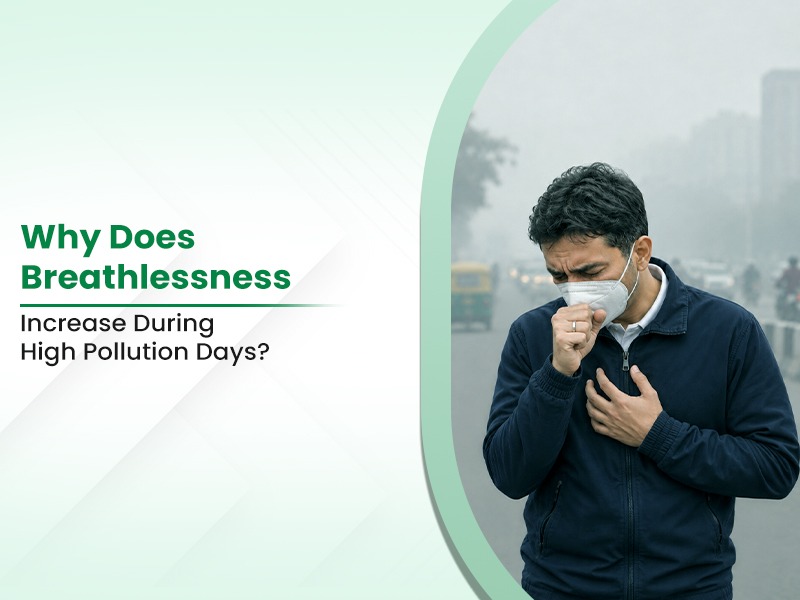
Why Does Breathlessness Increase During High Pollution Days?
Every winter across Delhi NCR, the morning sky shifts from clear blue to a dull, heavy grey, with a lingering haze of smoke. While many residents treat this annual haze as a routine seasonal change, the air during high-pollution days contains far more than harmless winter fog. It carries a mixture of dust, industrial emissions, and smoke that can travel deep into the respiratory system. Understanding how these pollutants trigger airway inflammation and affect oxygen exchange is important for protecting lung health.
How Toxic Air Triggers Breathlessness?
During severe smog episodes, vehicular exhaust, industrial fumes, construction dust, and crop residue burning can push PM2.5 and PM10 levels into hazardous territory. Unlike larger particles that are often trapped by nasal hairs or mucus in the upper airways, microscopic PM2.5 particles can bypass these natural defences and penetrate deep into the lower respiratory tract.
Once inhaled, these fine particles can reach the lungs and trigger an immune response. The resulting inflammation can cause the bronchial airways to swell, narrow, and produce excess mucus. This restricts airflow, making the lungs work harder with every breath and causing symptoms such as chest tightness, wheezing, and shortness of breath.
Why Delhi NCR, Ghaziabad, and Noida Face Higher Respiratory Risks
Landlocked geography, cooler winter temperatures, and unfavourable weather conditions can trap pollutants close to the ground across Delhi, Ghaziabad, and Noida. This can lead to persistently poor Air Quality Index (AQI) levels during winter. During these periods, even young, healthy adults without a history of respiratory illness may experience dry cough, throat irritation, fatigue, and unexplained breathlessness.
These symptoms are sometimes mistaken for a lingering seasonal viral infection. However, persistent or recurring symptoms may require a respiratory evaluation to check for airway obstruction, reduced lung function, or bronchial hyper-responsiveness. Repeated exposure to air pollution can aggravate existing respiratory conditions and contribute to the development or worsening of asthma, chronic bronchitis, and Chronic Obstructive Pulmonary Disease (COPD). Long-term exposure may also contribute to changes in lung function.
Warning Signs You Should Not Ignore
Early respiratory irritation may not always cause noticeable discomfort, making it easy to overlook until symptoms begin to interfere with daily activities. Seek timely evaluation from a pulmonologist in Vasundhara if you experience:
- Persistent cough lasting longer than two weeks
- Shortness of breath while walking on flat ground, climbing stairs, or performing routine tasks
- Chest heaviness, wheezing, or unusual fatigue, particularly during high-AQI days
- Recurrent throat or lower respiratory infections that take longer than usual to clear
Practical Steps to Protect Your Lungs During High-AQI Days
While outdoor air quality cannot be controlled overnight, a few daily precautions can help reduce exposure to air pollutants:
- Avoid early morning outdoor workouts: Pollution levels can remain high near the ground during cold morning hours. Check local AQI levels before exercising outdoors.
- Wear a well-fitted N95 mask outdoors: A properly fitted N95 mask can help filter fine particles. Standard cloth masks offer limited protection against PM2.5.
- Reduce indoor exposure during peak smog: Keep doors and windows closed when outdoor AQI levels are high, and use HEPA air purifiers if available.
- Maintain a balanced diet and stay hydrated: Include fruits and vegetables rich in vitamins and antioxidants as part of a balanced diet.
- Avoid tobacco smoke completely: Smoking adds to the harmful effects of ambient air pollution and can further damage respiratory health.
Expert Respiratory Care at Yashoda Medicity
If breathlessness, wheezing, or a persistent cough disrupts your daily routine, timely evaluation can help identify the underlying cause and guide appropriate treatment. At Yashoda Medicity, a leading hospital in Noida and across Delhi NCR, patients receive comprehensive respiratory evaluation through the Yashoda Institute of Respiratory Medicine & Interventional Pulmonology.
The institute is equipped with Pulmonary Function Testing (PFT) facilities, spirometry, High-Resolution CT (HRCT) scanning, video bronchoscopy suites, and respiratory intensive care facilities. These help specialists assess lung function and investigate respiratory conditions. Whether you are consulting the best pulmonologist in Noida or visiting from nearby Vasundhara and Ghaziabad, our multidisciplinary team provides care for pollution-related respiratory symptoms, allergy-triggered asthma, COPD, and complex airway disorders.
FAQs
1. Why do I feel breathless even when walking short distances on high-pollution days?
Fine PM2.5 particles can irritate and inflame the lower airways, causing swelling and excess mucus. This can restrict airflow and make physical activity more difficult.
2. Can healthy people without asthma develop breathing problems from air pollution?
Yes. Exposure to high levels of air pollution can irritate the airways and cause breathing difficulties, even in young, healthy individuals without a history of asthma.
3. When should I consult a pulmonologist in Vasundhara for pollution-related symptoms?
Consult a specialist if breathlessness, wheezing, chest heaviness or a persistent cough lasts for more than two weeks or interferes with daily activities. Seek urgent medical attention for severe or sudden breathlessness.
4. What diagnostic tests check if pollution has affected my lungs?
Doctors may recommend Pulmonary Function Tests (PFT), including spirometry, to assess airflow and lung function. High-Resolution CT (HRCT) scans may be advised when further evaluation of the lungs is required.
5. Where can I find advanced respiratory care for severe pollution-induced breathlessness?
You can consult the best pulmonologist in Noida and Delhi NCR at Yashoda Medicity, which offers respiratory diagnostic facilities, PFT services and respiratory intensive care.