
 Call: +91 9266610101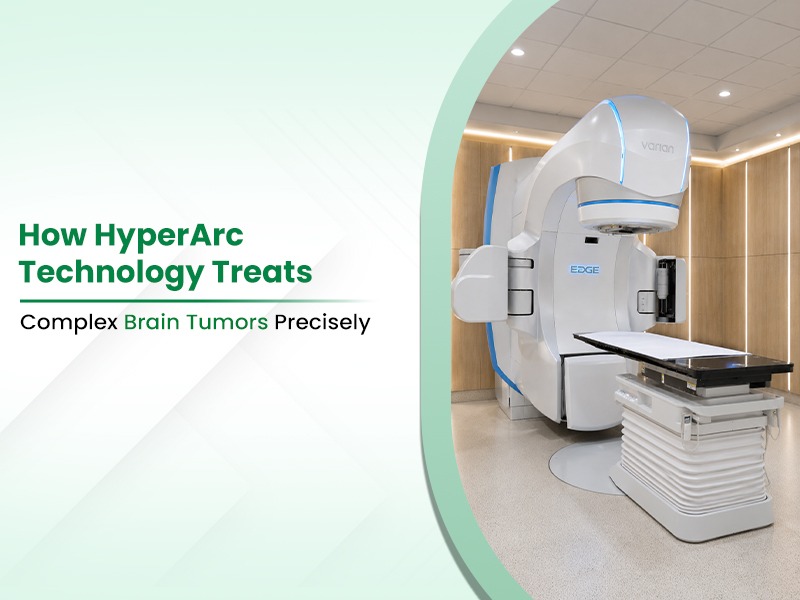
How HyperArc Technology Treats Complex Brain Tumors Precisely
The human brain is one of the most complex and delicate organs in the body, where even a small abnormality can significantly impact a person’s health and quality of life. Treating brain tumours requires a careful balance between eliminating abnormal growth and protecting critical areas responsible for essential functions such as movement, speech, and memory.
When tumours are located deep within the brain or near vital structures, conventional surgery may become challenging due to the risk of affecting surrounding healthy tissues. Advancements in radiation therapy, such as HyperArc technology, have introduced a highly precise, non-invasive approach for managing complex brain tumours while improving treatment accuracy and patient safety.
What Is HyperArc Technology?
HyperArc is an advanced, automated radiation therapy technology available within modern Radiation Oncology setups. It is a specialised form of stereotactic radiosurgery (SRS) designed to treat multiple brain lesions and complex intracranial tumours with exceptional precision.
Unlike conventional radiation therapy, where surrounding tissues may receive radiation exposure, HyperArc uses advanced imaging, automated treatment planning, and precision beam delivery techniques to focus radiation on the targeted tumour area while limiting exposure to nearby healthy brain structures. The system automatically determines optimal radiation beam angles and treatment pathways, allowing radiation oncologists to deliver highly accurate treatment for one or multiple brain tumours in a shorter and more efficient manner.
How Is High Precision Maintained?
The primary goal of brain tumour treatment is to deliver an effective radiation dose to abnormal cells while protecting healthy brain tissue. HyperArc achieves this through advanced software, real-time monitoring, and precise radiation delivery.
At Yashoda Medicity’s Radiation Oncology Department in Ghaziabad, advanced systems such as Varian EDGE with HyperArc and ExacTrac Dynamic enable radiation oncologists to deliver highly precise stereotactic radiosurgery (SRS) for complex brain tumours. This technology allows specialists to target tumours with sub-millimetre accuracy while minimising radiation exposure to surrounding healthy tissues.
The technology maintains accuracy through:
Automated Treatment Planning
Advanced computer algorithms analyse tumour size, location, and surrounding anatomy to create an optimised radiation plan. This helps specialists determine the safest and most effective beam pathways for treatment.
Precise Dose Distribution
HyperArc concentrates radiation energy within the tumour while reducing exposure to surrounding healthy brain structures. The radiation dose decreases rapidly beyond the targeted area, helping protect critical tissues.
Multi-Angle Radiation Delivery
The system delivers radiation beams from multiple directions, allowing them to converge precisely at the tumour site. This approach enables effective tumour control while reducing unnecessary radiation exposure to healthy areas.
Patients seeking advanced neurological care often choose a best brain and spine surgery hospital in Delhi equipped with modern radiation technology, experienced specialists, and multidisciplinary neuro-oncology teams.
Benefits of Non-Invasive Radiosurgery
For patients with deep-seated tumours, multiple brain lesions, or tumours located near critical structures, traditional surgery may involve higher risks. Non-invasive radiosurgery provides an alternative treatment approach by delivering focused radiation without the need for surgical incisions.
No Surgical Incisions
Unlike open brain surgery, stereotactic radiosurgery does not require opening the skull or physically removing tissue. It uses precisely targeted radiation beams to treat tumour cells.
Reduced Recovery Time
Since there are no surgical wounds or major physical trauma, patients generally experience shorter recovery periods and can return to daily activities sooner compared to conventional surgery.
Protection of Healthy Brain Tissue
The precision of HyperArc helps minimise radiation exposure to nearby healthy brain areas, supporting safer treatment outcomes.
Suitable for Complex Tumour Locations
Tumours located in challenging areas of the brain may be considered for radiosurgery when conventional surgical approaches are difficult or carry increased risks.
In situations where neurological symptoms worsen suddenly or urgent intervention is required, access to the best emergency hospital in Delhi with advanced imaging, critical care facilities, and specialist support ensures timely evaluation and treatment.
How Patient Movement Is Monitored During Treatment
Maintaining accuracy during radiation therapy requires precise patient positioning. Even small movements caused by breathing, muscle activity, or discomfort can affect treatment accuracy.
To address this challenge, HyperArc works alongside advanced motion monitoring systems such as ExacTrac Dynamic, which continuously tracks patient positioning during treatment.
These monitoring systems:
- Track patient position in real time.
- Detect even minor movements during treatment.
- Allow adjustments whenever required to maintain accuracy.
- Pause radiation delivery if movement exceeds safety limits.
This continuous monitoring ensures that radiation remains focused on the intended tumour area while protecting healthy brain structures.
Who Can Benefit From HyperArc Radiosurgery?
HyperArc can be beneficial for patients with several complex neurological conditions, including:
Multiple Brain Tumours
The technology can help treat multiple lesions located in different areas of the brain during a planned treatment approach.
Deep-Seated Tumours
Tumours located near important blood vessels or sensitive brain regions can be treated without requiring invasive surgical access.
Recurrent Tumours
Patients whose tumours return after previous treatment may benefit from the precision of radiosurgery, depending on their individual medical condition.
Patients Not Suitable for Traditional Surgery
Older patients or those with medical conditions that increase surgical risks may be evaluated for non-invasive radiation treatment options.
Where to Find Advanced Neuro Care?
Managing complex brain tumours requires advanced technology, experienced specialists, and coordinated multidisciplinary care. A dedicated healthcare facility with modern radiation systems, neurosurgical expertise, and comprehensive diagnostic support helps doctors create personalised treatment plans.
A best brain and spine surgery hospital in Ghaziabad brings together neurosurgeons, radiation oncologists, neurologists, and specialised teams to evaluate each patient’s condition and determine the most appropriate treatment approach.
At Yashoda Medicity, advanced neuro care combines modern radiation technology with expert clinical guidance to provide comprehensive management of complex brain and spine conditions.
Accessing Emergency Brain Care
Neurological emergencies require immediate medical attention. Symptoms such as sudden weakness, seizures, severe headaches, loss of consciousness, or changes in speech and vision require urgent evaluation.
A well-equipped emergency facility with advanced imaging, intensive care support, and specialist availability ensures patients receive timely diagnosis and appropriate intervention during critical situations.
Conclusion
Advancements in radiation therapy have transformed the management of complex brain tumours by providing highly precise, non-invasive treatment options. Technologies such as HyperArc enable radiation oncologists to target tumours accurately while protecting surrounding healthy brain tissue.
Choosing a specialised best brain and spine surgery hospital in Ghaziabad ensures access to advanced treatment technologies, experienced specialists, and comprehensive neurological care.
At Yashoda Medicity, the Radiation Oncology Department uses advanced systems such as Varian EDGE with HyperArc and ExacTrac Dynamic to deliver personalised stereotactic radiosurgery plans for patients with complex brain tumours. Supported by a multidisciplinary team of radiation oncologists, neurosurgeons, and neurologists, Yashoda Medicity provides precision-driven care focused on safety, accuracy, and improved patient outcomes.