
 Call: +91 9266610101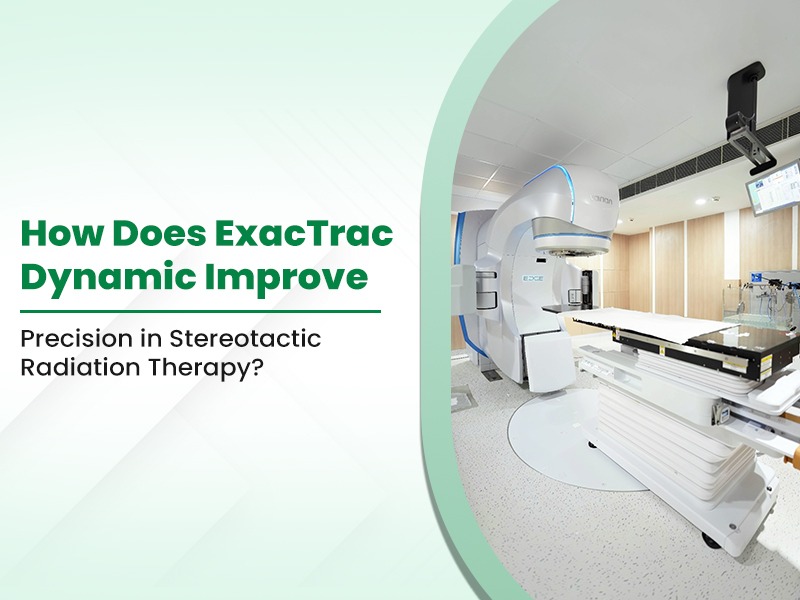
How Does ExacTrac Dynamic Improve Precision in Stereotactic Radiation Therapy?
Stereotactic Radiation Therapy (SRT) has revolutionized modern oncology by delivering concentrated, high-dose radiation directly to tumors while sparing adjacent healthy tissue. However, achieving highly accurate targeting requires managing minute body shifts, organ motion, and breathing patterns during treatment. Leading hospitals like Yashoda Medicity, recognised as the Best Radiotherapy Hospital in Noida, use advanced technologies such as Brainlab ExacTrac Dynamic to help manage these intra-fraction motion challenges.
By combining surface-guided radiation therapy (SGRT) with real-time thermal tracking and stereoscopic X-ray imaging, ExacTrac Dynamic supports precise patient positioning and motion monitoring. Patients seeking targeted cancer care at the Best Radiotherapy Hospital in Delhi NCR can benefit from this non-invasive monitoring approach, which may support frameless treatment workflows in appropriately selected cases.
High-Precision Dual-Imaging: Combining Surface and Thermal Tracking
EDGE with HyperArc and ExacTrac Dynamic combines optical surface tracking with thermal camera technology to create a detailed 3D surface map of the patient. The surface tracking module projects a dense light pattern onto the patient’s skin, monitoring multiple surface points simultaneously. The integrated thermal camera provides additional information for patient tracking and motion monitoring.
At Yashoda Medicity, this continuous, non-contact monitoring allows radiation oncologists to track patient positioning in real time without relying solely on physical restraints. By comparing the live surface information with the patient's baseline positioning data, the system can detect setup shifts during treatment. This supports accurate patient alignment before and during radiation delivery.
Real-Time Intra-Fraction Tracking with Automatic Beam Interruption
One of the biggest challenges in Stereotactic Radiosurgery (SRS) and Stereotactic Body Radiation Therapy (SBRT) is intra-fraction motion, which can occur while radiation is being delivered. Patients may move because of coughing, breathing, or other involuntary movements. EDGE with HyperArc and ExacTrac Dynamic supports continuous optical monitoring along with stereoscopic X-ray verification when required.
If the system detects movement beyond predefined treatment tolerances, radiation delivery can be interrupted according to the treatment workflow. The patient's position can then be reassessed and corrected before treatment resumes. This motion-management approach helps maintain accurate radiation delivery while reducing the risk of unintended exposure to surrounding healthy tissues.
Sub-Millimeter Accuracy for Complex Tumors and Cranial Indications
Targeting cranial, spinal, lung, or prostate lesions requires careful positioning because of their proximity to critical anatomical structures such as the optic pathways, brainstem, or spinal cord. ExacTrac Dynamic uses stereoscopic X-ray imaging to verify internal anatomical positioning rather than relying solely on external surface information.
This internal verification can help radiation oncologists assess target alignment during selected stereotactic treatments. High therapeutic doses can be delivered to appropriately defined treatment volumes while radiation exposure to surrounding organs at risk is carefully managed. ExacTrac Dynamic may support frameless stereotactic radiosurgery for selected brain lesions and stereotactic treatments at other sites, depending on the clinical indication.
Enhanced Patient Comfort and Faster Workflow Efficiency
Historically, some stereotactic radiosurgery procedures required invasive head frames or rigid immobilisation systems to restrict movement during treatment. ExacTrac Dynamic can support frameless workflows and non-contact monitoring in appropriately selected patients, which may improve comfort compared with certain rigid immobilisation approaches.
Additionally, automated alignment and continuous monitoring capabilities can support treatment setup and reduce the need for repeated manual positioning checks in selected workflows. This may help radiation therapy teams maintain consistent positioning during treatment while allowing them to respond to clinically relevant patient movement.