
 Call: +91 9266610101
Diwali Pollution and Breathing Problems: How Can You Protect Your Lungs?
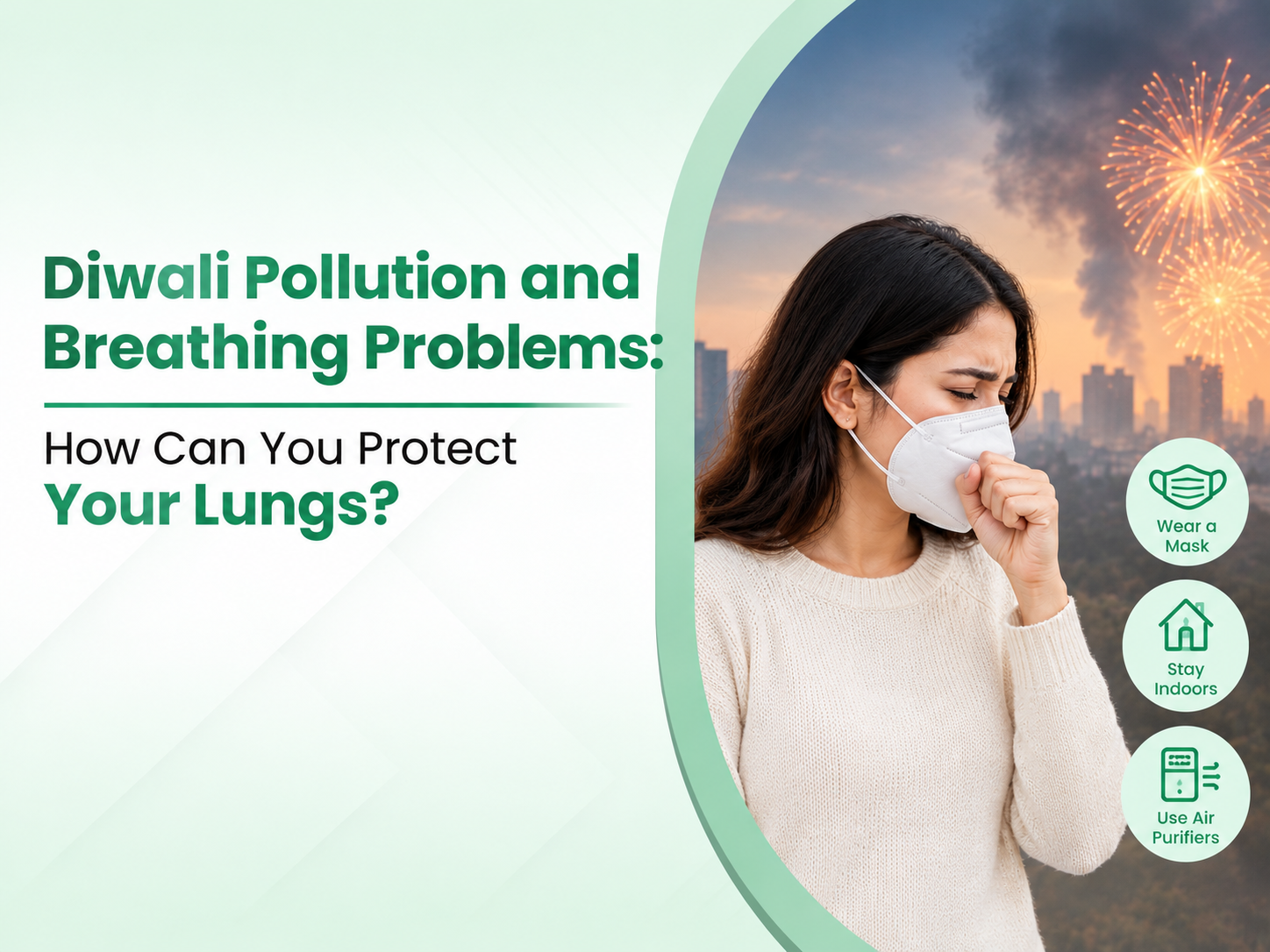
Diwali, the festival of lights, brings joy, family gatherings and vibrant celebrations. However, firecrackers, vehicular emissions and other pollutants can worsen air quality during the festive season. Exposure to smoke and fine particulate matter can irritate the airways, aggravate asthma and other respiratory conditions, and affect vulnerable groups such as children, older adults and people with pre-existing lung diseases.
Understanding how air pollution affects your lungs and following practical precautions can help you celebrate more safely. If you experience persistent or severe breathing difficulties, consult a pulmonologist for timely medical evaluation and appropriate care.
What Causes Air Pollution During Diwali?
Several factors can contribute to poor air quality during the festive season.
- Firecrackers: Release smoke, gases and fine particulate matter, including PM2.5 and PM10, which can enter the respiratory system.
- Increased vehicular traffic: Exhaust emissions add to the existing pollution burden.
- Industrial and household emissions: Industrial activity, energy use and waste burning can further contribute to pollution and smog.
How Diwali Air Pollution Affects Your Lungs
Exposure to smoke and polluted air can irritate the respiratory tract and cause symptoms such as:
- Irritation of the eyes, nose and throat
- Persistent coughing, wheezing and shortness of breath
- Worsening of asthma or Chronic Obstructive Pulmonary Disease (COPD)
- Increased respiratory discomfort in people with existing lung conditions
- Reduced lung function with prolonged or repeated exposure to air pollution
Children and older adults may be particularly vulnerable to the effects of polluted air. If symptoms persist or worsen, consulting a Lung Specialist in Noida can help identify the cause and determine appropriate treatment.
Key Symptoms of Pollution-Related Lung Irritation
Recognising early symptoms can help you take timely action. Watch for:
- Persistent cough or wheezing
- Chest tightness or discomfort
- Difficulty breathing, particularly in polluted environments
- Throat irritation or hoarseness
- Unusual fatigue or dizziness
People with pre-existing respiratory conditions may experience flare-ups even after relatively brief exposure to smoke. Those seeking a pulmonologist in Vasundhara should also consider timely evaluation if respiratory symptoms persist.
Practical Smog Protection Tips for Diwali
Protecting your lungs during Diwali involves reducing exposure to polluted air, both indoors and outdoors.
1. Use a Suitable Mask Outdoors
- Wear a well-fitting N95 or equivalent respirator when exposure to particulate pollution cannot be avoided.
- Ensure the mask fits snugly around the nose and mouth.
- Cloth and loose-fitting masks offer limited protection against fine particulate matter.
2. Limit Outdoor Exposure
- Avoid spending time outdoors during heavy firecracker activity or periods of poor air quality.
- Keep windows and doors closed when outdoor pollution levels are high.
- Check local Air Quality Index (AQI) readings before planning outdoor activities, and reschedule exercise or other strenuous activities when pollution is elevated.
3. Improve Indoor Air Quality
- Use an air purifier with a HEPA filter, if available, to reduce airborne particles.
- Avoid smoking, burning incense, and using other products that release smoke indoors.
- Follow recommended maintenance and filter replacement schedules for air purifiers.
Protecting Vulnerable Groups and Reducing Smoke Exposure
Children, older adults, and people with asthma, COPD, or other chronic respiratory conditions should take extra precautions during periods of heavy pollution. Limit their exposure to firecracker smoke and keep prescribed medicines readily available.
Choose celebrations that minimise or avoid firecrackers. If lighting diyas or candles, keep them away from flammable materials and avoid inhaling smoke directly.
Lifestyle Measures for Respiratory Health
Everyday habits can support general health, although they cannot eliminate the effects of air pollution.
- Balanced diet: Include a variety of fruits and vegetables as part of a balanced diet.
- Hydration: Drink enough water to maintain normal hydration and help keep airway mucus from becoming too thick.
- Breathing exercises: Practise recommended breathing exercises if suitable for your condition, particularly under professional guidance.
- Manage existing conditions: Follow your prescribed treatment plan and keep rescue inhalers accessible if prescribed. Monitor AQI levels and follow local health advisories when pollution is high.
When Should You Seek Medical Care at Yashoda Medicity?
Persistent coughing, wheezing, worsening breathlessness, or repeated asthma flare-ups warrant medical assessment. Seek emergency care for severe breathing difficulty, bluish lips, confusion or persistent chest pain.
If you are searching for a pulmonologist in Noida or a pulmonologist in Vasundhara, Yashoda Medicity in Indirapuram, Ghaziabad, offers access to specialist evaluation for respiratory concerns. A lung specialist can assess your symptoms and recommend investigations and treatment based on your medical history and condition.
Do not delay medical attention if breathing symptoms are severe or worsening, particularly during periods of high air pollution.