
 Call: +91 9266610101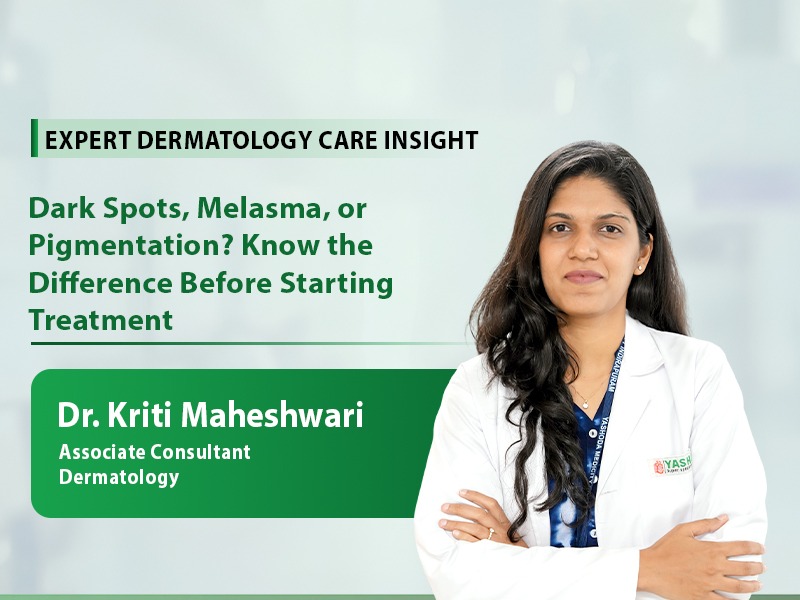
Dark Spots, Melasma, or Pigmentation? Know the Difference Before Starting Treatment
Not all facial dark patches are created equal, and applying the wrong over-the-counter brightening cream can often make stubborn discoloration worse. Dark spots are among the most common skin issues caused by intense sun exposure and urban pollution.
However, the skin discoloration you notice may not always stem from the same root cause. You might be searching for the difference between melasma and general pigmentation after noticing uneven skin tone, localized dark spots, or stubborn patches on your face.
Knowing the exact cause of your condition is the vital first step toward targeted, safe treatment. At Yashoda Medicity, our clinical team frequently diagnoses and differentiates melasma from other forms of hyperpigmentation to design personalized skin restoration plans. Consulting a qualified dermatologist in Delhi NCR ensures your skin receives an accurate assessment rather than a trial-and-error approach.
Unpacking the Terminology
Understanding how these conditions differ helps guide effective treatment:
- Hyperpigmentation (The Umbrella Term): This refers to any condition where excess melanin (the natural pigment that gives skin its color) forms deposits in the skin, creating darker patches than the surrounding tissue.
- Dark Spots or Sun Spots (Solar Lentigines): Flat, oval brown spots caused by direct, cumulative ultraviolet (UV) exposure. They commonly appear on high-sun areas like the cheekbones, nose, and forehead.
- Melasma: A specific, complex form of hyperpigmentation caused primarily by hormonal fluctuations combined with UV light, visible light, and heat exposure. It presents as larger, symmetrical, mask-like patches on the cheeks, the bridge of the nose, the chin, or the upper lip.
- Post-Inflammatory Pigmentation (PIH): Flat spots left behind after the skin experiences trauma, such as acne breakouts, eczema, or aggressive skin procedures.
Core Differences to Keep in Mind
To distinguish between these issues, pay attention to these three factors:
- Triggers and Root Causes: Dark spots stem directly from sun damage and environmental stressors. Melasma is strongly influenced by internal hormonal shifts (such as pregnancy, thyroid imbalance, or oral contraceptives) and by sun and heat exposure. PIH is triggered by direct skin injury or inflammation.
- Visual Appearance: Sunspots appear as distinct, isolated marks with clear boundaries. Melasma creates diffuse, feathered patches that usually cover broader areas symmetrically on both sides of the face.
- Pigment Depth: Standard dark spots are located primarily in the epidermal (surface) layer of the skin. Melasma often penetrates deeper into the dermal layers or exists as a mixed combination, making it far more stubborn to clear.
Understanding Pigment Depth: Epidermal vs. Dermal Hyperpigmentation
The depth at which excess melanin sits within your skin layers dictates both the treatment complexity and expected recovery timeline.
- Epidermal Pigmentation: Melanin deposits are trapped in the top layer of the skin. These patches usually appear well-defined, light-to-dark brown, and tend to respond relatively fast to topical exfoliants, chemical peels, and standard brightening agents.
- Dermal Pigmentation: Pigment settles deeper in the dermal layer, often appearing blue-gray, ash-brown, or slate colored with less defined borders. Because topical ingredients struggle to penetrate to this depth, dermal pigment requires advanced laser modalities to fragment the deep melanin.
- Mixed Pigmentation: A combination of both surface and deep dermal pigment. This is the most common presentation of melasma and requires a dual-action approach that pairs topicals with clinical laser therapies.
The Role of Lifestyle & Environmental Factors in Pigmentation
While genetics and hormones form the foundation of skin pigmentation, everyday habits and environmental exposures act as constant triggers:
- High-Energy Visible (HEV) Blue Light: Emitted by screen displays and digital screens as well as direct sunlight, HEV light penetrates deeper than UVA/UVB rays and can trigger pigment cells, particularly in melanin-rich skin.
- Urban Pollution & Particulate Matter: Airborne pollutants generate microscopic free radicals on the skin's surface, triggering localized oxidative stress that leads to cellular inflammation and stubborn dark spots.
- Infrared Radiation & Thermal Stress: High temperatures from cooking, saunas, or outdoor heat dilate blood vessels, triggering vascular pathways that directly feed melasma patches.
Why Accurate Diagnosis Matters Before Treatment
Applying aggressive exfoliating acids, using incorrect over-the-counter products, or undergoing unsuitable laser treatments without a clinical diagnosis can exacerbate pigmentation, especially in melanin-rich Asian skin types.
A trusted skin, hair, nail & aesthetic dermatology specialist evaluates the depth of pigment using specialized diagnostic tools like Wood's lamps or dermoscopy. While surface dark spots often respond well to topical retinoids and gentle chemical peels, melasma requires a broad, multilayered approach that includes oral anti-pigmentation agents, specialized low-fluence lasers, strict daily sun protection, and hormonal care.
Restoring Your Natural Glow at Yashoda Medicity
Whether you are dealing with stubborn melasma patches or sun-induced dark spots, receiving a customized treatment plan ensures your journey to clear, glowing skin is both safe and effective.
Dr. Kriti Maheshwari provides complete cosmetic and procedural solutions at Yashoda Medicity. She specializes in laser therapies using diode, Q-switched Nd:YAG, CO₂, IPL, and microneedling radiofrequency (MnRF). Her aesthetic services include treatments for melasma, anti-aging, acne, and acne scars.
FAQs
Q1. Can over-the-counter brightening creams permanently cure melasma?
No. Over-the-counter products typically target surface-level (epidermal) pigment and lack the concentration needed to address dermal or vascular melasma components. Because melasma is driven by internal hormonal signals and heat sensitivity, long-term clearance requires evaluation by a Skin, Hair, Nail & Aesthetic Dermatology Specialist who can prescribe medical-grade topicals, oral therapies, or targeted laser protocols.
Q2. Are laser treatments safe for dark spots and melasma on Indian skin tones?
Yes, provided they are performed using appropriate modalities and settings. Indian skin is prone to rebound post-inflammatory hyperpigmentation if exposed to high-heat lasers. Consulting an experienced Dermatologist in Delhi NCR ensures the use of safe, low-fluence lasers such as Q-Switched Nd:YAG or Microneedling Radiofrequency (MnRF), which fragment pigment gently without damaging surrounding tissue.
Q3. How can I tell if my facial spots are melasma or regular sunspots?
Sun spots usually present as distinct, flat, oval brown marks on areas of high sun exposure, such as the cheekbones or forehead. In contrast, melasma usually appears as broad, symmetrical, feathered patches on both sides of the face (cheeks, lip, bridge of nose). A professional clinical evaluation using a Wood's lamp or dermoscopy can definitively confirm the distinction.
Q4. Why does my melasma flare up even when I wear sunscreen daily?
Standard sunscreens often only protect against UVA and UVB rays, leaving skin vulnerable to High-Energy Visible (HEV) blue light from digital devices and direct sunlight, as well as heat radiation. For effective melasma management, dermatologists recommend tinted broad-spectrum sunscreens containing iron oxides, which physically block HEV light and prevent heat-induced triggers of vascular pigmentation.