Oral Thyroid Laryngeal Cancer Surgery Specialist
Open Emergency Modal

Frequently Asked Questions

Surgical oncology is the most common method used to treat head and neck cancer, which involves cutting out the tumor and a specific area of healthy tissue. In most cases, this can also involve neck dissection to remove affected lymph nodes, depending on the severity of the cancer. It allows the cancer to spread to nearby areas.
Usually, modern surgical oncology focuses on preserving the function of certain body parts. For this reason, advanced minimally invasive techniques by Dr. Sumanth Bollu are used, such as robotic surgery and transoral ultrasound surgery, to reach the tumors without large cuts in the skin.

Head and neck surgical oncology refers to the surgical treatment of tumors that appear on mucosal surfaces, glands, and structures of the upper aerodigestive tract. Cases affect oral cavity and pharyngeal cancers, including those occurring in the oral cavity (lips, tongue, gums, and buccal mucosa) and throat (nasopharynx, oropharynx, and hypopharynx).
This specialty also addresses laryngeal cancer (voice box tumors) and cancers located in the nasal cavity and paranasal sinuses. Furthermore, head and neck surgical oncology also deals with tumors occurring in thyroid and parathyroid cancers, along with those emerging from major and minor salivary glands, including parotid and submandibular ones.

Treatment protocols are tailored to the specific subsite and disease stage. Oral cancer is primarily treated through upfront surgical excision of the tumor paired with a neck dissection, followed by reconstructive surgery and adjuvant chemoradiation if high-risk features exist. Throat cancer (oropharyngeal) is managed via transoral robotic surgery (TORS) or definitive, targeted chemoradiation to spare swallowing function.
Thyroid cancer is addressed through surgical removal (partial or total thyroidectomy) utilizing intraoperative nerve monitoring to safeguard the vocal cords, often followed by radioactive iodine ablation. Laryngeal cancer utilizes a function-preserving approach, treating early stages with precision laser surgery or radiation, while advanced stages may require partial or total laryngectomy with subsequent voice rehabilitation.

Patients presenting with head and neck cancers, thyroid tumors, or salivary gland disorders should consult a dedicated Head and Neck Surgical Oncologist or a specialized Surgical Oncologist specializing in the head and neck subsite. These experts possess advanced training (such as an M.Ch in Head and Neck Surgery) to handle complex anatomy, complex ablative surgeries, and delicate reconstructive procedures.

Treating recurrent head and neck cancers and skull base tumors requires exceptional technical precision, as these conditions often involve previous radiation scarring or proximity to critical neurological and vascular structures. For skull base tumors, surgical oncologists utilize advanced endoscopic and open skull base approaches, operating in tandem with neurosurgeons to safely remove tumors located beneath the brain. In cases of recurrent cancers where standard options are limited, oncologists perform complex salvage surgeries. These aggressive resections are made possible by microvascular micro-reconstruction, using tissue, bone, and blood vessels from other body parts to fill complex structural gaps, alongside intraoperative navigation and nerve monitoring to protect vital functions.

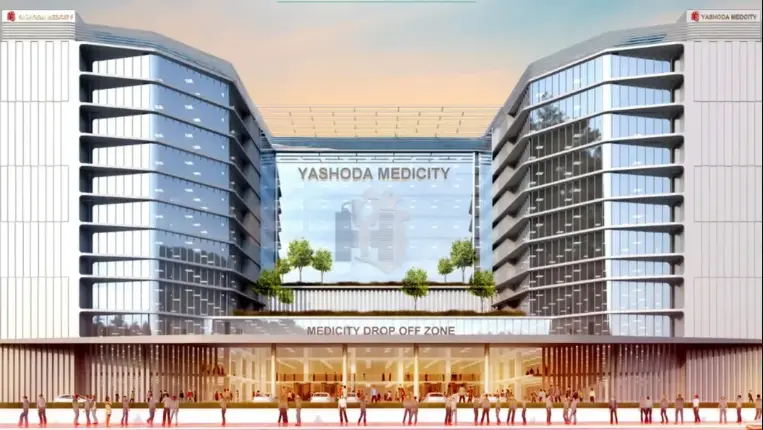
Yashoda Medicity offers a comprehensive, all-inclusive ecosystem for advanced head and neck oncology. Diagnostic infrastructure includes high-resolution PET-CT, MRI, and ultrasound-guided FNAC/biopsy for highly precise staging and molecular profiling. For treatment, the facility features ultra-modern operation theaters equipped for Transoral Robotic Surgery (TORS) and Transoral Ultrasonic Surgery (TOUSS), facilitating minimally invasive, scarless tumor removal. Radiation oncology is backed by precise platforms delivering IMRT, IGRT, and VMAT (Adaptive Radiotherapy) to precisely target tumors while sparing salivary glands. Furthermore, it provides dedicated day-care chemotherapy suites for advanced systemic therapies and immunotherapies, supported by a collaborative Multidisciplinary Tumor Board and specialized post-operative onco-rehabilitation teams.

Diagnosis begins with thorough clinical evaluations, fiberoptic laryngoscopy to view the airway, and imaging like ultrasound, CT, or MRI. Neck lumps and thyroid nodules undergo Fine Needle Aspiration Cytology (FNAC) or core biopsy to check for malignancy. Voice disorders are diagnosed via videostroboscopy to analyze vocal fold movement. Treatment for benign nodules or lumps involves observation or standard excision. If malignant tumors are found, treatment is multi-modal. Early voice box or throat tumors are addressed using precise laser resections or phono-surgery to restore voice quality. Malignant thyroid nodules require thyroidectomy under nerve monitoring, while complex head and neck tumors are treated with combinations of surgery, reconstruction, targeted radiation, and systemic therapies.

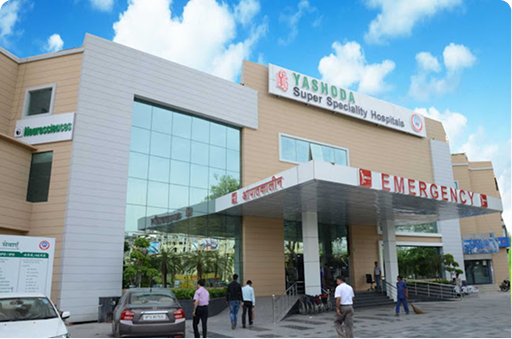
Patients in the Delhi National Capital Region (NCR) can access world-class, specialized treatment for head and neck cancers at premier tertiary care oncology institutes. A premier destination for complete care in the region is Yashoda Medicity, located in Indirapuram, Ghaziabad (Delhi NCR).
Yashoda Medicity features a dedicated Department of Head and Neck Oncology that offers advanced surgical options, precision radiation, and targeted therapies under one roof, removing the need for patients to travel deep into metro city centers. Other notable options in the broader NCR region include major apex public institutions like AIIMS New Delhi, alongside top-tier private healthcare networks like Medanta The Medicity (Gurugram), Max Healthcare, and Fortis Oncology centers.

Yes, comprehensive head and neck cancer treatment is actively available with Dr. Sumanth Bollu at Yashoda Medicity in Indirapuram, Ghaziabad. Dr. Sumanth Bollu is a highly accomplished Consultant in Head & Neck Surgical Oncology.
He holds an advanced M.Ch. in Head and Neck Surgery & Oncology from the prestigious AIIMS, New Delhi, and brings over a decade of specialized experience to the institution. He runs a full-spectrum oncology practice at Yashoda Medicity, providing expert surgical care for oral, throat, laryngeal, thyroid, and salivary gland cancers. His clinical focus emphasizes advanced transoral robotic surgery (TORS), laser resections, complex skull base surgeries, and intricate microvascular functional reconstructions.