Open Emergency Modal

Frequently Asked Questions

Cosmetic (aesthetic) surgery aims to enhance the beauty of healthy body parts, while reconstructive (Restorative) surgery aims to restore function and normalcy to parts of the body that were damaged by accident, disease, or birth defect(s). Dr. Shobhit Sharma is skilled at integrating these disciplines. In his more than 17 years as a surgeon, he uses the same principles of surgery, "tissue handling" and "aesthetic closure" to assist reconstructive surgical patients in restoring function without compromising their appearance. In addition, he provides his cosmetic patients with a natural and symmetrical outcome based on his extensive knowledge of human anatomy.

Dr. Sharma specializes in microvascular reconstruction and oncoplastic surgery for the head, neck, and extremities of cancer survivors. The technique of tissue restoration used in these advanced reconstructive procedures involves "free tissue transfer," in which skin, bone, or a combination of tissues is harvested from a healthy part of the body and microsurgically reattached to the defective portion. To date, Dr. Sharma has performed more than 2,000 such reconstructions to help cancer survivors regain and maintain essential functions such as the ability to swallow, speak, or walk; thus allowing them not only to "beat cancer" but also to improve the quality of life for cancer survivors.

Dr. Sharma's function-first approach is the basis of his work in complex Maxillofacial and Hand Trauma. Having treated more than 5,000 cases in total, he emphasizes properly realigning the facial bones to achieve adequate bite, vision, and facial symmetry during treatment. When treating Hand Trauma injuries, Dr Sharma treats the hand as a very carefully worked-on piece of machinery, taking into consideration the bone fractures, tendon rupturing, and nerve damage all at the same time, and ensures that he avoids as much stiffness and deformity long-term as possible using early mobilization protocols and careful surgical repairs to expedite return to normal activities for his patients.

When treating chronic non-healing ulcers and/or pressure sores, Dr. Sharma employs several complex flap surgical techniques, in addition to advanced wound care beyond a standard dressing. Surgical treatments involve rotating healthy, vascularized tissue over the wound to form a firm cushion and provide a constant blood supply; therefore, they are very beneficial for patients who have compromised healing (e.g., diabetes, spinal cord injury). The focus of his flap technique is to first debride all infected tissue and reconstruct the area to prevent any possible future occurrences, thereby closing these painful and potentially life-threatening wounds permanently.

Dr. Shobhit Sharma has performed more than 8,000 AV Fistula operations, providing patients on maintenance hemodialysis with a lifeline. A well-constructed fistula is essential for effective dialysis and for the patient's longevity. Dr. Sharma's extensive experience enables him to navigate challenging vascular anatomy and to perform "salvage" procedures for patients who have previously had unsuccessful access sites. Dr. Sharma's accuracy in establishing these connections minimizes complications, such as thrombosis and stenosis, resulting in reliable, long-term vascular access for patients and reducing the need for temporary catheters, which increase the risk of infection.

Patients with traumatic injuries to the brachial plexus or who have sustained a loss of function and/or sensation in the upper extremity should consider brachial plexus (nerve) repair, which Dr. Sharma indicates is best performed during what he calls the "Golden Period." This period generally falls within three to six months after the injury. During this timeframe, the muscle tissue is still able to respond to re-innervation. If the window is missed, the muscle atrophy would be irreversible. To help his patients regain functional use of their limbs.

At Yashoda Medicity, Dr. Sharma performs several Aesthetic (Cosmetic) Surgery procedures that create a more harmonized, balanced overall body and improve a person’s self-esteem and image. The three most popular procedure types are Liposuction (removal of fat), Abdominoplasty tummy tuck (restoration of the core), and Breast Reduction or Breast Augmentation; he has extensive experience with these. He also specializes in facial aesthetics including Rhinoplasty and Scar Revision. He takes a very safety-focused approach using only subtle, aesthetically pleasing changes that fit proportionately into a patient’s body, thereby creating the greatest likelihood that the patient will look good after surgery and not have any/ not have significant impact on their natural appearance.

Management of post-burn deformities - A type of surgery that releases contractures (increased density, thickness, and tightening of the skin/scarring tissues that restrict the range of motion in a joint, and cause deformities in the face). The reconstructive surgery techniques that Dr. Sharma employs include but are not limited to: skin grafting, Z-plasty, and tissue expansion. By replacing scarred tissues with healthy tissues, he enables burned patients to extend their extremities (limbs) and close their eyes. This process is extremely transformative because it not only reduces the physical difficulties associated with a burn but also greatly reduces the social stigma of being visibly scarred by a burn.

Dr. Sharma is a full-service physician for both the infant (newborn) and adult (post-infant) patient who was born with Cleft Lip and Palate. For the infant, the focus at this level is primarily on reconstructing the lip and palate to provide an adequate sucking/feeding mechanism (so that the newborn can be nourished appropriately) and to promote eventual speech development. For adults, the surgeon (Dr. Sharma) will perform any remaining surgeries necessary to correct a nasal deformity or address a speech problem (once a patient has had the opportunity to hone their speech skills). In this way, the surgeon takes a multi-disciplinary approach to provide a complete reconstruction of the lip and palate (relevant to both the lip and palatal repair), and the surgeon focuses on achieving a functional outcome (i.e. the individual has a fully functioning umbilical cord after the repair has occurred).

Dr. Shobhit Sharma has been working as a surgeon for over 17 years and has had an extensive number of surgical procedures performed. He was able to develop his current surgical techniques through his initial surgical training at the prestigious SMS Jaipur (Jaipur, India), and was influenced most heavily by his "surgical excellence through volume" training at SMS Jaipur. SMS Jaipur is renowned for its high volume of reconstructive (and trauma) surgeries, which have provided an excellent background for Dr. Sharma to develop into a highly skilled, calm, and precise surgeon during high-stress surgical procedures. His clinical style combines traditional surgical principles, as well as innovative and advanced microsurgical techniques to ensure that every patient (regardless of whether they were an infant or an adult when they underwent surgery) receives the highest level of care possible.

When people have lost a lot of weight, their last step in the transformation process might include body contouring through liposuction or a tummy tuck. Most people that lose a lot of weight will have sagging skin left over, as well as the need for reconstruction of their abdominal muscles. Following the surgical procedure, Dr. Sharma can use the excess skin to help create both a tight and toned abdominal wall and remove excess skin from the folds of the abdomen underneath. Not only is the objective of this procedure to achieve a better appearance, but also to remove the physical burden that the extra tissue causes, as well as to prevent, as much as possible, the possibility for the patient to develop skin infections from the excess skin folds as a result of their weight loss and their effort to attain a new body.

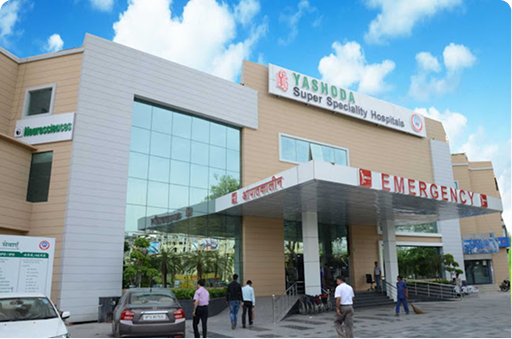
If you are in Ghaziabad, you can receive around-the-clock emergency reconstructive services for acute hand injuries, finger amputations, or traumatic facial injuries, all at Yashoda Medicity. Dr. Shobhit Sharma and his reconstructive team have the expertise and equipment to do Complex Re-implantation (Re-attaching Severed Limbs) and Complex Vascular Repairs that require Immediate Microsurgical Interventions. In Trauma, Time is Tissue. Having 24/7 access to an On-Call Plastic Surgeon gives trauma victims immediate access to Reconstructive Care, which enhances the likelihood of saving the limb and restoring facial integrity.