 Open Emergency Modal
Open Emergency Modal
Open Emergency Modal
Overview
Laser therapy represents an advanced treatment approach, offering precise and effective solutions for a wide range of conditions across various medical specialties. From delicate surgical procedures to pain management and aesthetic treatments, laser technology provides a minimally invasive alternative that often leads to faster recovery and improved clinical outcomes.
The Department of Dermatology & Cosmetology at Yashoda Medicity leverages advanced laser systems to deliver safe and effective laser therapies, ensuring patients receive the highest standard of care tailored to their specific needs. Our commitment to precision, safety, and patient-centric treatment makes us a trusted choice.
Laser therapy offered by the Dermatology & Cosmetology Department at Yashoda Medicity provides several advantages over traditional treatment methods, making it a preferred option for various medical and aesthetic conditions.
At Yashoda Medicity, our Department of Dermatology & Cosmetology offers evidence-based laser treatments tailored to individual skin types and concerns. Utilizing advanced, US FDA-approved technologies, we provide targeted solutions for hair reduction, skin rejuvenation, pigmentation correction, scar management, and tattoo removal.
Our centre employs advanced Diode and Nd:YAG laser technologies to achieve long-term hair reduction. The laser energy targets melanin within the hair follicle during the active growth phase (anagen), reducing future hair growth while preserving the surrounding skin. This treatment is suitable for a wide range of skin types.
We utilize fractional ablative and non-ablative laser systems for advanced skin rejuvenation. By creating microscopic thermal treatment zones (MTZs), these treatments stimulate collagen production, helping improve fine lines, skin laxity, acne scars, and overall skin texture.
Pigmentation concerns, including melasma, sun spots, freckles, and post-inflammatory hyperpigmentation, are treated using advanced Q-Switched and Picosecond laser technologies. These systems break down excess melanin into microscopic particles, which are naturally cleared by the body's lymphatic system.
Our scar revision treatments address acne scars, surgical scars, and hypertrophic scars using fractional resurfacing and vascular laser technologies. These treatments stimulate healthy collagen remodeling while reducing redness, improving the texture, flexibility, and appearance of the affected skin.
Yashoda Medicity offers laser tattoo removal using advanced Q-switched and picosecond laser technologies. Laser energy targets tattoo pigments, breaking them into tiny particles without damaging the surrounding tissue. These particles are gradually eliminated by the body's natural lymphatic system over multiple treatment sessions.
Laser skin tightening uses non-ablative laser technology to deliver controlled heat into the deeper layers of the skin, stimulating natural collagen production. This helps improve skin firmness, elasticity, and the appearance of mild skin laxity on the face, neck, and other treatment areas, with minimal downtime.
Stretch marks caused by pregnancy, rapid weight changes, or growth spurts can be improved using fractional laser technology. The treatment stimulates collagen and elastin remodelling, helping reduce the appearance, depth, and texture of stretch marks over multiple sessions.
Laser therapy is used to treat selected vascular conditions such as spider veins, facial redness, broken capillaries, and certain vascular birthmarks. The laser selectively targets blood vessels without damaging the surrounding skin, improving skin tone and reducing visible redness.
Selected benign skin lesions, including moles, warts, and skin tags, can be treated using advanced laser technology. The procedure offers precise removal with minimal damage to surrounding tissue, reduced bleeding, and faster healing when clinically appropriate.
Laser toning uses low-fluence Q-Switched laser technology to improve overall skin tone and texture. It is commonly used to address dull skin, uneven pigmentation, enlarged pores, and mild acne marks while stimulating collagen production for healthier-looking skin.
Low-Level Laser / Cold Laser (LLLT)
High-Intensity Laser Therapy (HILT)
Ablative Laser Therapy
Non-Ablative Laser Therapy
Fractional Laser Therapy
1. Consultation & Skin Assessment: Before Treatment
The Department of Dermatology & Cosmetology at Yashoda Medicity evaluates your skin type, medical history, and treatment goals. Based on the assessment, the appropriate laser type and treatment settings are selected. Patients may also be advised to avoid sun exposure or certain skincare products (such as retinoids) before the procedure.
2. Preparation & Numbing: 30–60 minutes before firing.
The treatment area is thoroughly cleansed. For deeper or heat-intensive lasers (like Ablative or Fractional), a topical numbing cream is applied to ensure comfort.
3. Safety Measures: Right before the procedure begins.
Both you and the clinician put on specialized protective eyewear. This is a non-negotiable step to protect your eyes from the specific wavelength of the laser light.
4. Laser Application: 15–45 Minutes
The dermatologist passes the laser handpiece over the treatment area. Depending on the type of laser used, you may experience a deep warming sensation (HILT/Non-Ablative), a mild snapping sensation similar to a rubber band (Fractional Laser), or little to no discomfort (Cold Laser). Cooling devices or chilled air may be used simultaneously to enhance patient comfort.
5. Post-Treatment Care: Immediately after.
A soothing ointment, a moisturizer, and a broad-spectrum sunscreen are applied to protect the fresh skin. The clinician will provide specific aftercare rules, such as staying out of the sun and avoiding harsh chemicals while the tissue heals.
Laser treatments at Yashoda Medicity are provided only after a comprehensive clinical evaluation. Qualified dermatologists supervise every procedure, especially since Indian skin types (Fitzpatrick skin types IV–VI) require careful selection of laser parameters such as wavelength, pulse duration, and energy fluence to minimise the risk of complications like overheating and post-inflammatory hyperpigmentation (PIH).
Our treatment protocols are designed to personalise laser settings for every patient, maximising safety, comfort, and treatment outcomes. Mild redness or swelling after certain procedures is normal and usually resolves within a few days.
Patients choose Yashoda Medicity for its experienced team of dermatologists, advanced multi-wavelength laser technologies, and stringent international safety protocols. The Department of Dermatology & Cosmetology offers comprehensive, evidence-based laser treatments tailored to individual patient needs, delivering safe, effective outcomes with minimal downtime and faster recovery.
 More
More
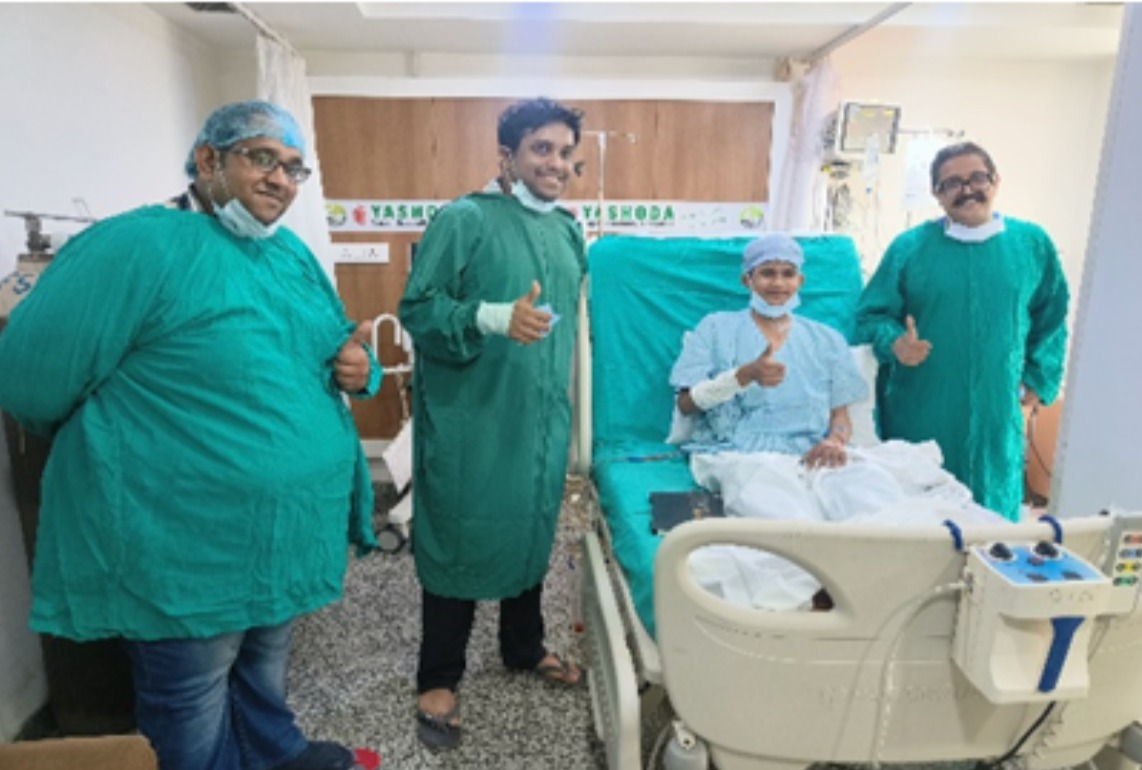
An International patient from Myanmar with Mitral Regurgitation, pulmonary hypertension and low ejection fraction-35% underwent successful transplant
A middle aged male was diagnosed with chronic kidney disease when he developed generalized body weakness, puffiness of face and swelling of legs with nausea, intermittent vomiting . On Investigations, he was found to have deranged renal function with urea-300 mg/dl,creatinine of 15 mg/dl, hb-9 mg and was subsequently started on hemodialysis via catheter inserted in right side of neck.
He subsequently visited India where he consulted our expert team of doctors-Dr Prajit Mazumdar, Dr Inderjit G Momin,Dr Vaibhav Saxena and Dr Kuldeep Agarwal at Yashoda Super Speciality Hospitals, Kaushambi who advised her to under renal transplant as it is the best form of renal replacement therapy. His Transplant workup was subsequently started and donor was wife and blood group was same.
However on transplant work up, it was found that he had Mitral Regurgitation, pulmonary hypertension and low ejection fraction-35% which increased his peri operative risk. Subsequently he was started on medicines and decongestion was done with diuretics and intensive hemodialysis. Subsequently renal transplantation was done after obtaining cardiology clearance with moderate risk and explaining the risk.
He underwent renal transplantation with Solumedrol and ATG induction. After transplantation he had good urine output with decreasing creatinine and was subsequently discharged with creatinine of 1.2 mg/dl . After transplant his pulmonary hypertension decreased and mitral regurgitation decreased which proves renal replacement therapy in form of transplant leads to improvement of cardiac condition. He is doing well on OPD follow up even today, 1.5 year after transplant with stable graft function and enjoying his life in myanmar.
Treatment By:
Dr Prajit Mazumdar, Dr Inderjit G. Momin, Dr Vaibhav Saxena, and Dr Kuldeep Agarwal
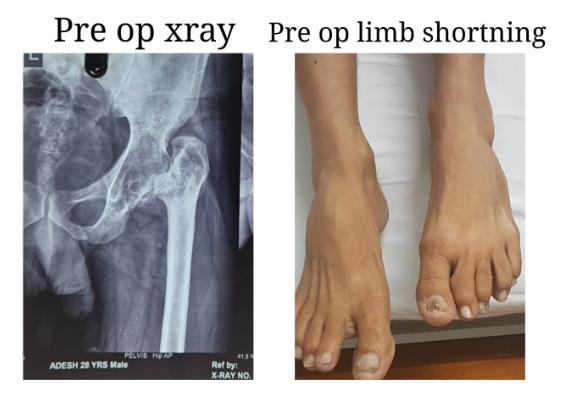
Total Hip Replacement in a Young Adult with Secondary Osteoarthritis of the Hip due to Sequelae of Childhood Septic Arthritis
Early and effective treatment of childhood hip septic arthritis is crucial to prevent or minimize long-term complications such as avascular necrosis, hip dislocation, osteoarthritis, and leg length discrepancy.
We present a case of a 30-year-old male patient suffering from secondary osteoarthritis of the left hip, with complete destruction of the joint over the past 20 years. He had septic arthritis of the left hip at the age of 9, which was only partially treated, resulting in long-term sequelae.
This was a challenging case due to the chronic arthritic hip and associated soft tissue contractures. We performed an uncemented total hip replacement with subtrochanteric osteotomy. The procedure proceeded as planned: the limb length discrepancy was corrected, and the patient was mobilized within 24 hours. He was discharged after four days, pain-free, and walking with support.
He is expected to achieve full weight-bearing and return to all activities of daily living within eight to ten weeks.
Treatment By:
Dr. Amit Sharma
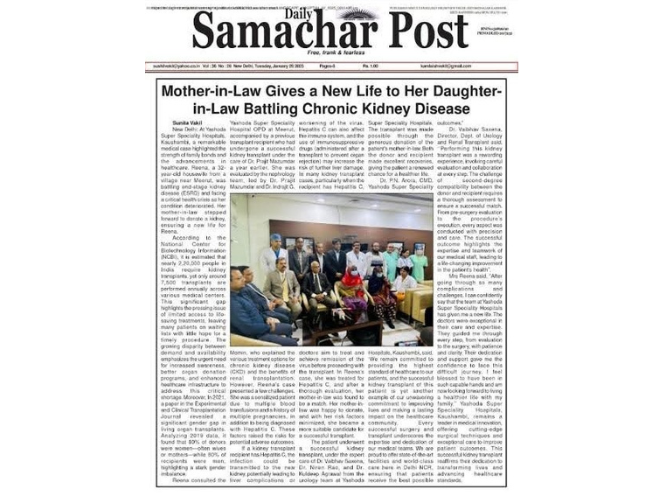
A new life donated to daughter-in law by mother in law
A 30-year-old female was diagnosed with chronic kidney disease after presenting with generalised weakness, loss of appetite, and intermittent vomiting. Investigations revealed impaired renal function, and she was started on haemodialysis through a catheter placed in the right side of her neck. She was advised maintenance haemodialysis three times a week.
She consulted our expert team of doctors including Dr Prajit Mazumdar, Dr Inderjit G. Momin, Dr Vaibhav Saxena, and Dr Kuldeep Agarwal at Yashoda Super Speciality Hospitals, Kaushambi. They recommended renal transplantation as the most effective form of renal replacement therapy. Her transplant workup was initiated, with her mother considered as the first donor option.
However, her mother was found to have diabetes, her father had a cardiac condition, and her husband was not a compatible blood group. With limited donor options, her mother-in-law, who had a matching blood group, came forward to donate a kidney and save her daughter-in-law’s life.
After obtaining clearance from cardiology, pulmonology, gynaecology, and psychiatry, along with approval from the authorisation committee, the transplant was successfully carried out with ATG induction. Post-transplant, she maintained good urine output with steadily improving creatinine levels. She was discharged with a creatinine of 1.2 mg/dl. The donor also recovered well and continues to do fine.
Treatment By:
Dr Prajit Mazumdar, Dr Inderjit G. Momin, Dr Vaibhav Saxena, and Dr Kuldeep Agarwal
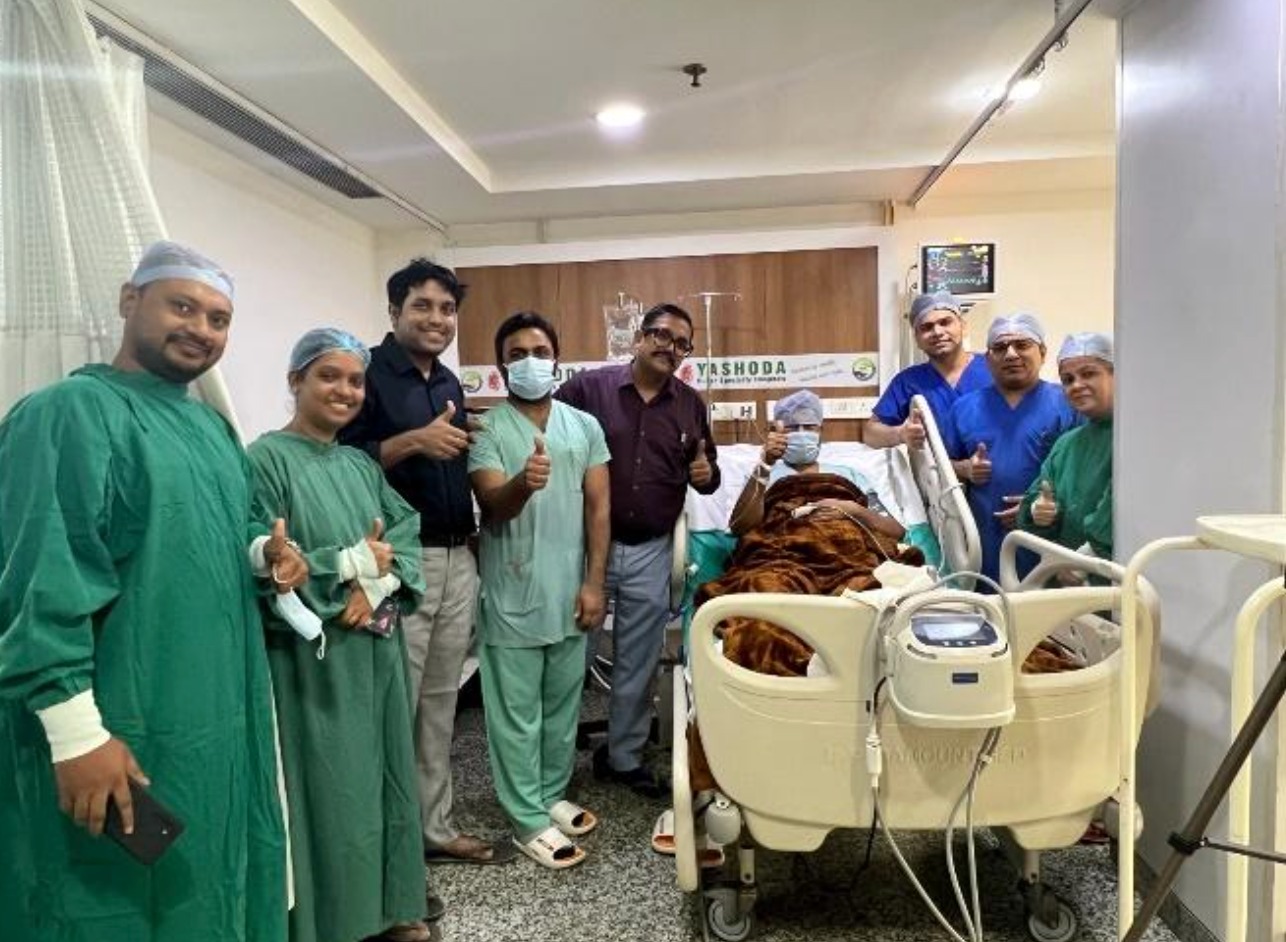
An International patient from Myanmar with Mitral Regurgitation, pulmonary hypertension, and low ejection fraction-35% underwent successful transplant
A middle-aged male was diagnosed with chronic kidney disease after developing generalised weakness, facial puffiness, swelling of the legs, nausea, and intermittent vomiting. Investigations revealed severely impaired renal function with urea of 300 mg/dl, creatinine of 15 mg/dl, and haemoglobin of 9 g/dl. He was started on haemodialysis through a catheter placed in the right side of his neck.
He later visited India and consulted our expert team of doctors, including Dr Prajit Mazumdar, Dr Inderjit G. Momin, Dr Vaibhav Saxena, and Dr Kuldeep Agarwal at Yashoda Super Speciality Hospitals, Kaushambi. Renal transplantation was advised as the most effective form of renal replacement therapy. His transplant workup was initiated, and his wife, who had a matching blood group, volunteered to donate.
During the evaluation, he was found to have mitral regurgitation, pulmonary hypertension, and a reduced ejection fraction of 35 percent, which significantly increased his perioperative risk. He was started on medications, optimised with diuretics, and maintained on intensive haemodialysis for decongestion. After cardiology clearance and counselling regarding moderate surgical risk, renal transplantation was planned.
He successfully underwent renal transplantation with Solumedrol and ATG induction. Post-transplant, he maintained good urine output with steadily decreasing creatinine levels and was discharged with a creatinine of 1.2 mg/dl. His pulmonary hypertension and mitral regurgitation also improved, demonstrating the positive impact of renal transplantation on cardiac function.
He continues to do well on outpatient follow-up, one and a half years after transplant, with stable graft function, and is enjoying a healthy life in Myanmar.
Treatment By:
Dr Prajit Mazumdar, Dr Inderjit G. Momin, Dr Vaibhav Saxena, and Dr Kuldeep Agarwal
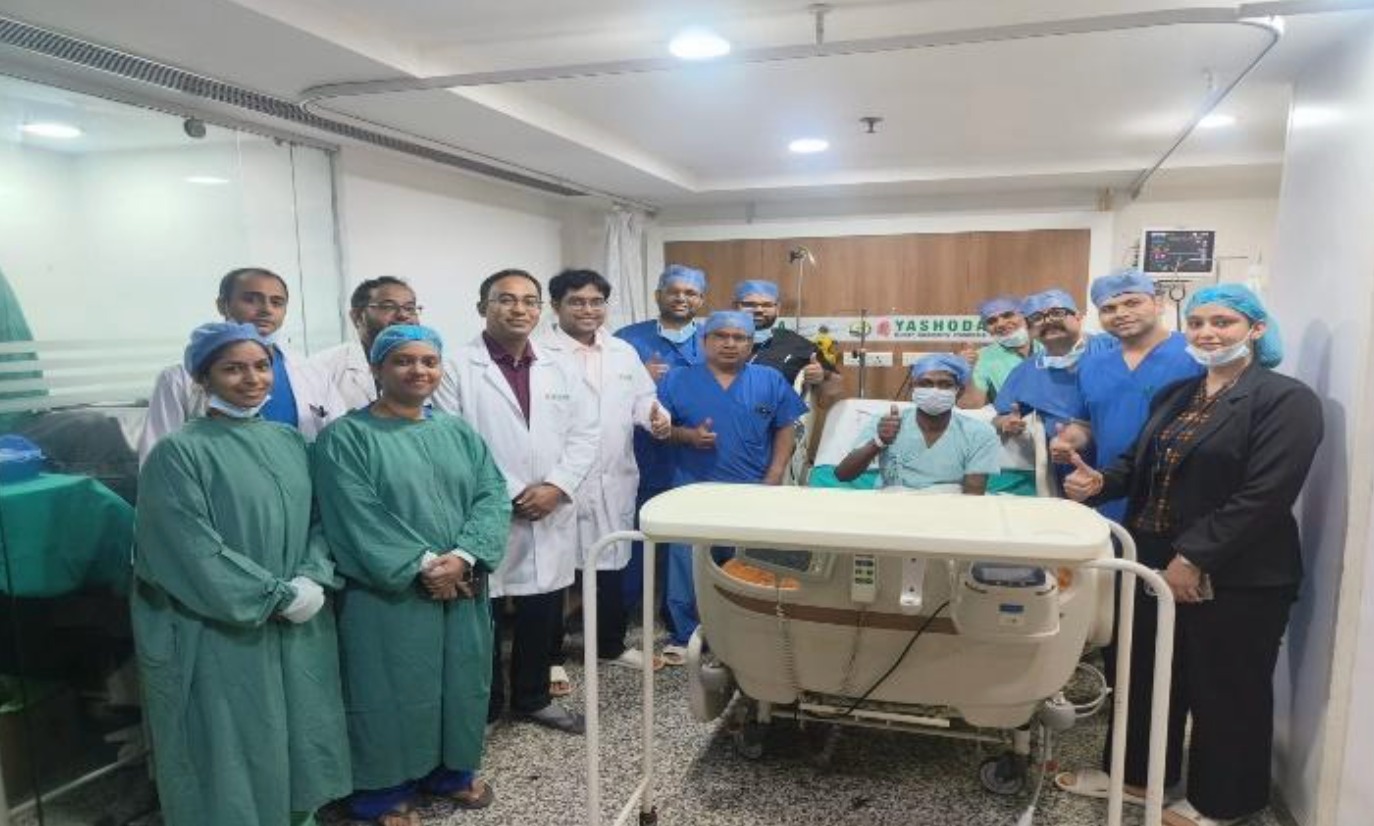
A case of ABO incompatible transplant with high ANTI B TITRES
A 37-year-old male was diagnosed with chronic kidney disease three years ago after presenting with frothy urine and hypertension. Initial investigations revealed a serum creatinine of 3 mg/dl. Over the next few years, his kidney function deteriorated, and he was started on maintenance haemodialysis three times a week via an arteriovenous fistula. He was referred to our hospital by a former recipient who had undergone renal transplantation under Dr Prajit Mazumdar. On evaluation by our team of doctors, the need for renal transplantation was explained in view of end-stage renal disease.
His transplant workup was initiated, with his father considered as the first donor. However, he was rejected due to diabetes. Donor evaluation of his mother was then undertaken, but her blood group was incompatible with the recipient. In view of ABO incompatibility, anti-A and anti-B titres were assessed and revealed a high anti-B titre.
After detailed counselling regarding prognosis, risks, and cost, the family opted to proceed with an ABO-incompatible renal transplant. Rituximab was administered two weeks prior to transplantation, and he was started on tacrolimus and mycophenolate mofetil. This was followed by two sessions of Glycosorb column treatment on days 12 and 14, after which his anti-B titre decreased to 1:2. He then underwent renal transplantation with Solumedrol and Simulect induction, with anti-B titres monitored every 12 hours.
Post-transplant, he maintained brisk urine output and his serum creatinine gradually declined. He was discharged with a creatinine of 1.2 mg/dl and continues to do well on follow-up.
Treatment By:
Dr Prajit Mazumdar
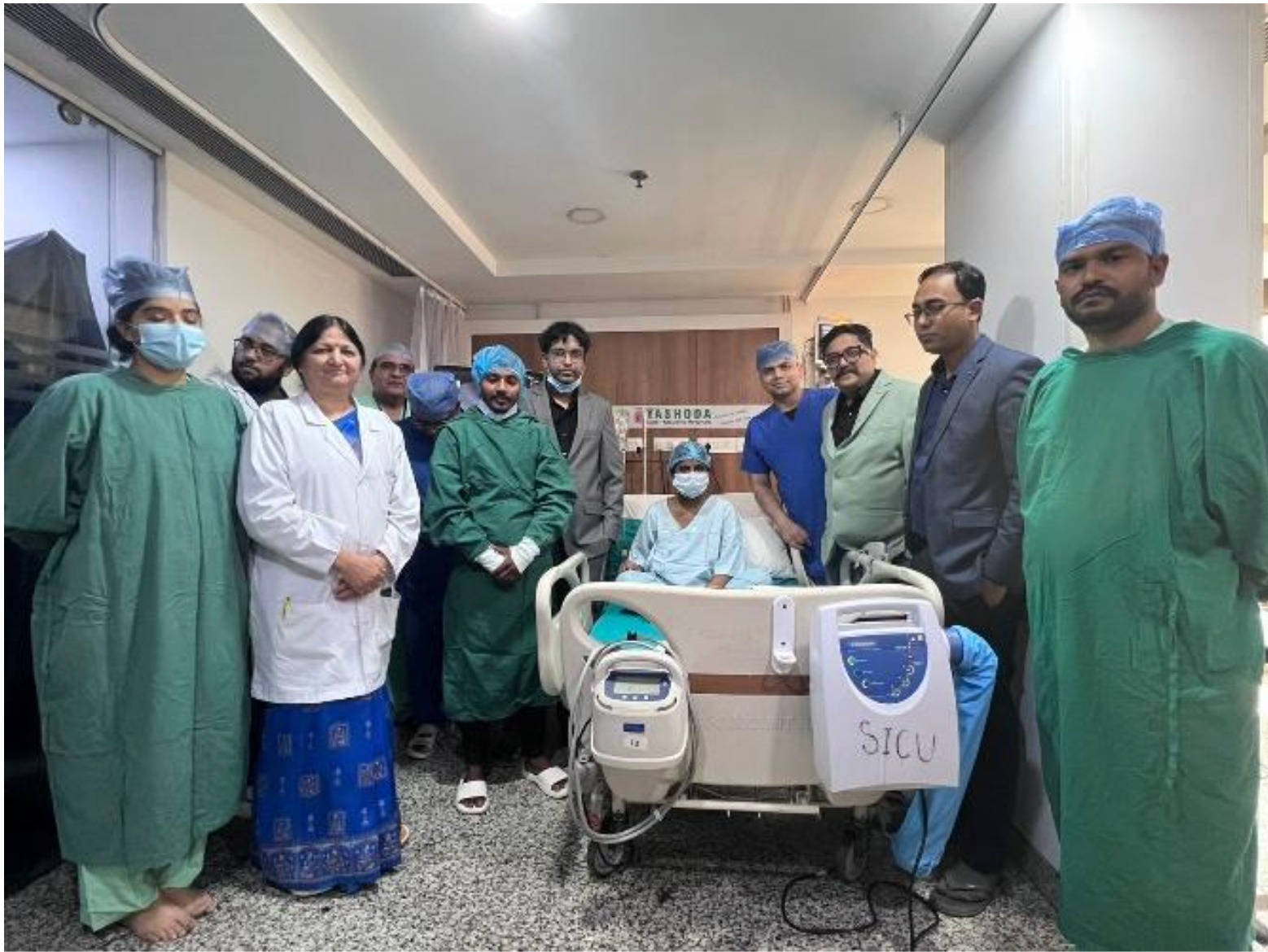
A challenging Case of renal transplant with a history of >22 units of blood transfusion and class 1 DSA positive
A 26-year-old male was diagnosed with chronic kidney disease after developing generalised weakness and loss of appetite. Investigations revealed impaired renal function with a creatinine of 12 mg/dl and haemoglobin of 5 g/dl. He was started on haemodialysis through a catheter placed in the right side of his neck and advised AV fistula creation with maintenance haemodialysis three times a week.
Despite regular dialysis, his anaemia persisted and he required multiple blood transfusions (more than 22 units over three months) even while receiving erythropoietin and iron therapy. Anaemia workup revealed occult blood in the stool, and upper GI endoscopy confirmed peptic ulcer disease.
He consulted our team of nephrologists (Dr Prajit Mazumdar and Dr Inderjit G. Momin) and urologists (Dr Vaibhav Saxena and Dr Kuldeep Agarwal) at Yashoda Superspeciality Hospitals, Kaushambi, where renal transplantation was advised. His mother, who had a matching blood group, was identified as the donor. However, transplant workup revealed donor-specific antibodies on single antigen bead testing (Class I) with an MFI greater than 2500 on multiple beads, most likely due to the multiple blood transfusions. This significantly increased the risk of acute rejection in the immediate post-transplant period, making the case high-risk.
After thorough counselling regarding risks, he underwent desensitisation with two sessions of plasmapheresis and IVIg to reduce the donor-specific antibodies. He then successfully underwent renal transplantation with ATG induction. Post-transplant, he maintained good urine output with steadily improving creatinine levels and was discharged with a creatinine of 1.2 mg/dl.
He continues to do well on outpatient follow-up.
Treatment By:
Dr Prajit Mazumdar, Dr Inderjit G. Momin, Dr Vaibhav Saxena, and Dr Kuldeep Agarwal
It was a very good experience, I had a cholecystectomy. All the doctors including surgeon, anesthetic, nursing and housekeeping staff were very supportive. I was admitted for 24 hours. Quick and very fast recovery. Under Dr P.K.Dewan, sir is very humble and nice.
All experience good, patient treatment was good, satisfied with all the services, nursing staff and doctors team also good and cooperative.
I had an excellent experience at Yashoda Hospital for my mother’s Total Knee Replacement Surgery.
From a clinical perspective, Dr. Amit Sharma and his team were outstanding. Their expertise and professionalism were evident throughout the process, and they did a fantastic job with the surgery and post-operative care.
Beyond the medical treatment, the administrative side was equally impressive. Mr. Varun took complete charge of the Insurance (TPA) and admission process, ensuring everything was seamless and stress-free for our family. His coordination made a significant difference in our overall experience.
We are truly grateful to the entire team for their dedication and care. Highly recommended!
Mr. Ajeet Kumar Verma from Yashoda Homecare provided satisfactory service of sample collection. Well behaved, humble & polite person
I had really good experience with Yashoda Home Care, the sample collection was very hygienically taken and pain-free, hassle-free. Mr. Ajeet was the phlebotomist.
Had a good experience with Ajeet Kumar Verma from Yashoda Home Care who supported me while I was looking for someone to dress my mom’s stitches. He is very professional and a caring person.
Great support and service by the Home care department. Everyone from Ms Niharika, Mr. Anoop to all the attendants including Mr. Natwar Pandey, Mr Inam and Mr. Ajit, all have been superbly supportive and helpful throughout. God bless you all and highly recommended.
Very good services in home care Yashoda hospital his ish
Caretaker Deepanshu and Jatin and Satish is very good caretaker I have never seen better care takers in my life.
And he is very polite behaviour and friend in nature
Yashoda Super Specialty Hospitals Kaushambi service is very good according other hospital and other home care services
The home care facility provided by the hospital is also good, the staff which was at home was cooperative.
Home care services are Good. Mr. सुनील Sajwan was cooperative and the केयर taker Mrs. Shushila's वर्क has been quite satisfactory.
Had a. Very good experience with Yashoda Homecare, Kaushambi. The staff was very cooperative with excellent on time services. I would like to give a special mention to Mr Sunil Sajwan (Sales) and Sushila ji (PCA) for their quick response and excellent services.
Fully satisfied Mr .Ajeet Kumar Verma service Yashoda home care . vry good
Was great to recieve the best homecare services from yashoda hospital and really impressed with Ms. Niharika's support at the initial phase followed by Mr. Natwar Pandey who was really supportive in taking care of my father basic daily needs.
Thanks for all the support


 Call: +91 9266610101