 Open Emergency Modal

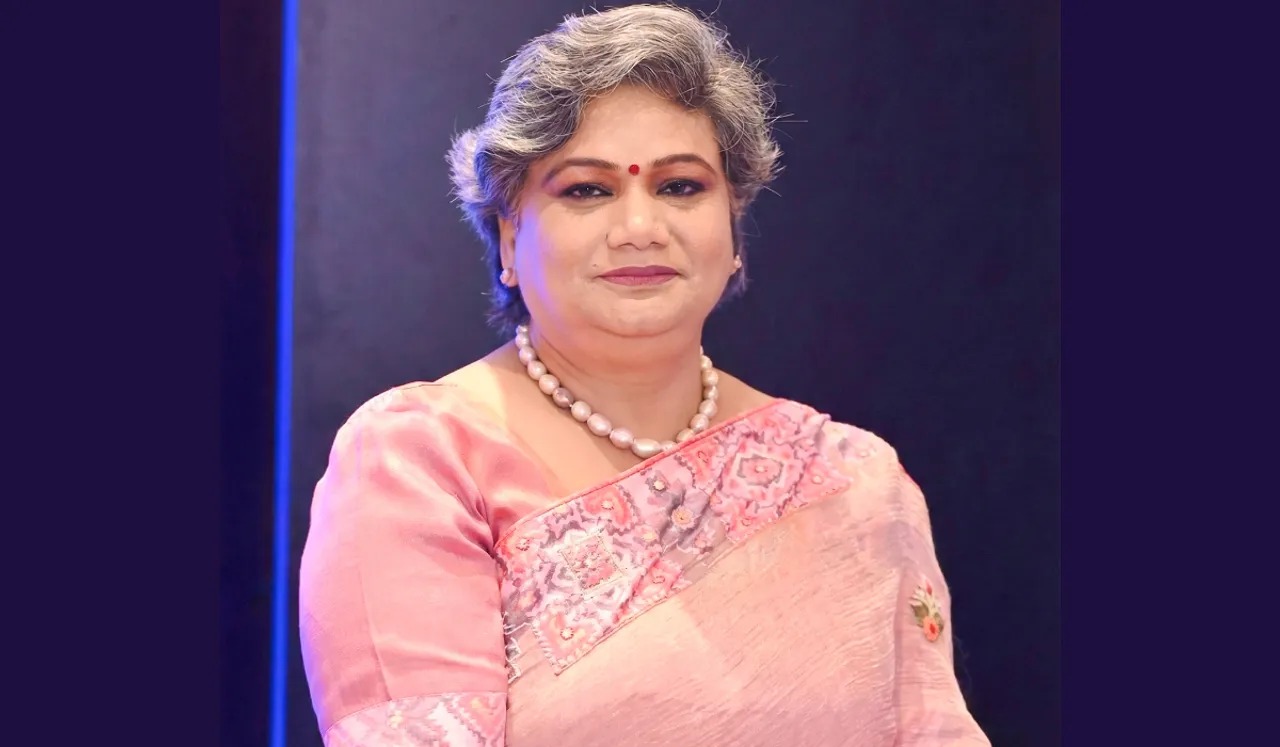
Dr Upasana Arora, MD of Yashoda Group of Hospitals, on the Rs 1,800 to 2,000 crore Yashoda Medicity build-out, medical tourism, margins, payers and Tier-2 expansion plans.
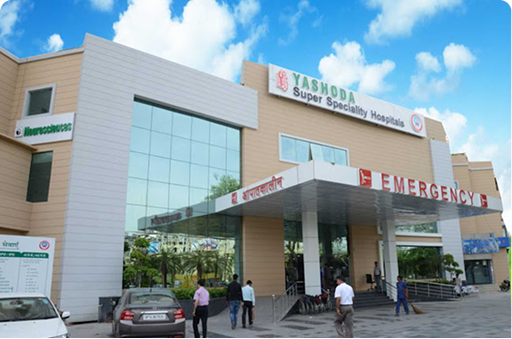
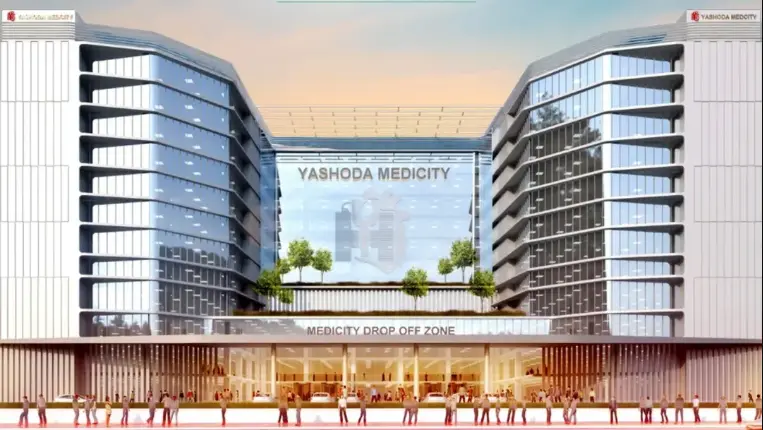
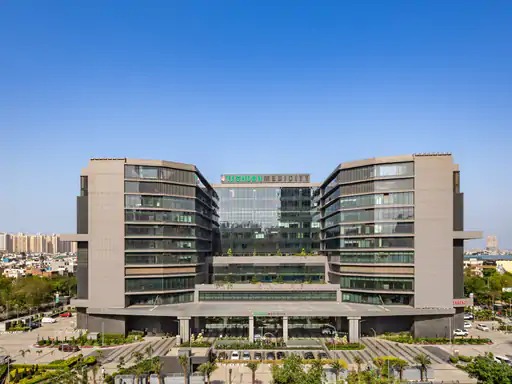
India’s private hospital sector is on an expansion spree, with growing demand for specialised treatment, better medical technology and care options for international patients. Among the latest developments is Yashoda Medicity, the Yashoda Group of Hospitals’ 1,200-bed facility in Indirapuram, Ghaziabad. Spread across eight acres, the hospital was inaugurated by President Droupadi Murmu. Its development also marks a significant investment in advanced healthcare infrastructure in North India.
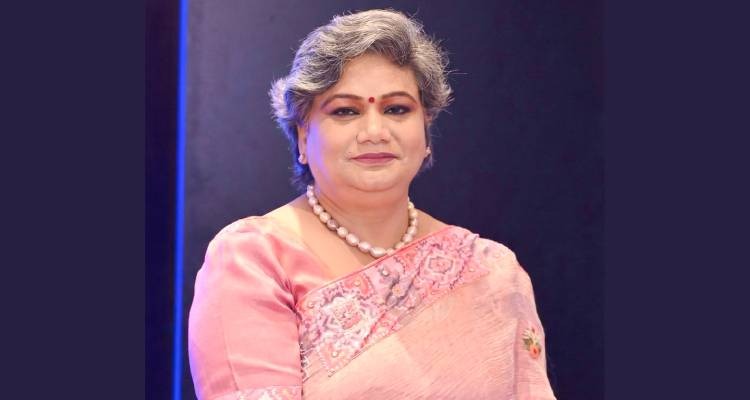
In an exclusive interaction with FE B2B Healthcare, Dr Upasana Arora, Managing Director of Yashoda Group of Hospitals, spoke about the investment behind the new facility, its revenue targets and plans to attract more patients from overseas. She also discussed rising procurement costs, energy savings, digital insurance processing and investments in medical training. (Edited Excerpts)
Q. What is the total capex for Yashoda Medicity, and what are your revenue targets over the next three years?
The hospital is being phased to enable us to gradually ramp up capacity as demand grows. The first phase, which currently has more than 300 beds operational, has seen an investment of around Rs 1,200 crore (excluding land costs). When the full capacity of 1,200 beds is attained, the total investment is likely to be in the range of Rs 1,800 crore to Rs 2,000 crore. The monthly revenues we envisage for the first year would be Rs 40 crore, Rs 60 crore in the second and Rs 80 crore in the third. Annually, this will be Rs 480 crore, Rs 720 crore and Rs 960 crore respectively.Our expansion plans also extend beyond Ghaziabad. We are planning a 300-bed hospital in Greater Noida, which is expected to open by 2028.
Q. Medical equipment and consumables are becoming more expensive. How are you managing these costs while protecting EBITDA margins?
For us, cost management involves more than negotiating a lower price for individual products. The way we purchase, store and use equipment and consumables also makes a difference.We follow standard operating procedures for procurement and inventory management and work with vendors through structured B2B contracts. This helps us secure predictable pricing while maintaining the quality and safety standards required in a hospital.Our presence across more than 65 super-specialities also gives us an opportunity to build long-term relationships with medical technology companies. These include Philips, Dräger, Medtronic and GE HealthCare. By planning purchases carefully and working directly with suppliers, we aim to limit the impact of inflation on operating costs without compromising patient care.
Q. Has the green building design at Yashoda Medicity translated into measurable cost savings?
Energy efficiency was considered from the design stage itself. The hospital’s glass façade is designed to help regulate indoor temperatures, reducing the need for excessive heating or cooling.Yashoda Medicity is registered for LEED certification with the US Green Building Council. The project also incorporates water conservation measures, energy management systems and automated infrastructure, including AEROCOM.Together, these measures have helped reduce overall operating costs by an estimated 2% to 3%. This is particularly relevant for a facility of our size, which includes 20 modular operation theatres, 10 endoscopy suites and 252 ICU beds. For a hospital that operates around the clock, even relatively small improvements in energy and resource consumption can make a difference over time.
Q. What share of your total revenue comes from international patients, and which markets are you focusing on?
International patients account for around 10% to 12% of our monthly revenue. Over time, we would like to increase that share to nearly 20%. We have built a network of more than 150 institutional MoUs and international travel partnerships to support this effort. Much of our focus is on South and Central Asia, including Uzbekistan, Kazakhstan, Kyrgyzstan, Tajikistan, Afghanistan, Bangladesh and Myanmar. We also receive patients from Africa, particularly East Africa, as well as the Middle East and West Asia. For patients travelling to India for treatment, arrangements outside the hospital are often just as important as the medical care itself. Our international patient services cover clinical assessments, visa assistance and follow-up care after treatment. We see demand across several specialities, particularly oncology, cardiology, neurosciences and organ transplantation.
Q. How is the Ayushman Bharat Digital Mission helping with insurance processing? Does NABH accreditation improve revenue yield?
We partner with over 300 insurance companies and corporate customers, including HDFC ERGO, Star Health, Medi Assist and leading GIPSA insurers such as New India Assurance.Ayushman Bharat Digital Mission interface helps link all points of a patient's journey, from consultation and admission to insurance claims. Improved digital linkage can help eliminate duplicated paperwork and facilitate faster claims and settlements.NABH compliance has contributed equally to the way we work on quality. It helps us bring in best hospital practices and makes patients and partner institutions more assured about our work.Accreditation can also play a role in how we get paid by insurers, where some form of payment guarantee will affect the bottom line of treatment. To complement operational discipline, this can also help with patient conversion and increase revenue outcomes.
Q. How much do you spend on doctor retention and training? What is the thinking behind the robotic surgery training centre and modular ICU?
Around 12% of our operational expenditure goes towards doctor retention, DNB academic programmes and ongoing clinical training. We consider this essential to building and retaining a strong team of specialists. Hospitals need experienced doctors, but they also need a steady pipeline of trained professionals. By incorporating DNB programmes and medical education into our operations, we can support the development of clinical talent while helping retain specialists in advanced surgical and critical care disciplines.The Dual-Bay Robotic Surgery Training Centre, launched in partnership with Intuitive, is another part of this effort. The centre is designed to allow two surgical training activities to take place simultaneously. Our objective is to strengthen surgeons’ skills and familiarity with robotic systems. Over time, better training can contribute to greater surgical precision and more efficient procedures. We see this primarily as a long-term investment in clinical capabilities rather than an immediate source of additional margins.Our 252-bed modular ICU, developed with Dräger, has a similar focus on improving clinical operations. The modular design makes cleaning and maintenance easier across specialised intensive care units. Integrated monitoring systems, along with ECMO and CRRT capabilities, support the management of critically ill patients.These facilities are intended to improve coordination between clinical teams and make better use of available resources. As the hospital expands, maintaining these standards will be important to both patient outcomes and operational efficiency.


 Call: +91 9266610101