
 Call: +91 9266610101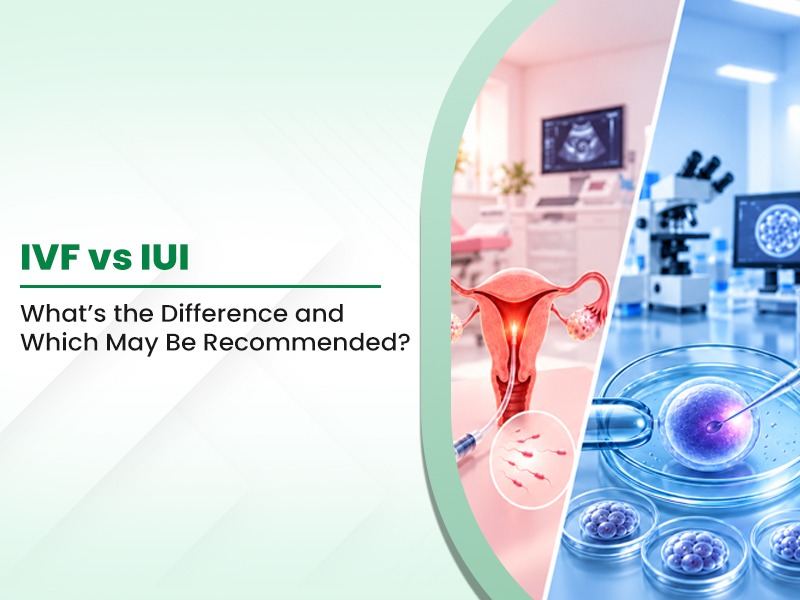
IVF vs IUI: What’s the Difference, and Which May Be Recommended?
While pregnancy could occur for most couples in the normal course, conception may remain elusive for some even years after establishing a conjugal relationship. In such cases, medical intervention is the best course of action. At Yashoda Cradle & Children's Hospital, recognized as a Best IVF Hospital in Noida, specialized fertility experts provide comprehensive guidance and state-of-the-art reproductive solutions customisd to every family's unique journey. There are two primary pathways to facilitate conception—intrauterine insemination (IUI) and in-vitro fertilization (IVF).
When nature isn’t taking the necessary action, these two fertility treatments can help women achieve pregnancy. Patients seeking guidance at the Best IVF Hospital in Greater Noida or looking for advanced care at the IVF Hospital often weigh both choices to find the path with the highest probability of success. For IUI, sperm is directly implanted into the woman’s uterus. On the other hand, IVF is a multi-step reproductive procedure covering egg stimulation and retrieval, followed by fertilization in a specialized laboratory and subsequent embryo transfer.
A fertility specialist will perform a thorough medical evaluation and preliminary diagnostic tests. Depending on the results, the couple will be advised about the most suitable treatment options. The estimated chances of successful conception with each procedure will also be disclosed, as IUI and IVF have crucial clinical differences. A detailed comparison of these options will help couples select the approach best suited to their medical needs, budget, and family goals.
When is IUI Preferred?
If infertility is an issue, doctors often recommend IUI as a first-line approach since it is a non-invasive, less expensive option with fewer clinical steps. Provided other reproductive parameters are normal, a few IUI cycles will typically be suggested before considering more complex interventions. During IUI, a processed and washed sperm sample is directly placed inside the woman’s uterus during her fertile window, either as part of a natural menstrual cycle or supported by mild fertility medications.
Because the washing process concentrates the most motile sperm, the egg is more likely to be fertilised. Direct intrauterine placement allows the sperm to bypass cervical barriers and travel a significantly shorter distance to reach the egg. This treatment line is especially suitable for couples experiencing sexual dysfunction issues or those with hectic work and travel schedules that disrupt regular conjugal relations.
When is IVF Recommended?
When IUI is clinically unsuitable or yields no results, fertility experts recommend progressing to IVF. Generally, IVF is advised by the Best IVF Hospital in Greater Noida in cases of severe male factor infertility, blocked or damaged fallopian tubes, advanced maternal age, or severe endometriosis. It is also the treatment of choice when there are concerns about passing specific inherited genetic disorders to the offspring.
Prior to an IVF embryo transfer, an advanced laboratory procedure known as Pre-implantation Genetic Testing (PGT) can be performed. This diagnostic technique helps detect specific genetic ailments or chromosomal abnormalities in the embryo. Identifying and selecting the healthiest, genetically viable embryo for transfer significantly improves implantation rates and fosters a healthy pregnancy.
Deciding the Better Option
Compared to IUI, IVF is widely deemed more reliable as it provides a higher overall probability of conception. Between the two, a key distinction lies in how eggs are utilized. In IUI, the goal is for the woman to mature only one or two eggs to trigger fertilization naturally inside the body. Conversely, IVF relies on retrieving multiple mature eggs directly from the ovaries, which is managed using specialized medications that stimulate egg growth prior to ovulation.
While 10 to 15 healthy eggs may be retrieved during an IVF cycle, outcomes vary: sometimes none lead to viable embryos, while in other cases, multiple high-grade embryos are formed. In both treatments, fertility medications improve success ratios, though temporary side effects from hormonal drugs can occur.
IUI is particularly useful when women experience mild ovulation irregularities, or men have minor sperm motility issues. However, for conditions like Polycystic Ovarian Disease (PCOD), tubal blockages, premature ovarian failure, or unexplained infertility, IVF delivers far superior outcomes.
To minimize the risk of multiple pregnancies and associated health complications for both mother and baby, clinicians often recommend single embryo transfers. Excess high-quality embryos can be safely preserved using embryo cryopreservation for future pregnancy cycles.
Furthermore, while IUI carries negligible risk of premature delivery, IVF pregnancies carry a slightly higher relative risk of low birth weight and premature birth, requiring close maternal-fetal monitoring.
Which Treatment Ensures More Successful Outcomes?
While couples eager to start a family frequently ask which option guarantees success, the answer varies based on individual biological factors. Technically, IVF at the best IVF hospital in Ghaziabad offers a higher success rate per cycle than IUI, but this statistical advantage does not apply uniformly to every situation. Final outcomes remain heavily contingent on age, underlying causes of infertility, ovarian reserve, baseline hormonal health, and medical history.
On average, IUI yields a success rate of approximately 15% to 20% per monthly attempt, with a cumulative success rate reaching 40% to 50% after three or four consecutive cycles. In contrast, a single IVF cycle at a modern fertility center delivers success rates ranging between 50% and 75%. Because every patient's situation is unique, consulting a qualified fertility specialist for a personalized evaluation is the most effective step toward achieving a healthy pregnancy.