
 Call: +91 9266610101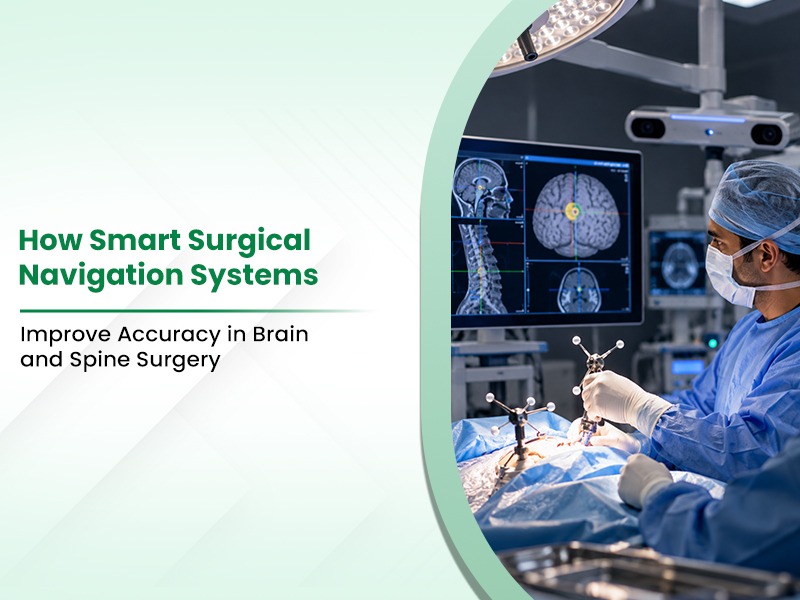
How Smart Surgical Navigation Systems Improve Accuracy in Brain and Spine Surgery
Conditions affecting the brain and spine often require careful surgical planning because important nerves and other critical structures may be located close to the treatment area. A smart surgical navigation system can provide neurosurgeons with image-guided information during surgery, helping them plan and perform procedures based on the patient's anatomy. Seeking care at the Best Neuro Hospital in Noida provides access to advanced navigation technology at Yashoda Medicity, supported by specialised neurosurgical expertise.
What is Smart Surgical Navigation?
Advanced surgical navigation functions as an image-guided reference system for neurosurgeons during brain and spine procedures. Before surgery, detailed imaging of the patient's brain or spine can be incorporated into the navigation system to create a three-dimensional anatomical reference.
During surgery, tracking technology helps the surgical team identify the position of instruments in relation to the patient's anatomy. This information can support surgical planning and navigation, particularly when operating near important neural structures.
How Surgical Navigation Supports Brain Surgery
The brain contains critical structures involved in functions such as movement, speech, memory, and sensation. Image-guided navigation can help neurosurgeons plan access to lesions or tumours while considering their relationship to surrounding anatomy.
Seeking care at the Best Neuro Hospital in Greater Noida provides access to advanced neurosurgical facilities at Yashoda Medicity, where navigation technology may support complex procedures in several ways:
- Tumour and Lesion Localisation: Navigation can help surgeons correlate pre-operative imaging with the surgical field and identify the planned target location.
- Surgical Planning: Three-dimensional imaging can help the surgical team plan an appropriate trajectory and surgical approach based on the patient's anatomy.
- Anatomical Guidance: Navigation can provide positional information when operating near important brain structures and neural pathways.
Neurosurgical teams may use these image-guided systems alongside other monitoring and imaging techniques depending on the procedure and patient's clinical requirements.
Intraoperative Imaging and Adaptability
Brain and spinal anatomy can change during surgery. In selected procedures, intraoperative imaging can provide updated anatomical information and help the surgical team reassess the operative field.
Navigation systems may be integrated with intraoperative imaging to support surgical decision-making when anatomical changes occur. The specific technology used depends on the procedure, surgical approach, and clinical requirements.
Pre-Operative Surgical Planning
Modern navigation systems can support detailed planning before surgery. Patient imaging can be reviewed using specialised software to understand the location of a tumour, lesion, deformity, or other abnormality in relation to surrounding structures.
Three-dimensional planning can help surgeons assess potential surgical trajectories and determine an appropriate operative approach for anatomically complex procedures. The final surgical strategy is based on the patient's imaging, diagnosis, clinical condition, and other relevant factors.
Enhancing Guidance in Spine Surgery
Spinal procedures may involve placing screws, rods, cages, or other implants close to the spinal cord and nerve roots. Image-guided navigation can assist surgeons in planning and assessing implant placement during selected procedures.
Smart surgical navigation may support spine surgery by:
- Supporting Implant Placement: Navigation provides three-dimensional anatomical information that can assist with planning the trajectory and position of spinal implants.
- Reducing Reliance on Repeated Fluoroscopy: In selected procedures, navigation and intraoperative imaging may reduce the need for repeated conventional X-ray imaging, depending on the surgical technique.
- Supporting Minimally Invasive Approaches: Image guidance can assist selected minimally invasive procedures by providing anatomical information through smaller surgical access points.
The potential benefits and limitations of navigation depend on the specific procedure, technology used, and individual patient factors.
Key Benefits of Smart Navigation for Patients
Smart surgical navigation can support neurosurgeons by providing additional anatomical information during complex brain and spine procedures. Potential benefits include:
- Detailed Surgical Planning: Three-dimensional imaging can support planning based on the patient's individual anatomy.
- Image-Guided Instrumentation: Tracking technology helps the surgical team relate instrument position to pre-operative or intraoperative imaging.
- Support for Complex Procedures: Navigation may be particularly useful when operating near critical neural structures or when precise implant positioning is required.
Navigation is an adjunct to surgical expertise and does not eliminate the potential risks associated with neurosurgical procedures. Surgical outcomes vary according to the diagnosis, procedure, overall health, and other individual factors.
Why Choose Yashoda Medicity for Advanced Neurosurgery?
Choosing a hospital for complex brain and spine care involves considering specialist expertise, surgical infrastructure, imaging capabilities, critical care support, and multidisciplinary coordination. Finding the Best Neuro Hospital in Noida provides patients with access to specialised neurological and neurosurgical services supported by advanced technology.
At Yashoda Medicity, neurosurgical teams use image-guided navigation and other surgical technologies according to the patient's diagnosis and clinical requirements. The hospital also provides Neuro-Intensive Care support and multidisciplinary neurological care when required.
Patients can consult the neurosurgery team to understand whether surgical navigation or other image-guided technologies are appropriate for their condition. Schedule a consultation through the Yashoda Medicity online appointment system.
FAQs
Q1. What is a smart surgical navigation system, and what is its application at Yashoda Medicity?
A smart surgical navigation system is an image-guided technology that helps neurosurgeons relate surgical instruments to a patient's pre-operative or intraoperative imaging. At Yashoda Medicity, such systems may be used during selected brain and spine procedures based on the patient's clinical requirements.
Q2. How can surgical navigation assist in brain tumour surgery at Yashoda Medicity?
Surgical navigation can help neurosurgeons correlate the location of a brain tumour or other lesion with surrounding anatomy and plan an appropriate surgical trajectory. It may be combined with other imaging and monitoring techniques depending on the procedure.
Q3. Can pre-operative virtual planning support complex neurosurgery at Yashoda Medicity?
Yes. Three-dimensional imaging and planning software can help surgeons review patient-specific anatomy, assess potential surgical approaches, and plan procedures before surgery. The final approach depends on the patient's diagnosis and clinical requirements.
Q4. How can surgical navigation support spine surgery at Yashoda Medicity?
Navigation can provide three-dimensional anatomical guidance during selected spine procedures, helping surgeons plan and assess the placement of spinal implants such as screws. It may also reduce the need for repeated conventional X-ray imaging in selected procedures.
Q5. Why consider Yashoda Medicity for complex neurosurgery?
Yashoda Medicity provides specialised neurosurgical services supported by image-guided surgical navigation, advanced diagnostic imaging, Neuro-Intensive Care, and multidisciplinary neurological expertise. Treatment is planned according to the patient's condition and clinical requirements.