
 Call: +91 9266610101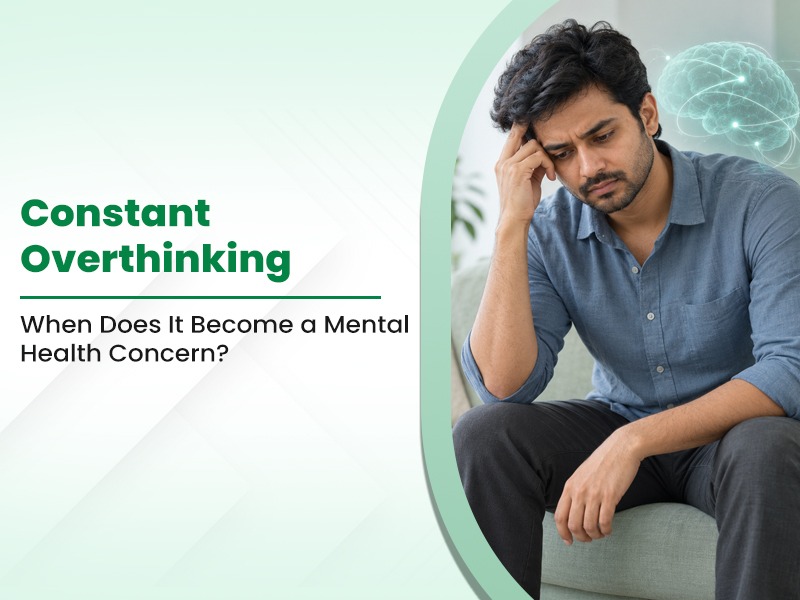
Constant Overthinking: When Does It Become a Mental Health Concern?
Do your thoughts keep you awake at night? Do you repeatedly second-guess your decisions or imagine different worst-case scenarios? Occasional worry and reflection are a normal part of life, but persistent overthinking can become difficult to manage when it starts affecting sleep, concentration, relationships, work, or daily activities.
Overthinking is not a mental health disorder by itself. However, persistent worry or rumination can occur alongside conditions such as anxiety disorders and depression. Recognising when repetitive thoughts are becoming difficult to control can help you seek appropriate support and protect your emotional well-being.
Is Overthinking a Mental Illness?
According to mental health professionals at the Best Mental Health Hospital in Noida, overthinking is not a distinct mental health diagnosis. It is a general term used to describe patterns such as excessive worry, repetitive negative thinking, or rumination. These patterns can occur during periods of stress and may also be associated with anxiety, depression, obsessive-compulsive disorder, or other mental health conditions.
One condition commonly associated with persistent and difficult-to-control worry is Generalized Anxiety Disorder (GAD). GAD involves excessive anxiety and worry about several areas of life, occurring more days than not for at least six months and accompanied by symptoms such as restlessness, fatigue, difficulty concentrating, irritability, muscle tension, or sleep disturbance.
However, experiencing frequent overthinking does not automatically mean that a person has GAD or another mental health disorder. A qualified mental health professional can assess the nature, duration, and impact of these symptoms before determining whether further evaluation or treatment is required.
What Does Overthinking Look Like?
Overthinking can involve repeatedly analysing the same situation without reaching a useful conclusion. A small concern about a work task, relationship, health issue, or financial decision may lead to a prolonged cycle of hypothetical questions and negative possibilities.
Common patterns may include:
- Catastrophising: Assuming that a situation will lead to the worst possible outcome without sufficient evidence.
- Decision Paralysis: Spending excessive time analysing choices and repeatedly questioning decisions that have already been made.
- Reassurance Seeking: Frequently asking others for confirmation or reassurance because uncertainty feels difficult to tolerate.
- Rumination: Repeatedly revisiting past conversations, mistakes, or situations without identifying a practical way forward.
- Mental Fatigue: Feeling emotionally or mentally exhausted after spending prolonged periods worrying or analysing situations.
- Sleep Difficulties: Finding it difficult to fall asleep or stay asleep because thoughts continue to occupy the mind.
These patterns can become a concern when they are persistent, difficult to control, or interfere with everyday functioning.
Overthinking vs. Problem-Solving
Understanding the difference between productive problem-solving and unproductive rumination can be helpful.
Problem-solving generally involves identifying a specific issue, considering realistic options, and taking practical steps that are within your control. It has a clear purpose and can lead to an action or decision.
Rumination, on the other hand, involves repeatedly going over the same thoughts, mistakes, or possibilities without reaching a practical resolution. It can maintain feelings of worry or distress rather than helping resolve the original problem.
For example, making a plan to prepare for an upcoming presentation is problem-solving. Repeatedly imagining everything that could go wrong with the presentation without taking any practical steps may become unhelpful rumination.
If repetitive thoughts are interfering with your daily life, discussing them with a mental health professional can help identify the underlying concerns and appropriate coping strategies.
Actionable Steps to Manage the Overthinking Loop
There is no single strategy that works for everyone, but several approaches may help manage repetitive thoughts:
- Practise Mindfulness: Breathing exercises, mindfulness, or meditation can help bring attention back to the present moment rather than repeatedly focusing on past or future concerns.
- Set Aside a Worry Period: Writing down concerns and setting aside a short, specific period to think about them may help prevent worry from taking over the entire day.
- Challenge Unhelpful Thoughts: Ask yourself whether a negative prediction is based on evidence or whether you are assuming an outcome without enough information.
- Focus on What You Can Control: Identify one practical action you can take instead of repeatedly analysing factors outside your control.
- Maintain Healthy Routines: Regular physical activity, adequate sleep, balanced nutrition, and social connection can support overall mental well-being.
- Seek Professional Support: If overthinking is persistent or significantly affects sleep, work, relationships, or daily functioning, a psychologist or psychiatrist can help assess the underlying cause and recommend appropriate treatment.
When Should You Seek Professional Help?
Occasional overthinking is common, particularly during stressful periods. Professional support may be appropriate when repetitive thoughts become difficult to control or begin affecting everyday life.
Consider speaking with a mental health professional if you experience persistent anxiety, prolonged low mood, frequent sleep disturbances, difficulty concentrating, withdrawal from normal activities, or significant changes in your ability to manage work and relationships.
If repetitive thoughts are accompanied by thoughts of self-harm or suicide, seek urgent professional or emergency support rather than trying to manage the situation alone.
Find Mental Health Support at Yashoda Medicity
When persistent overthinking begins affecting daily life, sleep, relationships, or emotional well-being, professional evaluation can help identify whether an underlying mental health condition may be contributing to these symptoms.
At Yashoda Medicity, mental health services include psychiatric evaluation, psychological assessment, counselling, and evidence-based therapeutic approaches based on individual clinical needs. Treatment may include psychotherapy, cognitive behavioural therapy (CBT), medication when clinically appropriate, or a combination of approaches.
Yashoda Medicity is also accessible to patients looking for the best mental health hospital in Delhi, the best mental health hospital in Noida, and the best mental health hospital in Greater Noida. Mental health care is tailored to the individual's symptoms, diagnosis, personal circumstances, and treatment requirements.
If persistent overthinking is affecting your sleep, concentration, relationships, or daily activities, consider speaking with a qualified mental health professional for an appropriate assessment and personalised care plan.