Open Emergency Modal

Frequently Asked Questions

Congenital heart disease (CHD) is a term describing the structural defects of the heart that a person is born with. Such defects arise during fetal heart development and can involve the heart's walls, valves, or blood vessels. In children, this situation can cause an insufficient oxygen supply to the body. Thus, the child may experience symptoms such as rapid breathing, fatigue during breastfeeding, slow weight gain, or skin turning bluish (cyanosis).

The leading defects are Atrial Septal Defects (ASD) and Ventricular Septal Defects (VSD). An ASD is a hole in the wall dividing the two upper chambers, whereas a VSD is a hole in the wall separating the two lower chambers that actually do the pumping. These "holes" cause oxygen-rich blood to leak back into the lungs, which overworks the heart far beyond its normal capacity.

Basically, the surgery is about closing the abnormal opening so that the blood can flow in the right direction. Dr. Abhinav Singh Chauhan, a Pediatric Cardiac Surgeon, can close the defect using a synthetic patch or the child's own tissue. Thus, the child's lungs will no longer be congested, the heart will be a more efficient pump, and the child can grow normally.

Tetralogy of Fallot (TOF) is a severe "cyanotic" defect that refers to four different heart problems resulting in a lack of oxygen in the blood pumped to the body. This leads to a bluish discoloration of the skin, often called "blue baby syndrome." Other cyanotic conditions, such as TAPVD and Ebstein's anomaly also depend on special surgical treatment to realign the blood circulation properly.

A small PDA or ASD is considered a simple defect that probably will need just one, very easy operation or potentially may even close naturally. On the other hand, a Transposition of the Great Arteries or Hypoplastic Left Heart Syndrome are examples of complex defects that consist of several structural abnormalities and generally need highly delicate, life-saving operations within the first few days after birth.

Neonatal surgeries refer to operations on neonates, generally within the first few hours or days after birth. These surgeries are life-saving in cases of "ductal, dependent" lesions or severe obstructions, such as Interrupted Aortic Arch or Obstructed TAPVC. Such high-risk operations necessitate the expertise of a very competent Pediatric Cardiac Surgeon at Yashoda Medicity, Ghaziabad, to rescue a baby.

Surgery on a child's heart valve is a preferable option if it can be the child's own natural valve. The importance of this factor lies in the growth of natural tissue along with the child. Dr. Chauhan is an expert in pulmonary valve reconstructions and other valve repairs that help patients maintain normal heart function for a very long time, without requiring a lifetime blood-thinning regimen.

As children mature, an artificial conduit or valve implanted in infancy might physically become too small or simply wear out. Thus, redo surgeries refer to planned changes to these parts or to the performance of the next step in multi-stage repairs, e.g., Fontan surgery after a previous Glenn procedure.

These are staged operations for children with a single functional pumping chamber (univentricular heart). The Glenn operation reroutes the upper body's venous return to the lungs, and the subsequent Fontan operation reroutes the lower body's venous return. In this way, the single ventricle is free to perform only the job of systemic blood circulation.

It is a complicated operation for "Transposition of the Great Arteries" (TGA), in which the two main "pipes" of the heart are internally swapped. The surgeon goes back to physically "switch" them and has to replant the tiny coronary arteries. The procedure is usually performed within the first two weeks of the baby's life to support healthy heart development.

These are staged surgeries that children with a congenital heart condition, where there is only one functional pumping chamber in the heart (univentricular heart) undergo.
Glenn surgery reroutes blood from the upper body directly to the lungs, while Fontan surgery reroutes blood from the lower body to the lungs. Both features allow the single ventricle to focus solely on pumping blood to the body.

This is a very difficult corrective surgery for "Transposition of the Great Arteries, " the condition in which the heart's two main vessels are switched. The surgeon has to "switch" them back and consequently reattach the tiny coronary arteries. Usually, this operation is performed within the first two weeks of life to allow normal heart development.

There are various parts of the body where narrowing occurs in some diseases. The major artery, or aorta, is severely narrowed in diseases like coarctation of the aorta. The normal ends after the narrowed segment has been removed can be sewn together (anastomosis), or, if the surgeon places a patch, the vessel is widened. In either case, blood pressure is kept normal everywhere in the body.

A "Vascular Ring" is formed when the blood vessels grow abnormally and surround the trachea (windpipe) or esophagus (food pipe), thereby compressing them. Patients have chronic wheezing and can also have difficulty swallowing as a result of this condition. Treatment involves a "Vascular Ring Division," in which the surgeon cuts the vessel causing the constriction to relieve the pressure.

Parents should seek advice from a pediatric cardiothoracic surgeon. A specialist like Dr. Abhinav Singh Chauhan, who is not only an experienced professional but also an empathetic individual with more than 10 years of practice focusing on the intricate anatomy of neonatal and pediatric hearts, is thus a "boon to society" through his patient-centered care.

Dr. Chauhan's style is very warm and inviting with an optimistic attitude. He mixes this with surgical perfection at the AIIMS level. His expertise stretches from very simple ASD/VSD closures to highly complicated neonatal "Switch" operations and heart transplants. Thus, he ensures that each child is given a surgical plan suited to them, which is the best possible outcome.

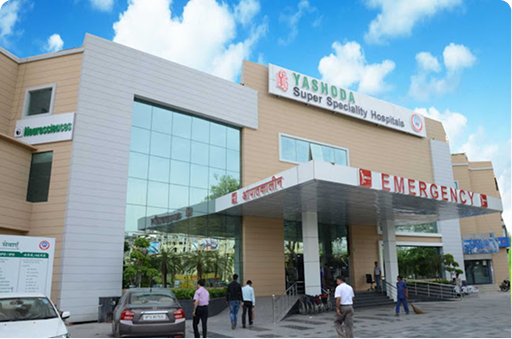
Yashoda Medicity offers advanced pediatric cardiac care. In addition, the hospital has an outstanding pediatric cardiac program, specifically designed and well-equipped with the latest technology for neonatal surgery, minimally invasive approaches, and complex reconstructions. Therefore, families from Delhi NCR and Ghaziabad have great access to healthcare through Yashoda Medicity.