Open Emergency Modal

Frequently Asked Questions

Old-style open-heart surgery involves a large 8- 10 inch incision of the chest bone (sternotomy), whereas minimally invasive open-heart surgery can be performed with only a small 2- 3 inch incision between the ribs without cutting any bones. This results in a much smaller cosmetic scar, lower blood loss, less pain, faster recovery and early return to normal live. By bloodless we mean performing an open-heart surgery without the need for blood transfusions from outside sources. This is achieved by many specialized techniques and equipment. Bloodless surgery aims to reduces the risk of infections and the body's inflammatory reactions.

Many complex conditions can now be treated through these small incisions. Among these are Coronary Artery Disease (CAD) treated by bypass, repair or replacement of the mitral and aortic valves; closure of atrial and ventricular septal defects (holes in the heart); and removal of some cardiac tumors, such as myxomas.

Bypass surgery (CABG) is a method of taking a healthy blood vessel from the arm, leg, or chest and using it as an additional path "bypass" to supply blood beyond the blocked portion of a coronary artery. This procedure is most commonly recommended when the three main arteries of the heart are significantly narrowed or to patient in whom the anticipated results of stenting are inferior.

In conventional bypass, the heart is made to stop beating, and a machine takes over the patient's breathing and blood circulation temporarily. 'Beating heart' (off, pump) surgery means the surgeon works while the heart is still beating. This method, adopted by Dr. Vikas Kumar Keshri Cardiothoracic & Vascular Surgeon, reduces the chances of stroke and kidney problems linked to the use of a heart-lung machine.

Valve replacement means a severely damaged heart valve is replaced with an artificial or prosthetic valve. There are two types of artificial valve: mechanical valves made of special metals (which are very durable) and bioprosthetic tissue valves usually made from bovine or porcine heart valve or pericardium. Valve repair means surgically fixing the patient's own biological valve by a combination of highly specialized techniques so that it opens and closes properly.

Robotics-assisted cardiac surgery implies performing heart surgery with help of advanced surgical robot. The surgeon sitting on a distant console, controls precise robotic limbs which are inserted in the chest through tiny holes called "ports". It offers a 3D, high-definition view and greater dexterity than the human hand. For patients, this means few scars, minimal pain, and a faster recovery within days rather than months.

Aortic surgery is a procedure performed on the aorta, the largest artery of the body arising from the heart. It becomes necessary when the aorta becomes very large in size and forms a dangerous aneurysm that may rupture or cause a tear in the lining. Both these conditions are emergencies that can be fatal if not treated immediately by a Cardiothoracic & Vascular Surgeon in Delhi NCR.

Congenital heart defects are commonly called hole in the heart by laymen. They are defects in the structure of the heart that are present at birth. For example, there may be holes in the walls separating the heart chambers or valves may be narrowed. Depending on the seriousness of the defect and the age of the child, the treatment may range from a simple catheter-based repair that does not require surgery to a complex surgical reconstruction.

ECMO or Extracorporeal Membrane Oxygenation is a device that supports a patient's life by functioning as an external heart and lung temporarily. It takes blood from the body, strips off the carbon dioxide, oxygenates it and returns the blood to the circulatory system. The purpose of this equipment is to act as a "bridge" to the recovery of patients who have had very serious heart or lung failure.

An implanted ventricular assist device (VAD) is a mechanical pump placed in the body to support the weakened heart in pumping blood throughout the body. VADs are primarily used in cases of end-stage heart failure patients who are on the waiting list for an organ transplant or patients who are not suitable for an organ transplant.

A heart transplant replaces the patient's failing heart with a healthy donor heart. This is recommended for patients with "end-stage" heart failure” when the patient's quality of life has not been improved through lifestyle changes, medical therapies, devices and less invasive surgeries. For many patients with end stage heart failure, who have run out of options it is the gold standard treatment.

Since the breastbone is not broken, the body suffers less physical trauma and since incisions are smaller, they result in less bleeding and a lower risk of wound infection. Both these things together mean less compromise on the respiratory mechanics after an open-heart surgery and hence patients recover faster. Typically, patients are discharged within 3 to 4 days and can resume driving and light work soon after, compared with traditional surgery.

Nearly all patients with valve disease or multiple-vessel blockages can undergo either procedure. It is especially helpful for old patients, diabetic patients, or those who are concerned about visible scars. However, a thorough checkup by a doctor is required to ensure it is the safest option for a particular heart structure.

Immediate surgical repair is the only way to stop life-threatening internal bleeding and organ failure in emergencies, such as aortic dissections, post myocardial infarction ventricular septal rupture or traumatic injuries of the heart. These cases require a highly skilled surgical team that can perform complex reconstructions under extreme stress to save patients' lives.

Patients should look for a board-certified cardiac surgeon who has completed additional training through fellowships in minimally invasive techniques and who performs the procedures regularly. Dr. Vikas Kumar Keshri, Associate Director of CTVS at Yashoda Medicity, is both a Fellow of the Royal Colleges of Surgeons (UK) and the European Board. Dr. Keshri can be approached for an MICS surgery.

With over 16 years of experience and training, Dr. Keshri performs "keyhole" surgeries with a very high level of accuracy. He uses specialized tools and "off-pump" techniques to allow the heart to continue working normally during the operation, and uses multiple blood conservation strategies like retrograde priming, auto transfusion, meticulous hemostasis and cell savers to name a few, to perform a bloodless cardiac surgery. These methods provide his patients with the best possible safety and a quick recovery.

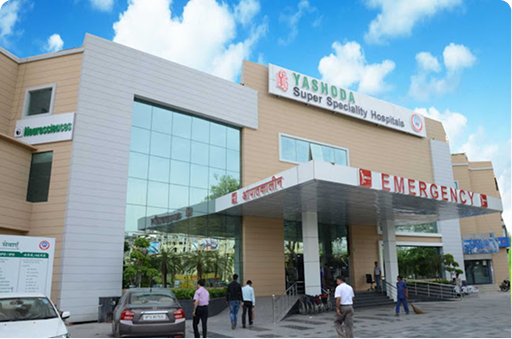
Second-to-none cardiac services are available at Yashoda Medicity, Indirapuram. This center offers modern modular OTs and robotic platforms, making it easy for people living in Delhi NCR and Ghaziabad to access the best heart treatments without having to go abroad.